
6 Character Traits Every Kid Needs with Lisa Phillips | TGD
Character traits for kids are learned habits that shape how children handle choices, conflict, and responsibility. Respect, honesty, empathy, self-control, resilience, and perseverance help children build strong relationships and a steady inner compass.
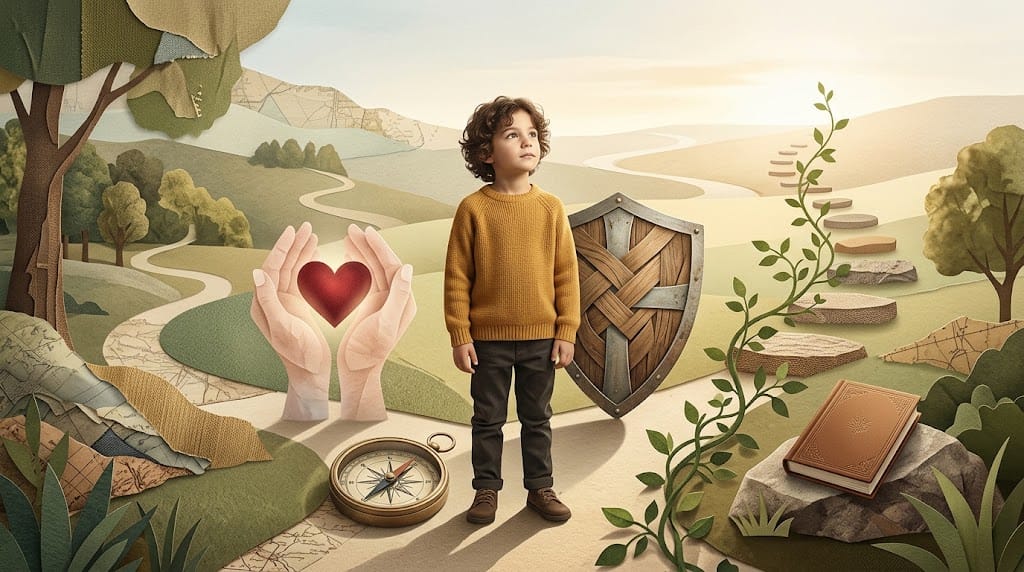
Character traits for kids are learned habits that shape how children handle choices, conflict, and responsibility. Respect, honesty, empathy, self-control, resilience, and perseverance help children build strong relationships and a steady inner compass.
Key Takeaways
- Character traits are not fixed labels; children build them through repetition, modeling, and feedback.
- Respect, responsibility, honesty, empathy, self-control, and perseverance show up in ordinary moments, not just big life decisions.
- The best teaching uses short language, clear expectations, and chances to practice repair after mistakes.
- Lisa Phillips's course turns those ideas into a structured inner-compass framework with lesson-by-lesson skill books.
- The Great Discovery is a useful next step for parents and educators who want a guided, child-friendly approach rather than improvising from scratch.
Table of Contents
- Understanding Character Traits for Kids
- Key Character-Building Concepts
- Who Benefits from Learning Character Traits for Kids?
- What Do Students Say?
- Is This Course Worth It?
- About the Creator
- Essential Character Traits Deep Dive
- Watch Before You Enroll
- Frequently Asked Questions
- Conclusion
- Explore More on TGD
Understanding Character Traits for Kids
Character traits for kids are the patterns of behavior that guide how children act when they are tired, frustrated, proud, or under pressure. They matter because they turn values into repeatable habits, which is what children actually use in school, at home, and with friends.
Respect keeps relationships workable, honesty builds trust, empathy reduces unnecessary harm, self-control slows impulsive reactions, perseverance keeps effort going after setbacks, and responsibility helps children own their choices. These traits are not taught best as abstract rules; they grow through modeling, repetition, and clear feedback in daily life. When adults use the same language across routines, consequences, and encouragement, children learn to connect behavior with identity. A child who can name the trait behind a choice is more likely to pause, repair, and try again. That is why character education matters: it gives kids a practical way to become steadier, kinder, and more resilient over time.
Want to Learn Character Traits for Kids Step by Step?
This course on The Great Discovery covers these fundamentals in a more structured format.
The Great Discovery (TGD) is a global online course marketplace where creators publish courses and learners discover practical training across business, technology, wellness, and personal growth.
Key Character-Building Concepts
The fastest way to teach character is to turn values into repeatable routines. Children learn these traits best when adults make them visible, specific, and practiced in real life.
Model the Trait
Children copy what adults do before they copy what adults say. If you want a child to practice respect, show respectful speech, timely follow-through, and calm correction in ordinary moments.
Use Small, Repeated Routines
Traits stick when they are practiced in daily habits such as chores, greetings, apologies, and turn-taking. A repeated routine gives the child a clear place to practice the trait instead of only hearing about it.
Praise the Behavior, Not the Label
Specific praise helps kids understand exactly what they did well. Saying, 'You waited your turn and kept your voice calm,' teaches more than calling a child 'good.'
Practice Repair After Mistakes
Character grows when kids learn that mistakes can be repaired. A good repair process includes admitting what happened, naming the impact, and trying a better response next time.
Tie Traits to Real Decisions
Traits become useful when children can apply them to homework, sibling conflict, sports, and friendships. That connection helps them see character as a tool for daily life, not just a classroom idea.
Who Benefits from Learning Character Traits for Kids?
This topic matters most when adults want values to show up in daily behavior. It is useful for families, classrooms, coaching settings, and any home where kids need a clear framework for making better choices.
Parents and Guardians
Parents often need a simple way to talk about behavior without turning every moment into a lecture. Lisa Phillips's course is a practical starting point if you want a structured sequence rather than improvising lesson by lesson.
Teachers and Homeschool Educators
Educators benefit when character language is consistent and easy to repeat. The course's lesson-based format and skill books make it easier to connect a trait like responsibility to a weekly classroom habit.
Children Who Struggle with Impulse Control or Confidence
Kids who react quickly, shut down easily, or give up after a setback need traits they can practice one step at a time. Self-control, perseverance, and empathy give them concrete moves, not vague advice.
Coaches, Counselors, and Mentors
Mentors can use character traits to make feedback more constructive and memorable. Lisa Phillips's emphasis on an inner compass fits especially well for adults who want kids to lead themselves with steadier judgment.
What Do Students Say?
This course is new to the marketplace and hasn't collected reviews yet. Check back after launch for student feedback.
Is This Course Worth It?
Yes, if you want a clear, values-based way to help kids practice six traits that shape everyday decisions.
It is best for parents, grandparents, teachers, and mentors who want a lesson-driven framework around a child's inner compass. The course description points to a structured, child-friendly path with lesson PDFs, binder-ready skill books, and a completion certificate.
It is not the best fit if you want dense child psychology, a broad parenting library, or a theory-heavy approach. The strongest use case is focused practice, especially when your goal is to turn abstract values into habits a child can repeat.
As a next step on TGD, this course makes sense when you already believe character is teachable and want a guided format that keeps the work simple and concrete.
About the Creator
Lisa Phillips is listed as an author and children's mental wellness coach. Her catalog data shows 1 course, 0 recorded learners, and an average rating of 0.0, so the strongest signal here is her child-focused coaching perspective.
Courses created: 1 | Total learners: 0 | Average rating: 0.0
View Lisa Phillips on The Great Discovery
Essential Character Traits Deep Dive
These traits are easiest to understand when you see how they appear in daily life. The table below translates each trait into a real-world behavior and explains why it matters.
| Trait | What It Looks Like | Why It Matters |
|---|---|---|
| Respect | Listening without interrupting, using kind words, and recognizing boundaries | Builds safe relationships and trust at home and at school |
| Responsibility | Finishing chores, owning mistakes, and following through on commitments | Teaches reliability and self-management |
| Honesty | Telling the truth and admitting when something goes wrong | Strengthens trust and speeds up problem-solving |
| Empathy | Noticing how someone else feels and responding with care | Reduces conflict and supports healthy friendships |
| Self-Control | Pausing before reacting, taking a breath, or asking for help | Helps kids make better choices under stress |
| Perseverance | Trying again after frustration, failure, or disappointment | Supports resilience and long-term learning |
This framework shows why character teaching works best when the trait is connected to a specific action. Lisa Phillips's course uses a similar idea by turning broad values into structured, lesson-based practice.

Master Character Traits for Kids with Expert Guidance
Lisa Phillips's course walks through the same traits in a child-friendly sequence, and the lesson PDFs make each idea concrete. If you want a guided way to help kids practice an inner compass, this is a logical next step.
Watch Before You Enroll
This video explains how to become an affiliate on The Great Discovery and is useful if you plan to share courses you trust.
Learn how to become an affiliate on The Great Discovery — the best affiliate program for course creators and marketers in 2026. Start earning commissions by sharing courses you believe in.
Frequently Asked Questions
These are the questions readers usually ask when they want to teach character traits in real life.
What are the six essential character traits for kids?
They are commonly taught as respect, responsibility, honesty, empathy, self-control, and perseverance. Together, they help children manage behavior, relationships, and setbacks.
How do kids learn character traits?
Children learn traits through adult modeling, consistent language, small responsibilities, and repeated practice in daily routines. They usually absorb the lesson faster when they are praised for the specific behavior, not just the outcome.
Why is self-control important for children?
Self-control helps kids pause before reacting, which improves friendships, learning, and problem-solving. It does not remove emotion; it helps children choose a better response.
Can character education help with resilience?
Yes. Resilience grows when children learn to try again after disappointment, accept feedback, and see mistakes as repairable.
How can parents reinforce character traits at home?
Keep the language simple, praise specific actions, and build small repeatable routines around chores, apologies, and follow-through. Kids learn faster when character is part of everyday life rather than a one-time talk.
Is the TGD course a good fit for families who want structure?
Yes. The course description emphasizes a strong inner compass, lesson-by-lesson skill books, and a completion certificate, which makes it a good fit for families who want a guided sequence rather than a loose overview.
Ready to Go Deeper?
You've learned the fundamentals of character traits for kids, including how they become habits through modeling and practice. This course takes that understanding and turns it into a structured path for action.
Start Learning Character Traits for Kids on TGD →
Conclusion
Character traits are learned through repetition, language, and everyday repair. Respect, responsibility, honesty, empathy, self-control, and perseverance help kids become steadier, kinder, and more resilient in real situations.
Lisa Phillips's course gives that work a clear structure, especially for adults who want to build an inner-compass framework one lesson at a time. If you want the next step after learning the basics, use the course to turn these ideas into a guided practice routine.
Explore More on TGD
No related courses were listed in the catalog data, so these category pages are the closest matches. Use them to keep exploring adjacent topics on The Great Discovery.
- Kids Content courses
- Teaching / Education courses
- TGD Success courses
- Mental / Emotional Health courses
- The Great Discovery homepage
- Lisa Phillips creator page
Share Your Knowledge on The Great Discovery
Join Lisa Phillips and hundreds of other creators sharing their expertise. Create and sell your own courses on TGD.