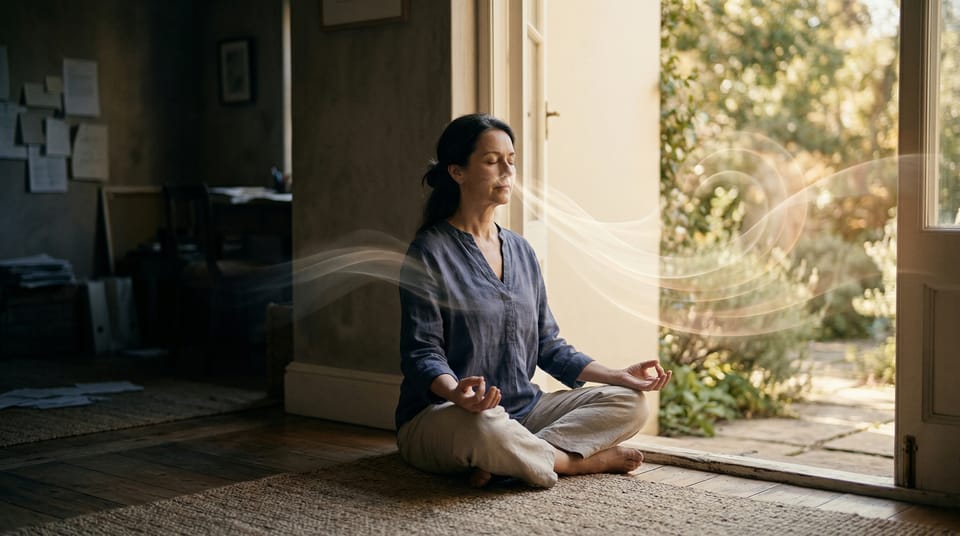
Breathe Away Your Pain with Leigh Kadooka | TGD
Breathing for nerve pain relief uses slow, controlled breath patterns to calm the nervous system, reduce stress amplification, and create a steadier body state. It is not a cure, but research suggests it can complement pain care and improve day-to-day coping.
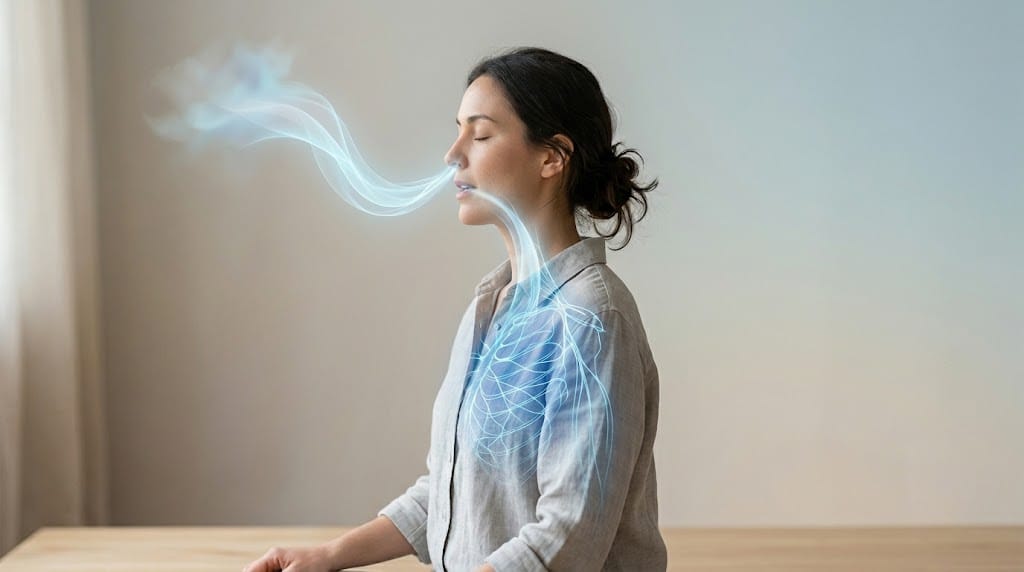
Breathing for nerve pain relief uses slow, controlled breath patterns to calm the nervous system, reduce stress amplification, and create a steadier body state. It is not a cure, but research suggests it can complement pain care and improve day-to-day coping.
Key Takeaways
- Chronic pain affects more than 50 million U.S. adults, so low-burden self-management tools matter.
- Breathing exercises can influence stress, sleep, and perceived pain when practiced consistently.
- According to PubMed, a 2026 review of 17 studies with 633 participants found breathing exercises reduced pain intensity in chronic non-specific low back pain, though certainty was low to very low.
- Leigh Kadooka's 3-minute beginner lesson is useful if you want a simple, grounding starting point.
- Breathwork works best as a complement to medical care, not a replacement for diagnosis or treatment.
Table of Contents
- Understanding Breathing for Nerve Pain Relief
- Key Concepts and Techniques
- Who Benefits from Learning Breathing for Nerve Pain Relief?
- What Do Students Say?
- Is This Course Worth It?
- About the Creator
- Essential Breathing Techniques for Pain Relief
- Watch Before You Enroll
- Frequently Asked Questions
- Conclusion
- Explore More on TGD
Understanding Breathing for Nerve Pain Relief
Breathing-based pain relief is a self-regulation strategy, not a miracle cure. It uses slow, deliberate breath patterns to downshift the stress response, reduce muscle guarding, and make pain feel more manageable. According to NIH, more than 50 million U.S. adults live with chronic pain, about 25% of adults reported chronic pain in 2023, and the annual economic burden of pain management is estimated at $725 billion.
Research is encouraging but still developing. According to PubMed, a 2026 systematic review of 17 studies with 633 participants found breathing exercises reduced pain intensity in chronic non-specific low back pain, though the evidence certainty was low to very low. According to PubMed, a 2025 randomized trial in 69 hemodialysis patients found eight weeks of breathing exercises improved pain, sleep, and symptom scores.
In practice, the value of breathwork is consistency. Small sessions can help people feel more grounded, especially when pain flares are tied to anxiety, tension, or poor sleep.
Want to Learn Breathing for Nerve Pain Relief Step by Step?
This course on The Great Discovery covers these fundamentals in a compact, beginner-friendly format.
The Great Discovery (TGD) is a global online course marketplace where creators publish courses and learners discover practical training across business, technology, wellness, and personal growth.
Key Concepts and Techniques
The most useful breathwork methods are simple, repeatable, and calm the body enough to interrupt the pain-stress loop. The ideas below help readers understand why breathing can be useful even when pain has a medical cause.
Diaphragmatic Breathing
Diaphragmatic breathing shifts work from the chest into the belly, which can reduce shallow, tense breathing. A practical version is to let the abdomen rise on the inhale and soften on the exhale for several cycles.
Longer Exhales
Exhaling slightly longer than you inhale is a common way to encourage calm. For example, a four-count inhale and a six-count exhale can feel steadier than fast or forceful breathing, especially during a flare.
Grounding During Pain Spikes
Grounding pairs breath with attention. Counting breaths, naming sensations, or focusing on the feeling of air moving through the nose can keep the mind from spiraling into panic or catastrophizing.
Consistency Over Intensity
Breathing exercises work best when they are short and regular. A few minutes practiced daily often matter more than one long session, because the nervous system learns the pattern through repetition.
Track What Changes
Simple note-taking helps people see patterns in pain, sleep, stress, and breathing practice. If a technique lowers tension but not pain, that is still useful information because less tension can make daily coping easier.
Who Benefits from Learning Breathing for Nerve Pain Relief?
This topic helps people who want a low-friction way to reduce stress around pain without adding a complicated routine. The course is basic, short, and aligned with the wellness and self-improvement categories, so it fits several kinds of learners.
Beginners Who Want a Quick Starting Point
If you want one clear technique instead of a long program, this topic is a good fit. Leigh Kadooka's 3-minute lesson is especially appropriate for people who want to try something practical immediately.
People Living with Chronic or Nerve Pain
People with recurring pain often need tools they can use during a flare, in bed, or at a desk. Breathing will not replace clinical care, but research suggests it may help reduce the intensity or emotional load of pain over time.
Caregivers, Coaches, and Supportive Friends
Anyone who supports someone in pain can benefit from a simple, non-threatening technique to teach or model. A short course like this can help you explain the basics in plain language and avoid overcomplicating the first step.
People Exploring Gentle Self-Help
If you prefer non-drug self-management tools and want something grounded in current evidence, breathwork is worth learning. The course's basic format makes it a sensible starting point before moving into more advanced pain strategies.
What Do Students Say?
"Very good technique to ground and relax"— Olya Zhilinskaya
"Simple and easy process to relieve stress and pain - great technique!!"— Leslie Capps
"Simple technique that everyone can learn to help manage pain. Check it out!"— Sixu Chen
The reviews point to the same pattern: the course is simple, calming, and easy to try immediately. That matches a beginner lesson designed to ground the reader and introduce a repeatable technique.
Is This Course Worth It?
Yes, if you want a short, beginner-friendly entry point into breathing for pain relief.
This course is best for people who want a fast, practical introduction to a calming technique and do not need a long curriculum. It suits learners who value a direct, easy-to-try lesson over a heavy theoretical program.
It is not the right fit for someone expecting advanced clinical treatment, a comprehensive chronic pain course, or a substitute for medical care. Breathwork can support coping, but it should be used alongside proper evaluation when pain is persistent or severe.
The strongest use case is when a reader wants a simple first step that feels manageable today. The reviews, the 3-minute format, and the creator's focused approach all point to a solid next step on TGD for beginners who want to test the method before going deeper.
About the Creator
Leigh Kadooka is a Digital Learning Consultant & Promoter.
Courses created: 5
Total learners: 40
Average rating: 5.0
That creator profile suggests a small but focused catalog with consistently strong reception. You can view the creator page here: Leigh Kadooka on TGD.
Essential Breathing Techniques for Pain Relief
These techniques teach the mechanics behind breathing for pain relief and show how a short lesson can turn them into a usable habit.
| Technique | What It Does | Why It Matters |
|---|---|---|
| Diaphragmatic breathing | Uses the diaphragm instead of shallow chest breathing. | Can reduce tension and help the body shift out of a stress pattern. |
| Longer exhale breathing | Makes the exhale slightly longer than the inhale. | Often feels calming and can help during pain spikes or worry. |
| Counting breaths | Adds structure by counting each inhale and exhale. | Gives the mind an anchor when pain feels distracting or overwhelming. |
| Grounding with sensation | Focuses on air flow, posture, or contact with the floor. | Helps interrupt spiraling thoughts and brings attention back to the present. |
| Short daily practice | Practices the method for a few minutes each day. | Builds consistency, which matters more than intensity for habit formation. |
| Symptom tracking | Notes pain, sleep, and stress before and after practice. | Helps learners see whether the technique changes coping, sleep, or flare frequency. |
A short course is useful when you want to learn one method cleanly before combining it with other self-care habits. Leigh Kadooka's lesson focuses on exactly that kind of practical starter skill.

Master Breathing for Nerve Pain Relief with Expert Guidance
Leigh Kadooka's course turns the basic breathing and grounding ideas above into a short lesson you can complete quickly and revisit whenever you need a reset.
Enroll in Breathe Away Your Pain: A Journey to Relief →
Watch Before You Enroll
Learn how to become an affiliate on The Great Discovery — the best affiliate program for course creators and marketers in 2026. Start earning commissions by sharing courses you believe in.
Frequently Asked Questions
What is breathing-based pain relief?
It is the use of slow, intentional breathing to calm the nervous system and reduce stress amplification around pain. According to NIH and recent PubMed studies, this approach may help people cope better, but it is not a cure.
Can breathing exercises reduce nerve pain?
They may reduce how intense pain feels or how disruptive it becomes. According to a 2026 PubMed review of 17 studies, breathing exercises lowered pain intensity in chronic non-specific low back pain, though the evidence certainty was low to very low.
How often should you practice breathing exercises for pain?
Short, repeated practice usually works better than occasional long sessions. Daily practice helps the body learn the pattern, and a 2025 trial in 69 hemodialysis patients found benefits after eight weeks of regular breathing exercises.
When should you not rely on breathwork alone?
If pain is severe, persistent, new, or paired with other symptoms, breathwork should not be your only response. It is best used as a complement to proper medical evaluation and a broader care plan.
Is this course good for beginners?
Yes. The course is described as a 3-minute lesson with basic skill level content, so it is well suited to people who want a short introduction rather than a deep technical curriculum.
Ready to Go Deeper?
You have learned the fundamentals of breathing for nerve pain relief. This course takes you from understanding to practical application in a very short, beginner-friendly format.
Start Learning Breathing for Nerve Pain Relief on TGD →
Conclusion
Breathing for pain relief is a practical self-regulation skill that can help reduce stress, improve grounding, and support daily coping with chronic or nerve pain. The evidence is promising but still developing, which is why the smartest use case is as a complement to medical care and other healthy habits. For many readers, the biggest gain is not pain elimination, but a more stable response when symptoms flare.
If you want a quick, beginner-friendly introduction to the basics, Leigh Kadooka's course is a sensible next step on TGD: Breathe Away Your Pain: A Journey to Relief.
Explore More on TGD
If this topic is useful, browse more of The Great Discovery here:
- TGD Success courses
- Self Improvement courses
- Health and Fitness courses
- The Great Discovery homepage
- Leigh Kadooka creator page
Share Your Knowledge on The Great Discovery
Join Leigh Kadooka and hundreds of other creators sharing their expertise. Create and sell your own courses on TGD.