
Breathwork Meditation with Cathy Lawson on TGD
Breathwork meditation is the practice of using intentional breathing to steady attention, calm the nervous system, and support emotional regulation. It combines simple patterns like slow breathing, box breathing, and diaphragmatic breathing with mindful focus.
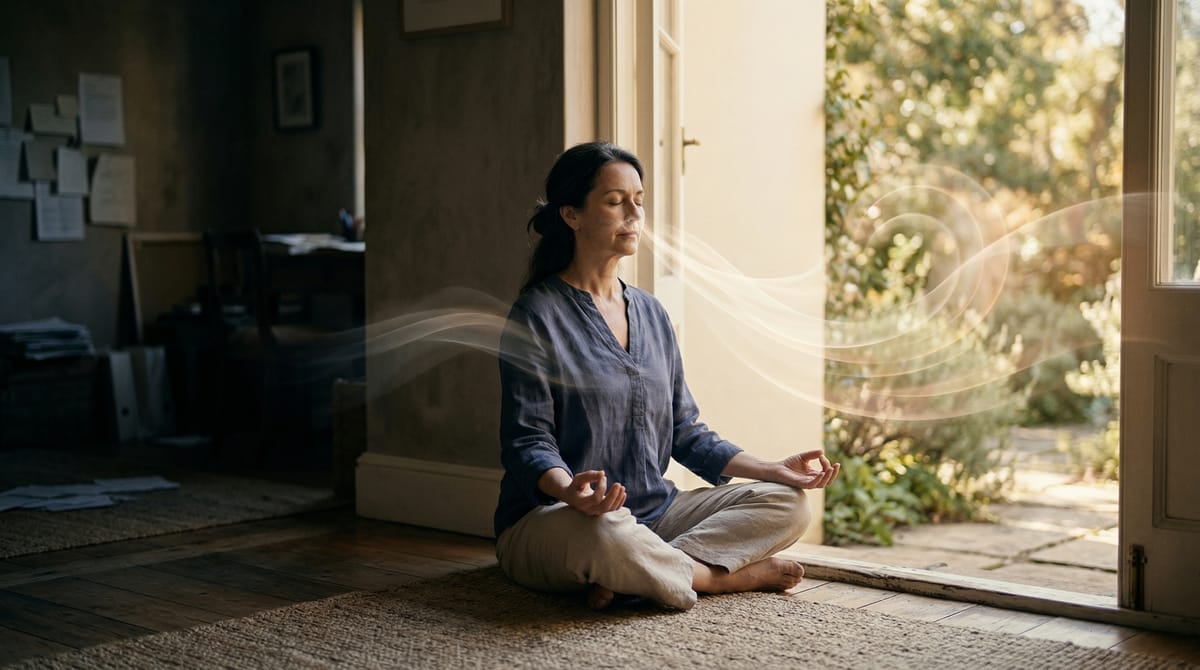
Breathwork meditation is the practice of using intentional breathing to steady attention, calm the nervous system, and support emotional regulation. It combines simple patterns like slow breathing, box breathing, and diaphragmatic breathing with mindful focus.
Key Takeaways
- Breathwork meditation uses the breath as a practical regulation tool, not just a relaxation trick.
- Harvard Health says slow breathing usually means about 6 to 10 breaths per minute, and 15 minutes a day may help lower blood pressure.
- A 2026 meta-analysis of 25 studies (N=1,278) found moderate-to-large reductions in anxiety, depression, and perceived stress.
- Beginner-friendly methods like box breathing and diaphragmatic breathing are portable and easy to start anywhere.
- Cathy Lawson's Basic-level course is a logical next step if you want a structured introduction from an experienced TGD creator.
Table of Contents
- Understanding Breathwork Meditation
- Key Concepts and Techniques
- Who Benefits from Learning Breathwork Meditation?
- What Do Students Say?
- Is This Course Worth It?
- About the Creator
- Breathwork Techniques at a Glance
- Watch Before You Enroll
- Frequently Asked Questions
- Conclusion
- Explore More on TGD
Understanding Breathwork Meditation
Breathwork meditation matters because the way you breathe can change how your body and mind respond to stress. Cleveland Clinic defines meditation as focusing or clearing the mind with mental and physical techniques, including pairing the breath with a word, phrase, or image. Breathwork takes that idea one step further by making the breathing pattern itself the main tool.
According to Harvard Health, most adults breathe about 22,000 times a day, and slow breathing usually lands around 6 to 10 breaths per minute. Harvard also reports that 15 minutes a day can help lower blood pressure, with systolic pressure sometimes dropping by up to 10 points for people with hypertension. A 2026 meta-analysis in Body, Movement and Dance in Psychotherapy pooled 25 studies (N=1,278) and found moderate-to-large reductions in anxiety, depression, and perceived stress.
According to the Global Wellness Institute, breathing practices are moving into mainstream wellness and are being studied for sleep, emotional regulation, recovery, and longevity. That matters because breathwork is simple enough for beginners, but broad enough to support daily calm, better self-awareness, and a more deliberate response to stress.
Want to Learn Breathwork Meditation Step by Step?
This course on The Great Discovery covers these fundamentals in a more structured format.
The Great Discovery (TGD) is a global online course marketplace where creators publish courses and learners discover practical training across business, technology, wellness, and personal growth.
Key Concepts and Techniques
Breathwork meditation works best when you understand the mechanics behind the method. The most useful techniques are simple, repeatable, and easy to adjust for your goal.
Breathing Pace and Cadence
Breathing pace is the first variable to notice. Harvard Health describes slow breathing as roughly 6 to 10 breaths per minute, which gives the body more time to settle between inhales and exhales. A slower cadence is often easier to sustain than a forceful breathing pattern.
Box Breathing
Box breathing uses equal counts for inhale, hold, exhale, and hold. That simple rhythm is useful when you want structure, because it keeps attention occupied and reduces the tendency to rush the breath.
Diaphragmatic Breathing
Diaphragmatic or belly breathing shifts effort away from the upper chest and toward the diaphragm. Beginners often find it easier because the movement feels natural, and it can be practiced in a chair, on a walk, or before sleep.
Attention, Route, and Consistency
The 2025 review on chronic stress notes that variables like breathing ratio, breathing route, attention, and biofeedback matter. In practice, that means technique alone is not enough; steady attention and repeated practice help turn a breathing drill into a reliable daily habit.
Who Benefits from Learning Breathwork Meditation?
Breathwork meditation helps different readers in different ways. The most obvious fit is the person who wants a calm, practical entry point into mindfulness without complicated theory.
Beginners Who Want a Gentle Entry Point
If you are new to meditation, a Basic-level course is a smart start. The general-audience framing and calm, accessible style make breathwork easier to approach without jargon.
Breathwork Meditation on TGD is a natural starting point when you want structure instead of piecing together tips from social media.
People Managing Everyday Stress
If your goal is to feel calmer during work, parenting, or school, breathwork gives you a portable reset. Harvard Health notes that 15 minutes of slow deep breathing a day may lower blood pressure, which shows the practice can fit into real routines.
Wellness Coaches and Helpers
If you guide other people, a clear introduction helps you teach the method responsibly. A course with accessible language is useful in the Self Improvement, Health and Fitness, and Mental/Emotional Health spaces.
The creator's "Empowering Breakthrough" framing also fits people who want a grounded, supportive teaching style.
Experienced Meditators Refining Technique
If you already meditate but want more precision, breathwork can tighten your practice. The 2025 review's emphasis on pace, ratio, route, and attention shows that small technical choices can change the experience.
What Do Students Say?
The student feedback is short but very positive. It emphasizes clarity, accessibility, and the feeling that the material is useful for both newcomers and experienced meditators.
"Breathwork Meditation" by Cathy Lawson is a beautifully crafted guide that explores the transformative power of breath as a tool for mindfulness and healing.— Ruben Lanier
The review points to a course that is calm, approachable, and grounded in practical use. That matches the course's Basic level and makes it a sensible entry point for learners who want reassurance, not complexity.
Is This Course Worth It?
Yes, if you want a beginner-friendly way to learn breathwork meditation with clear structure.
This course is best for beginners, stressed professionals, and anyone who wants a calm, practical introduction to breath-based regulation. The Basic level and general-audience framing make it easy to start without prior meditation experience.
It is not the right fit if you are looking for advanced therapeutic instruction, a medical treatment plan, or a highly technical breath science curriculum. People who want that depth will need something more specialized.
As a next step on TGD, it looks strongest when you want a steady, supportive entry into the topic rather than a fast, flashy overview. The creator context, the positive review, and the accessible positioning all point to a course that should help you move from curiosity to a usable daily practice.
About the Creator
Cathy Lawson describes her work as "Empowering Breakthrough." She has created 4 courses, reached 184 total learners, and holds a 4.8 average rating.
That mix suggests a creator with enough experience to teach calmly without making the topic feel overcomplicated. Visit Cathy Lawson's creator page
Breathwork Techniques at a Glance
These techniques are the practical vocabulary of breathwork meditation. Learning the differences helps you choose the right method for calm, focus, or sleep.
| Technique | What It Does | Best Use |
|---|---|---|
| Slow breathing | Reduces breathing rate to about 6 to 10 breaths per minute | Everyday stress reduction and nervous-system downshifting |
| Box breathing | Uses equal counts for inhale, hold, exhale, and hold | Resetting attention before meetings or stressful moments |
| Diaphragmatic breathing | Shifts effort toward the diaphragm and belly | Foundational practice for beginners and evening wind-down |
| Breathing ratio work | Changes the balance between inhale and exhale | Customizing intensity and response for different goals |
| Attention plus body scan | Keeps awareness on breath sensation and drift | Mindfulness practice and habit-building |
A structured course is helpful because it shows how these methods differ in practice, not just in theory. Once you can match a technique to a goal, breathwork becomes easier to use consistently.

Master Breathwork Meditation with Expert Guidance
Cathy Lawson's course covers these concepts and more in a beginner-friendly format. If the table clarified what the techniques do, the course can show you how to practice them consistently.
Enroll in Breathwork Meditation →
Watch Before You Enroll
Learn how to become an affiliate on The Great Discovery — the best affiliate program for course creators and marketers in 2026. Start earning commissions by sharing courses you believe in.
Frequently Asked Questions
What is breathwork meditation?
Breathwork meditation is the practice of using intentional breathing with mindful attention to influence your mental and physical state. Cleveland Clinic describes meditation as focusing or clearing the mind through mental and physical techniques, and breathwork applies that idea directly to the breath.
How many breaths per minute is slow breathing?
Harvard Health describes slow breathing as roughly 6 to 10 breaths per minute. That pace is slow enough to feel deliberate without becoming strained, and it is one of the simplest ways to begin.
Can breathwork help with anxiety and stress?
Research suggests it can. A 2026 meta-analysis of 25 studies with 1,278 participants found moderate-to-large reductions in anxiety, depression, and perceived stress, along with improvements linked to emotional regulation.
Is breathwork meditation safe for beginners?
For most people, yes, when it is practiced gently and without forcing the breath. If you feel dizzy, uncomfortable, or short of breath, pause and return to normal breathing; people with medical conditions should check with a clinician before starting any new practice.
What is the difference between box breathing and diaphragmatic breathing?
Box breathing uses equal counts for inhale, hold, exhale, and hold, which gives the mind a clear rhythm. Diaphragmatic breathing focuses on fuller belly movement and helps beginners learn a more relaxed, efficient breathing pattern.
Is this TGD course good for beginners?
Yes. The course is marked Basic and General Audiences, and the review language highlights a clear, accessible style that works well for people who are just starting out.
Ready to Go Deeper?
You have the fundamentals of breathwork meditation now. This course takes you from understanding the method to practicing it with structure and confidence.
Start Learning Breathwork Meditation on TGD →
Conclusion
Breathwork meditation is a simple practice with real depth: it can steady attention, change stress physiology, and create a repeatable reset you can use every day. Research points to meaningful benefits, from slower breathing rhythms to reduced anxiety and perceived stress, while mainstream wellness groups now treat breathwork as an important nervous-system skill. If you want a structured way to learn the method instead of experimenting alone, Cathy Lawson's Breathwork Meditation on TGD is a logical next step.
Explore More on TGD
- Browse TGD Success courses
- Browse Self Improvement courses
- Browse Health and Fitness courses
- Browse Mental/Emotional Health courses
Visit The Great Discovery homepage | Visit Cathy Lawson's creator page
Share Your Knowledge on The Great Discovery
Join Cathy Lawson and hundreds of other creators sharing their expertise. Create and sell your own courses on TGD.