
Craft Powerful Paragraphs: Writing Structure & Clarity on The Great Discovery
A powerful paragraph develops a single main idea through a clear topic sentence, supporting evidence, and strategic transitions. Structure and clarity transform scattered thoughts into persuasive, readable writing that holds reader attention.

A powerful paragraph develops a single main idea through a clear topic sentence, supporting evidence, and strategic transitions. Structure and clarity transform scattered thoughts into persuasive, readable writing that holds reader attention.
Key Takeaways
- A topic sentence should appear early and clearly state the paragraph's main idea
- Supporting sentences provide evidence, examples, or explanation that develops the main idea
- Transition words (however, therefore, for example) connect ideas and guide reader understanding
- This free course breaks down paragraph fundamentals into manageable, practical lessons
- Mastering paragraph writing improves essays, emails, social media captions, and professional communication
Table of Contents
- Understanding Powerful Paragraphs
- Key Concepts: The Building Blocks of Strong Paragraphs
- Who Benefits from Mastering Paragraph Writing?
- What Do Students Say?
- About Kristen Bowers
- The Anatomy of a Powerful Paragraph
- Watch Before You Enroll
- Frequently Asked Questions
- Conclusion
- Explore More on The Great Discovery
Understanding Powerful Paragraphs
A paragraph is more than just a collection of sentences—it's a unit of thought that works together to develop a single idea. When a paragraph is well-crafted, readers understand your point clearly and stay engaged with your writing.
Powerful paragraphs share three characteristics: clarity, structure, and coherence. Clarity means your reader immediately grasps what you're saying without confusion. Structure gives your ideas an organized form—a beginning, middle, and end. Coherence ensures every sentence connects logically to the next, so the reader can follow your thinking without stumbling.
Most writers struggle with paragraphs because they write the way they think—jumping from idea to idea without a clear framework. The difference between weak and powerful writing often comes down to one skill: knowing how to build a paragraph that guides the reader through your logic step by step.
Want to Learn Paragraph Writing Step by Step?
This free course on The Great Discovery covers all of these fundamentals and more, with structured lessons designed for writers at any level.
Key Concepts: The Building Blocks of Strong Paragraphs
The Topic Sentence
The topic sentence is the controlling idea of your paragraph—it tells the reader what to expect. Typically placed at the beginning of the paragraph, the topic sentence should be clear and specific enough that the reader knows exactly what you're discussing.
Example: "Email marketing remains one of the highest-ROI channels for digital businesses." This sentence tells the reader the paragraph will focus on email marketing's business value, not its history or technical details.
Supporting Evidence and Examples
Supporting sentences develop the topic by providing specific evidence, examples, or explanation. These are the sentences that prove your point or elaborate on your main idea. Without strong supporting sentences, your paragraph feels empty and unconvincing.
Example: Instead of just saying "Email works," explain why—mention conversion rates, provide case studies, or describe how it compares to other channels. The more specific your support, the more credible your paragraph becomes.
Transitions and Flow
Transition words and phrases (however, furthermore, for instance, in contrast) connect your ideas and guide the reader's understanding. They show relationships between sentences: cause and effect, addition, contrast, or sequence.
Example: "Email marketing works because it's personal. Furthermore, automation allows businesses to send targeted messages at scale." The word "furthermore" shows that the second sentence adds to the first, rather than contradicting or replacing it.
Paragraph Unity and Coherence
Unity means every sentence in the paragraph supports the topic sentence. Coherence means the sentences flow logically from one to the next. A paragraph that lacks unity wanders between different ideas; a paragraph that lacks coherence jumps around and confuses the reader.
Test: Read your paragraph and ask, "Does every sentence relate directly to the main idea?" If yes, you have unity. Then ask, "Can I follow the logical flow?" If yes, you have coherence.
Who Benefits from Mastering Paragraph Writing?
Students and Academic Writers
Essays, research papers, and reports depend entirely on clear paragraph structure. Students who master paragraph writing see immediate improvements in grades because teachers can follow their arguments more easily. Whether you're writing a five-paragraph essay or a research paper, strong paragraphs are the foundation.
Kristen Bowers' course is ideal for students because it breaks down paragraph fundamentals into simple, applicable lessons that work across any academic subject.
Business Professionals and Email Writers
Professional communication—emails, reports, proposals—lives in paragraphs. Executives, managers, and individual contributors who write clear paragraphs are perceived as more credible and persuasive. A muddled email gets ignored or misunderstood; a clear one moves projects forward.
This course teaches the paragraph structure that makes business writing punchy and effective, helping professionals communicate with clarity and impact.
Content Creators and Marketers
Blog posts, social media captions, ad copy, and landing pages are all built from strong paragraphs. Content creators who understand paragraph structure write more compelling posts that engage readers and drive action. Strong paragraphs mean higher click-through rates, more shares, and better conversion.
Anyone Looking to Improve Their Writing
Job seekers need strong cover letters. Authors need compelling prose. Anyone communicating through writing benefits from understanding how to craft powerful paragraphs. The skill is universal and applicable immediately.
What Do Students Say?
This course is new to the marketplace and hasn't collected reviews yet. Check back after launch for student feedback. Early learners will have the opportunity to shape how this course is refined and improved.
About Kristen Bowers
Kristen Bowers (Simply Novel) is an accomplished course creator with 5 courses and 60+ learners across The Great Discovery platform. Her focus on practical writing fundamentals reflects her commitment to helping writers at all levels develop real, applicable skills.
Kristen brings years of writing experience to her courses, with an emphasis on clarity and structure—the same principles that make paragraphs powerful. You can learn more about her work at her creator profile on The Great Discovery.
The Anatomy of a Powerful Paragraph
| Element | Purpose | What It Contains |
|---|---|---|
| Topic Sentence | Introduces the main idea and tells readers what to expect | One clear, specific statement of the paragraph's central point |
| Supporting Sentence 1 | Develops the topic with the first piece of evidence or explanation | Specific facts, examples, statistics, or explanation tied directly to the topic |
| Supporting Sentence 2 | Adds a second layer of support or elaboration | Additional evidence, a related example, or extended explanation |
| Transition/Link | Connects ideas and shows relationships between sentences | Words like "furthermore," "however," "in contrast," or "for example" |
| Concluding Sentence (Optional) | Reinforces the main idea and prepares readers for the next paragraph | A restatement of the main point or a bridge to the following paragraph |
This table shows the standard structure of a powerful paragraph. The exact number of supporting sentences varies—some paragraphs need three, others need five—but the elements remain consistent. Understanding this anatomy helps you diagnose why a paragraph isn't working and fix it.
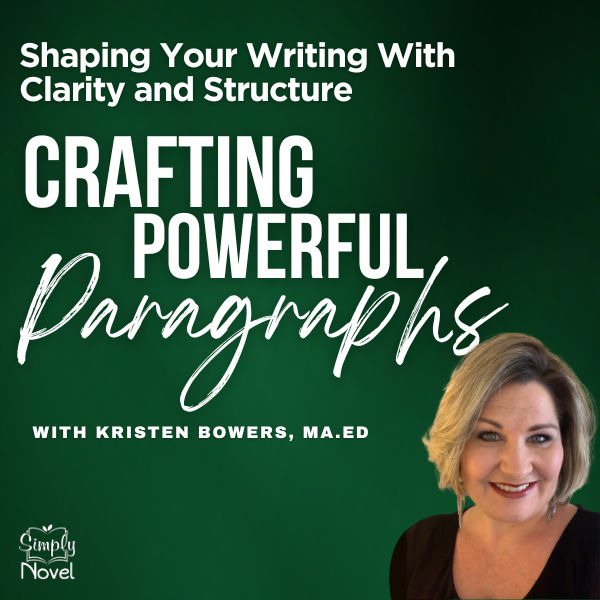
Master Paragraph Writing with Expert Guidance
Kristen Bowers' course covers all of these elements with structured lessons you can complete at your own pace. Learn to diagnose weak paragraphs and transform them into compelling, clear writing.
Enroll in Crafting Powerful Paragraphs →
Watch Before You Enroll
Learn how to become an affiliate on The Great Discovery — the best affiliate program for course creators and marketers in 2026. Start earning commissions by sharing courses you believe in.
Ready to Go Deeper?
You've learned the fundamentals of paragraph structure and clarity. This free course takes you from understanding to practical application, with real exercises that improve your writing immediately.
Start Learning Paragraph Writing on TGD →
Frequently Asked Questions
What exactly is a paragraph?
A paragraph is a group of sentences organized around a single main idea. It serves as the basic building block of written communication—the unit between a sentence and a full essay or document. Every paragraph should have a clear purpose and contribute directly to your overall message.
How many sentences should a paragraph have?
There's no magic number. Most paragraphs contain between 3 and 7 sentences, but some may be shorter (especially in journalism or marketing) and others longer (especially in academic writing). The rule is: as many sentences as you need to fully develop your idea, but no more.
What's the difference between paragraph unity and coherence?
Unity means all sentences in the paragraph relate to the main idea—nothing strays off-topic. Coherence means the sentences flow logically from one to the next so the reader can follow your thinking. A paragraph can have unity but lack coherence if the sentences jump around; it can have coherence but lack unity if sentences are well-connected but address different topics.
Should the topic sentence always come first?
Most often, yes—putting the topic sentence first helps readers immediately understand your point. However, in some contexts (like narrative writing or persuasive essays), writers sometimes build to the topic sentence. Master the traditional structure first, then experiment with variations once you understand the rules.
How can I improve my paragraph transitions?
Read your paragraph aloud and listen for places where the connection between sentences feels weak or abrupt. Insert transition words that clarify the relationship: "furthermore" for addition, "however" for contrast, "therefore" for cause-and-effect, "for example" for illustration. Make connections explicit so readers don't have to guess.
Is there a cost for this course?
No—Crafting Powerful Paragraphs is completely free on The Great Discovery. You get full access to all lessons and exercises at no cost, making it an accessible way to strengthen your writing fundamentals.
Conclusion
Strong paragraphs are the foundation of all clear writing. Whether you're writing an email, an essay, a blog post, or a report, your ability to structure ideas into coherent paragraphs determines whether readers understand and engage with your message. The good news: paragraph writing is a learnable skill, and improvement happens quickly once you understand the core principles of topic sentences, supporting evidence, and clear transitions.
Kristen Bowers' free course on The Great Discovery walks you through these fundamentals with practical lessons and exercises you can apply immediately. If you've ever felt frustrated by your own writing or unsure how to fix a paragraph that just doesn't work, this course gives you the tools and clarity to transform your writing. Start the course today and begin writing paragraphs that actually work.
Explore More on The Great Discovery
Interested in improving your writing further? Check out other courses in the Academic Learning and Self Improvement categories on The Great Discovery:
- More Academic Learning Courses
- Self Improvement Courses
- More courses by Kristen Bowers
- Browse All Courses on The Great Discovery
Share Your Knowledge on The Great Discovery
Join Kristen Bowers and hundreds of other creators sharing their expertise. Create and sell your own courses on TGD.