
From Chaos to Keepsake with Philip Griffith II | TGD
Photo organization is the process of sorting, culling, backing up, and sharing digital images so memories stay searchable, secure, and meaningful. It matters because modern camera rolls fill fast, and without a system, important moments disappear into clutter, duplicates, and forgotten folders.
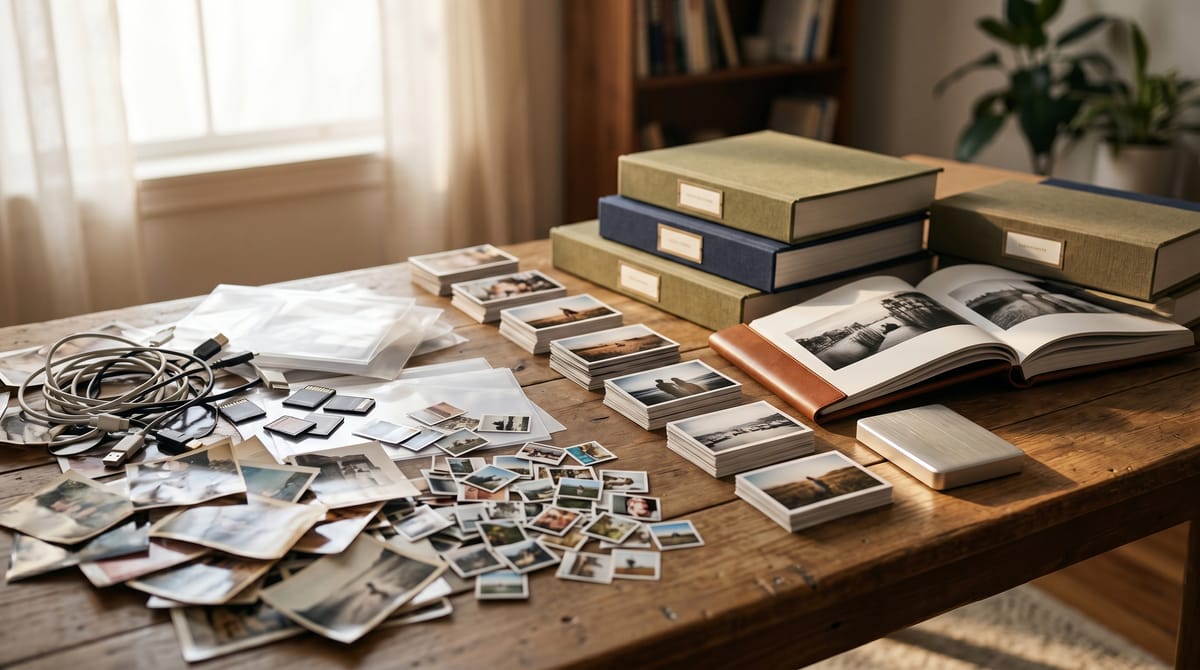
Photo organization is the process of sorting, culling, backing up, and sharing digital images so memories stay searchable, secure, and meaningful. It matters because modern camera rolls fill fast, and without a system, important moments disappear into clutter, duplicates, and forgotten folders.
Key Takeaways
- Google Photos says more than 1.5 billion people use the service each month, which shows photo overload is now mainstream.
- Haven says the typical adult has 1,598 photos on a phone, and many people rarely revisit them, so a simple system matters.
- AI tools can stack similar shots, search memories with natural language, and reduce manual sorting work.
- Printed keepsakes such as photobooks are resurging because tactile formats help people relive events more intentionally.
- From Chaos to Keepsake is a basic, practical course for learners who want a clear workflow for organizing, preserving, and sharing photos.
Table of Contents
- Understanding Photo Chaos and Keepsakes
- Key Concepts and Techniques
- Who Benefits from Learning Photo Organization?
- What Do Students Say?
- Is This Course Worth It?
- About the Creator
- Essential Photo Organization Methods
- Watch Before You Enroll
- Frequently Asked Questions
- Conclusion
- Explore More on TGD
Understanding Photo Chaos and Keepsakes
Photo clutter becomes a memory problem when the images are scattered, duplicated, and hard to find. According to Google Photos, more than 1.5 billion people use the service each month, with over 9 trillion photos and videos stored there. That scale matters because 370 million people search, 440 million share, and 210 million edit photos every month, so photo libraries are not just archives anymore; they are active memory systems.
According to Haven, the typical adult has 1,598 photos on their phone camera roll, and 19% rarely look back at them. Haven also found that 14% often forget special moments, which shows that storage alone does not preserve meaning. According to Adorama, photobooks are seeing a quiet resurgence because people want tactile, more soulful ways to relive important moments. According to Aftershoot, AI-powered culling and editing saved 89 million hours in 2025, which signals a clear shift toward faster organization and more intentional curation.
Want to Learn Photo Organization Step by Step?
This course on The Great Discovery covers these fundamentals in a more structured format.
The Great Discovery (TGD) is a global online course marketplace where creators publish courses and learners discover practical training across business, technology, wellness, and personal growth.
Key Concepts and Techniques
A useful photo system is built from a few repeatable decisions, not from perfect software. Once you understand culling, organizing, backup, curation, and secure sharing, the whole workflow becomes easier to maintain.
Cull before you catalog
Start by removing duplicates, blurry shots, and near-identical frames. A smaller set of keepers is easier to search, back up, and turn into meaningful keepsakes.
Use albums, stacks, and tags
Grouping photos by event, year, or theme helps you find what you need later. According to Google Photos, AI tools can group similar photos with Photo Stacks and support natural-language search, which reduces manual sorting.
Preserve the best images in physical form
Not every photo should stay trapped in a camera roll. Photobooks, prints, and albums turn digital files into objects people actually revisit, which is why tactile keepsakes are regaining attention.
Share privately and securely
Family photos often need limited-access sharing, not public posting. Private links, album sharing controls, and QR-based sharing can keep the audience small while still making memories easy to access.
Build a repeatable review habit
Weekly, monthly, or seasonal reviews prevent the backlog from returning. The goal is not a one-time cleanup; it is a small habit that keeps the library usable as new photos arrive.
Who Benefits from Learning Photo Organization?
This topic helps anyone who wants less clutter and more access to the memories already on their phone. Because the course is basic and practical, it works best for people who want a simple path rather than a technical archive-management deep dive.
Parents and family archivists
Parents often carry the biggest emotional burden because family moments accumulate quickly. A course like From Chaos to Keepsake is a good starting point when the goal is to preserve milestones, reduce clutter, and share photos privately with relatives.
Beginners with overwhelming camera rolls
If your phone is full but your memories feel inaccessible, you need a framework, not more storage. The Basic skill level makes this course approachable for learners who have never built a photo system before.
Creators, freelancers, and photographers
Anyone producing lots of images needs a faster culling and organization workflow. Categories like Sales and Productivity, TGD Success, and Vocational & Tech fit the practical nature of the course, especially when you want to turn a digital backlog into something usable.
People who want keepsakes, not just files
Some learners do not want a perfect catalog; they want books, prints, and shareable memory objects. The course description aligns with that goal by covering organization, keepsake options, and secure sharing in one path.
What Do Students Say?
Students describe the course as practical, clear, and easy to apply. The reviews point to a short learning curve, useful frameworks, and guidance that helps people act on their photo backlog instead of just thinking about it.
"Many content creators overwhelm their audiences with too much information and irrelevant details. Not Philip. This is a quick and easy watch, filled with practical and useful advice. It'll be well worth your time to get your memories in order with the help of this course."— Caroline Guntur
"If you are stuck and overwhelmed with what to do with all your photos- definitely go through Phillip's course. It will give you some clarity on a path to take and how to take it! Plus, having a 1-1 with Phillip is so worth your time!"— Frank Dew
"Love how links are included for following up!"— The Connective
The overall sentiment is consistent: learners want clarity, structure, and practical follow-through. That is a good sign for anyone who needs immediate help turning a messy library into something manageable.
Is This Course Worth It?
Yes, if you want a beginner-friendly path from cluttered camera roll to usable keepsakes.
This course is best for people who want practical photo organization, simple keepsake options, and private sharing guidance without a lot of jargon. The reviews suggest that the teaching style is concise and action-oriented, which fits learners who want to move quickly.
It is not the right fit for someone looking for advanced digital asset management, professional archiving standards, or a deep technical workflow. If you already have a mature system, the value here is likely in the keepsake and sharing ideas rather than in foundational organization theory.
As a next step on TGD, this is a strong choice when you want a structured beginner course from a creator who has a focused mission around family photo legacy. The combination of practical reviews, basic skill level, and a clear outcome makes it a sensible course to start with.
About the Creator
Philip Griffith II builds around one clear idea: leaving a legacy for your family with photos. He has created 2 courses for 54 learners and holds a 5.0 average rating, which suggests a small but focused catalog with strong learner response.
Creator bio: Leaving a legacy for your family with photos.
View Philip Griffith II's creator page on TGD
Essential Photo Organization Methods
These methods help turn a cluttered camera roll into a library you can actually use. The point is to choose a repeatable system that matches how you think, then keep that system small enough to maintain.
| Method | What It Does | Why It Matters |
|---|---|---|
| ABC culling | Sorts photos into keep, maybe, or delete | Reduces indecision and lowers clutter fast |
| Event-based albums | Groups images by trip, holiday, or milestone | Makes searching easier when memories are tied to events |
| Keyword tagging | Adds searchable words like names or places | Helps modern search tools find specific moments later |
| Photo stacks | Collapses similar shots into one view | Removes visual noise from burst shooting and repeats |
| Photobooks | Curates the best images into a printed story | Turns digital files into a keepsake people revisit |
| Private sharing links | Limits who can view an album | Protects family photos while keeping sharing simple |
These methods are most powerful when combined, not used in isolation. The course fits that idea by showing a path from digital overload to organized memories and secure sharing.

Master Photo Organization and Keepsakes with Expert Guidance
Philip Griffith II's course covers these concepts and more, with structured lessons you can complete at your own pace. The table above shows the main decisions, and the course turns them into an action plan.
Enroll in From Chaos to Keepsake: Transform your photo chaos to cherished keepsakes →
Watch Before You Enroll
This video explains how The Great Discovery affiliate program works for course creators and marketers.
Learn how to become an affiliate on The Great Discovery — the best affiliate program for course creators and marketers in 2026. Start earning commissions by sharing courses you believe in.
Ready to Go Deeper?
You have learned the basics of photo organization, keepsake creation, and private sharing. This course takes you from understanding to practical application.
Start Learning Photo Organization on TGD →
Frequently Asked Questions
These are the questions people usually ask when they are trying to tame a large photo library. The answers below focus on the topic itself, with one question about the TGD course for learners who want a guided starting point.
What is the best way to organize thousands of digital photos?
The best system is one you can repeat. Start by deleting obvious duplicates, then group keepers into albums by event, year, or family branch, and add searchable tags or names.
How do AI photo tools help with organization?
AI tools can stack similar photos, surface likely duplicates, and let you search by natural language. According to Google Photos, users already search 370 million times a month, which shows how important fast retrieval has become.
Should I delete duplicate photos or keep them?
In most personal libraries, duplicates add confusion without adding meaning. Keep the strongest version, especially if it is sharper, better framed, or emotionally more useful.
What are the easiest keepsakes to make from digital photos?
Photobooks, printed albums, and small framed prints are the easiest starting points. According to Adorama, photobooks are seeing a quiet resurgence because they make memories feel more tangible and intentional.
How can I share family photos privately and securely?
Use private album links, access controls, or QR-based sharing instead of public posting. Google Photos supports album sharing and natural-language search, which can make private access easier without exposing the whole library.
Is From Chaos to Keepsake good for beginners?
Yes. The course is Basic and focuses on organizing photos, creating keepsakes, and sharing them securely, which makes it a practical starting point for nontechnical learners.
Ready to Go Deeper?
You now know how photo clutter becomes a memory problem and how simple systems solve it. If you want a structured path from cleanup to keepsakes, this course is the natural next step.
Start Learning Photo Organization on TGD →
Conclusion
Photo chaos is a systems problem, not a storage problem. Once you understand culling, tagging, private sharing, and keepsake-making, your camera roll becomes easier to search and more likely to preserve what matters. AI tools can speed up the work, and physical formats like photobooks can turn digital clutter into something people actually revisit.
If you want a guided way to put those ideas into practice, From Chaos to Keepsake: Transform your photo chaos to cherished keepsakes is a sensible next step on TGD. Start with the course here: From Chaos to Keepsake on TGD.
Explore More on TGD
If you want to keep learning on TGD, these links help you browse by category, creator, and homepage. Because this course does not list related courses, the best next browse is the broader category pages that match the course metadata.
- Browse Music courses
- Browse Sales and Productivity courses
- Browse TGD Success courses
- Browse Vocational & Tech courses
- The Great Discovery homepage
- Philip Griffith II creator page
Share Your Knowledge on The Great Discovery
Join Philip Griffith II and hundreds of other creators sharing their expertise. Create and sell your own courses on TGD.