
Handle with Care: Dog Trust | Susan Mimm | TGD
Cooperative care for dogs is a positive-reinforcement approach that teaches pets to participate willingly in grooming, nail trims, ear cleaning, and vet handling. It reduces fear, improves safety, and makes routine care easier by building trust through short, repeatable practice.
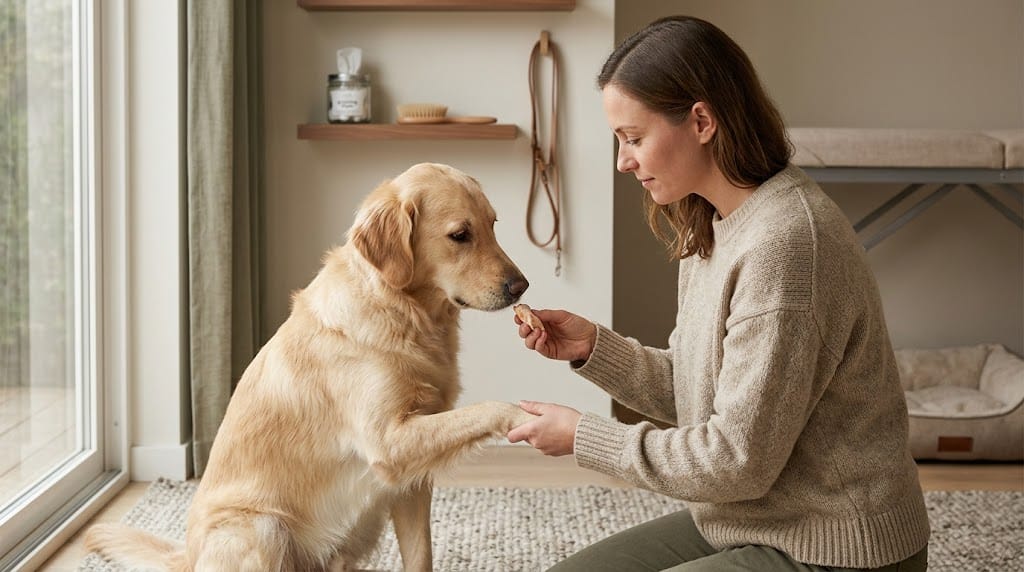
Cooperative care for dogs is a positive-reinforcement approach that teaches pets to participate willingly in grooming, nail trims, ear cleaning, and vet handling. It reduces fear, improves safety, and makes routine care easier by building trust through short, repeatable practice.
Key Takeaways
- Cooperative care uses tiny steps and rewards so dogs learn that handling predicts something good.
- According to Frontiers in Veterinary Science, more than 74% of dogs in North America visit a veterinary clinic each year, so routine handling matters for most households.
- AAHA recommends calm handling practice at home with paws, ears, mouth, and body, plus treats, play, and short positive car rides.
- A 2025 Frontiers survey found minimal restraint was still used for 73.1% of fearful dogs, which shows why stress-reducing preparation matters.
- Susan Mimm's Basic-level TGD course gives pet parents a structured introduction to trust-building care.
Table of Contents
- Understanding Cooperative Care for Dogs
- Key Concepts and Techniques
- Who Benefits from Learning Cooperative Care for Dogs?
- What Do Students Say?
- Is This Course Worth It?
- About the Creator
- Cooperative Care Deep Dive
- Watch Before You Enroll
- Frequently Asked Questions
- Conclusion
- Explore More on TGD
Understanding Cooperative Care for Dogs
Cooperative care helps dogs learn to participate willingly in routine handling instead of resisting it. According to the Merck Veterinary Manual, it uses positive reinforcement to teach nail trimming, grooming, ear cleaning, and other necessary care. That approach matters because trust, not force, changes how dogs experience future handling.
According to Frontiers in Veterinary Science, more than 74% of dogs in North America visit a veterinary clinic each year, and negative experiences can make later visits harder. A 2025 survey of 691 veterinary professionals found minimal restraint was used for 82.7% of calm dogs, 73.1% of fearful dogs, and 51.9% of aggressive dogs. Those numbers show why stress-reducing preparation matters before the dog reaches the exam table.
According to AAHA, calm handling practice at home, treats, short touch sessions, and positive car rides can all help dogs feel safer. Cooperative care is not about perfect obedience. It is about making necessary care more predictable, less frightening, and safer for everyone involved.
Want to Learn Cooperative Care Step by Step?
This course on The Great Discovery covers these fundamentals in a more structured format.
The Great Discovery (TGD) is a global online course marketplace where creators publish courses and learners discover practical training across business, technology, wellness, and personal growth.
Key Concepts and Techniques
The core of cooperative care is predictable, reward-based repetition. Small steps, clear signals, and calm setup reduce stress and make handling easier to repeat.
Consent-based handling
Consent-based handling means the dog gets a chance to stay engaged or pause. If the dog turns away, freezes, or steps off the mat, you treat that as information and slow down.
Desensitization and counterconditioning
Desensitization introduces the smallest possible version of a scary touch or tool. Counterconditioning pairs that tiny step with food or play so the dog learns a better emotional response.
Reward timing
Reward timing tells the dog exactly which behavior earned the treat. A quick reward after a calm paw touch or brief stillness makes the next repetition easier to understand.
Environment setup
Use non-slip surfaces, short sessions, and easy body positions. A good setup lowers the need for restraint and makes it easier for the dog to succeed before fear builds.
Reading stress signals
Watch for lip licking, head turns, stiff body language, and avoidance. Those signals are your cue to end the rep early and keep trust intact.
Who Benefits from Learning Cooperative Care for Dogs?
This topic is most useful for people who want routine care to feel calm, repeatable, and safe. The course sits in Pets, Caregiving, and TGD Success, so it bridges practical dog care and confidence-building for the human on the other end of the leash.
Pet parents with anxious dogs
If vet visits or grooming feel like wrestling, cooperative care gives you a kinder process. Susan Mimm's Basic-level TGD course is a strong starting point because it explains the trust-building mindset before things get complicated.
New dog owners
Early handling habits matter because dogs learn from repetition. New owners can use this topic to prevent nail trims, ear checks, and brushing from becoming future battles.
Groomers and veterinary support staff
Professionals can use the same ideas to reduce stress and improve cooperation during procedures. In the 2025 Frontiers survey, minimal restraint was reported for 73.1% of fearful dogs and 51.9% of aggressive dogs, which shows how much handling strategy influences outcomes. Fear Free Pets' groomer certification shows that the model is already influencing grooming practice.
Caregivers of sensitive or senior dogs
When dogs are older, sore, or easily overwhelmed, tiny steps matter even more. Cooperative care helps you respect limits while still getting necessary care done.
What Do Students Say?
This course is new to the marketplace and hasn't collected reviews yet. Check back after launch for student feedback.
Is This Course Worth It?
Yes, if you want a basic, practical introduction to cooperative care and calmer routine handling.
It is best for pet parents who want a gentler system for nail trims, grooming, and vet prep. The course level and topic make it approachable for beginners.
It is not for readers looking for advanced behavior rehab, crisis intervention, or a professional certification track. If your dog has severe fear or aggression, you may need a veterinarian or qualified behavior professional alongside education.
As a next step on TGD, this course makes sense when you already know that handling can be trained and you want a structured walkthrough from someone focused on dog parenting and holistic care.
About the Creator
Susan Mimm shares wholehearted, holistic dog parenting support. Her profile shows 3 courses, 7 total learners, and an average rating of 0.0.
Creator bio: Wholehearted & Holistic Dog Parenting Support.
Visit Susan Mimm's creator page.
Cooperative Care Deep Dive
These practices show how cooperative care becomes a habit instead of a one-time trick.
| Practice | What It Is | Why It Helps |
|---|---|---|
| Consent test | The dog stays engaged, turns back, or steps away voluntarily. | It shows whether the dog is ready for another step. |
| Touch ladder | Touch paws, ears, mouth, or body for a second or two. | It builds tolerance without overwhelming the dog. |
| Food reward timing | Reward immediately after a calm rep. | It connects handling with something the dog wants. |
| Desensitization | Introduce the smallest version of the trigger. | It lowers the intensity of the handling cue over time. |
| Counterconditioning | Pair the trigger with treats or play. | It changes the emotional meaning of care tasks. |
| Happy visits | Short, low-pressure clinic or grooming visits. | It helps the dog rehearse the environment before procedures. |
Use these ideas to turn handling into short, predictable routines. The course expands that foundation into a guided path for real vet and grooming situations.
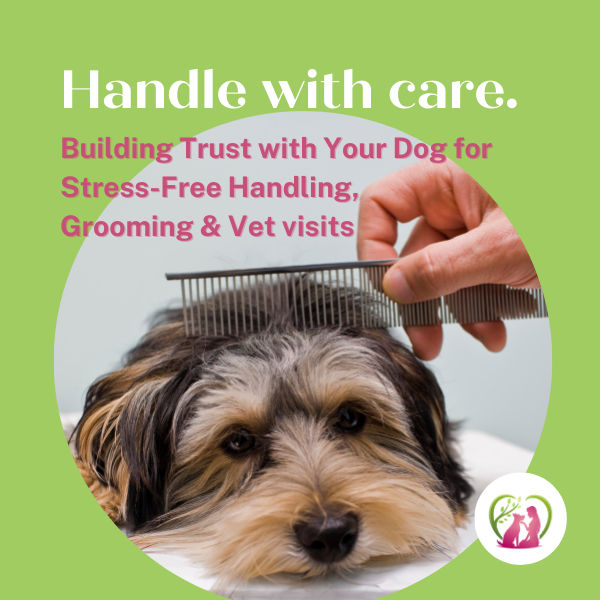
Master Cooperative Care with Expert Guidance
Susan Mimm's course expands these handling skills into a gentle, structured path for everyday dog care, from touch practice to calmer vet and grooming routines.
Enroll in Handle with Care: Building Trust with Your Dog for Stress-Free Vet and Grooming Visits →
Watch Before You Enroll
If you want to understand how sharing courses works on TGD, watch the short affiliate walkthrough below.
Learn how to become an affiliate on The Great Discovery — the best affiliate program for course creators and marketers in 2026. Start earning commissions by sharing courses you believe in.
Frequently Asked Questions
What is cooperative care for dogs?
Cooperative care is positive reinforcement training that teaches a dog to participate willingly in grooming and veterinary handling instead of being forced through it. According to the Merck Veterinary Manual, it works especially well for nail trims, grooming, ear cleaning, and similar care tasks.
How do I start handling practice at home?
AAHA recommends brief, calm touch sessions on paws, ears, mouth, and body, followed by treats or play. Keep the repetition short so the dog stays under threshold and can succeed.
Why do vet visits stress dogs?
According to Frontiers in Veterinary Science, more than 74% of dogs in North America visit a veterinary clinic each year, and negative experiences can make future visits harder. Stress can turn a normal exam into a bigger behavior problem.
Can grooming be trained the same way as vet care?
Yes. The same skills apply because both settings require handling, stillness, and trust. Fear Free Pets says grooming education is built around making the experience as enjoyable as possible for every pet.
What if my dog is already fearful or reactive?
Start smaller, not harder, and work with a veterinarian or qualified behavior professional if fear is severe. A 2025 survey of 691 veterinary professionals found minimal restraint was still used for 73.1% of fearful dogs and 51.9% of aggressive dogs, which shows that stress-reducing methods can still matter.
Is Handle with Care good for beginners?
Yes. Handle with Care is listed as a Basic-level course in Pets, Caregiving, and TGD Success, so it fits pet parents who want a guided introduction rather than advanced behavior training.
Ready to Go Deeper?
You now know why cooperative care works and how to start. This course turns those ideas into a practical path for real vet and grooming routines.
Start Learning Cooperative Care on TGD →
Conclusion
Cooperative care turns routine dog handling into a trainable skill. You learned that short, reward-based practice can reduce fear, make vet and grooming visits easier, and improve safety for dogs and humans. The research is consistent: dogs need more predictability, not more force. If you want a structured introduction to that approach, Handle with Care: Building Trust with Your Dog for Stress-Free Vet and Grooming Visits is a practical next step on TGD.
Explore More on TGD
You can keep learning through related TGD category pages, the homepage, and the creator's profile.
- Browse TGD Success courses
- Browse Caregiving courses
- Browse Pets courses
- The Great Discovery homepage
- Susan Mimm creator page
Share Your Knowledge on The Great Discovery
Join Susan Mimm and hundreds of other creators sharing their expertise. Create and sell your own courses on TGD.