
Healing Through Energy with Reetu Verma on TGD
Healing through energy, also called energy healing or biofield therapy, uses gentle practices such as Reiki, Therapeutic Touch, Healing Touch, and qigong to support relaxation and wellbeing, but it should be treated as complementary care, not a replacement for medical treatment.
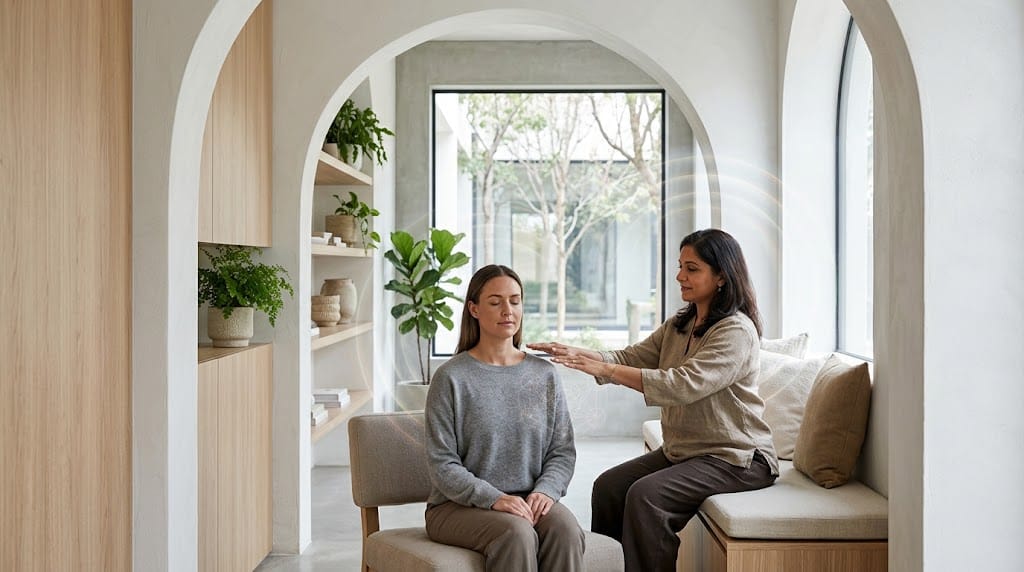
Healing through energy, also called energy healing or biofield therapy, uses gentle practices such as Reiki, Therapeutic Touch, Healing Touch, and qigong to support relaxation and wellbeing, but it should be treated as complementary care, not a replacement for medical treatment.
Key Takeaways
- Energy healing is a broad umbrella, and Reiki, Therapeutic Touch, Healing Touch, and qigong are all part of the wider conversation.
- According to NCCIH, Reiki is a complementary practice and has not been clearly shown to be effective for any health-related purpose.
- According to PubMed, a 2025 evidence map found 353 biofield studies in 352 reports, including 255 randomized controlled trials, which shows the topic is actively studied.
- According to WHO, traditional and complementary medicine is used in 170 countries and by billions of people, so this is a globally relevant wellness subject.
- Reetu Verma's Basic-level course gives beginners a structured way to explore energy balance, mindset, and heart-centered healing without needing prior experience.
Table of Contents
- Understanding Healing Through Energy
- Key Concepts and Techniques
- Who Benefits from Learning Healing Through Energy?
- What Do Students Say?
- Is This Course Worth It?
- About the Creator
- Essential Energy Healing Practices
- Watch Before You Enroll
- Frequently Asked Questions
- Conclusion
- Explore More on TGD
Understanding Healing Through Energy
Energy healing is a complementary approach that focuses on the body's subtle energy or biofield. People use it for relaxation, reflection, and symptom support, but the topic matters because it is both widely used and closely scrutinized. According to WHO, traditional, complementary and integrative medicine is used in 170 countries and by billions of people, and its 2025 advisory work shows a stronger push for evidence, standards, and regulation. That global reach explains why the topic keeps showing up in wellness, caregiving, and personal growth conversations.
According to NCCIH, Reiki is a practice in which hands are placed lightly on or just above a person, yet it has not been clearly shown to be effective for any health-related purpose. According to PubMed, a 2025 evidence map found 353 biofield studies in 352 reports, including 255 randomized controlled trials, but outcomes varied across methods and populations. That mix of reach and mixed evidence is why healing through energy is best understood as supportive self-care and a reflective practice, not a substitute for diagnosis or treatment.
Want to Learn Healing Through Energy Step by Step?
This course on The Great Discovery covers these fundamentals in a more structured format so you can learn the topic with a clear path.
The Great Discovery (TGD) is a global online course marketplace where creators publish courses and learners discover practical training across business, technology, wellness, and personal growth. It is a neutral place to explore structured learning and compare topics by what you want to learn next.
Key Concepts and Techniques
The useful part of energy healing is not mystery; it is practice. The clearest methods combine body awareness, steady attention, and a calm setting, which makes the work easier to understand and easier to evaluate.
Biofield awareness
Many energy-healing systems describe a biofield or subtle energy layer around the body. The practical takeaway is not to chase mysterious language, but to notice how attention, calm, and intention can shape your experience.
Hands-on and hands-above methods
Reiki and similar approaches often use light touch or no touch at all. That keeps the focus on relaxation and presence rather than forceful manipulation.
Breath and grounding
Slow breathing and simple grounding routines help people settle before or after a session. In a course like this, those techniques make the work feel more usable in daily life.
Intention and mindset
The course description emphasizes positive mindset and heart-centered healing, which fits the broader idea that attention and belief can influence how a session feels. That does not prove a medical effect, but it does explain why people find the practice meaningful.
Integration with conventional care
The most responsible approach is to treat energy work as one part of a broader wellbeing routine. NCCIH advises people to tell all health care providers about complementary approaches and to check education, training, licensing, and certifications.
Who Benefits from Learning Healing Through Energy?
This topic helps people who want a calm, reflective approach to wellbeing. Because the course is Basic and marked for General Audiences, and it sits in TGD Success and Mental/Emotional Health, it suits readers who want an accessible starting point rather than a technical deep dive.
Beginners and curious readers
If you are new to energy healing, the course is a sensible starting point because it uses accessible language and a simple frame. It is a practical fit when you want to understand energy balance before exploring deeper methods.
Readers focused on emotional steadiness
People looking for calm routines, reflection, or stress-friendly practices may find the topic useful. The course's emphasis on positive mindset and heart-centered healing makes it especially relevant for that audience.
Wellness practitioners and caregivers
Coaches, caregivers, and wellness guides can benefit from understanding how people talk about energy healing in real conversations. WHO says traditional and complementary medicine is used in 170 countries and by billions of people, so this is a topic many communities already encounter.
Curious but skeptical learners
If you want to compare the subject with conventional care without getting lost in jargon, the Basic level is a good entry point. The TGD course gives you structure first, so you can decide how much of the practice fits your own worldview.
What Do Students Say?
This course is new to the marketplace and hasn't collected reviews yet. Check back after launch for student feedback.
Is This Course Worth It?
Yes, if you want a gentle introduction to energy healing.
It is best for readers who are curious about complementary wellness, want a simple framework for energy balance and mindset, and prefer a course that stays accessible.
It is not for people looking for medical treatment, urgent symptom relief, or an advanced practitioner certification.
Given the Basic level, the general-audience scope, the lack of reviews, and the creator's small but focused teaching profile, this looks like a sensible first step rather than a high-stakes decision. It is most valuable when you want a calm, structured introduction before deciding how far to go.
About the Creator
Reetu Verma is the creator of Healing Through Energy and the founder of Healing Health & Happiness.
Courses created: 3. Total learners: 6. Average rating: 5.0. That is a small but focused profile, which makes the course feel more like a personal introduction than a mass-market program. Visit the creator page
Essential Energy Healing Practices
Energy healing approaches overlap, but they are not identical. The table below compares common methods so readers can see what each one emphasizes and why it is used.
| Practice | What It Emphasizes | Typical Use |
|---|---|---|
| Reiki | Hands lightly on or just above the body to support relaxation | Quiet sessions where the recipient rests and reflects |
| Therapeutic Touch | Practitioner attention near the body's energy field | Supportive care and calming routines |
| Healing Touch | Structured energy-based method with intentional touch and focus | Body-mind balance and comfort |
| Qigong | Movement, breath, and attention coordinated together | Active practice for people who like movement-based routines |
| Distant healing | Uses intention without direct physical contact | Chosen when in-person sessions are not available |
These approaches differ in touch, movement, and setting, but they share a focus on relaxation and intentional attention. The course is useful if you want a beginner-friendly overview of the broader family of practices rather than a single-method manual.
Master Healing Through Energy with Expert Guidance
Reetu Verma's course brings these ideas together in a beginner-friendly path, so you can understand where each technique fits and how to approach energy work with more clarity.
Enroll in Healing Through Energy →
Watch Before You Enroll
This video shows how TGD affiliates share course links and track commissions.
Learn how to become an affiliate on The Great Discovery — the best affiliate program for course creators and marketers in 2026. Start earning commissions by sharing courses you believe in.
Frequently Asked Questions
What is healing through energy?
Healing through energy refers to complementary practices that work with the body's subtle energy or biofield to encourage relaxation, reflection, and wellbeing. Common examples include Reiki, Therapeutic Touch, Healing Touch, and qigong. According to WHO, these approaches sit inside a much larger global category of traditional and complementary medicine.
Is Reiki the same as energy healing?
Reiki is one form of energy healing, but not the only one. According to NCCIH, it is a complementary health approach in which hands are placed lightly on or just above a person, and NCCIH says it has not been clearly shown to be effective for any health-related purpose.
What does the research say about biofield therapies?
The evidence base is large but mixed. According to PubMed, a 2025 evidence map found 353 studies in 352 reports, including 255 randomized controlled trials, yet outcomes varied by method, population, and outcome.
Can energy healing replace medical care?
No. It is best treated as a complementary practice for relaxation or self-care, not a substitute for diagnosis or treatment. NCCIH also advises people to tell all health care providers about complementary approaches they use.
Is Healing Through Energy good for beginners?
Yes. The course is listed at Basic skill level and General Audiences, so it fits readers who want a gentle introduction to energy balance, positive mindset, and heart-centered healing. It is a practical starting point if you want structure without jargon.
How do I choose a practitioner or teacher?
Check education, training, licensing, certifications, and whether the person is willing to coordinate with conventional care. NCCIH recommends sharing all complementary practices with your health providers so care stays aligned.
Ready to Go Deeper?
You've learned the fundamentals of healing through energy, the current evidence picture, and how to approach the topic with healthy caution. This course is a natural next step if you want a simple, structured introduction to the practice.
Start Learning Healing Through Energy on TGD →
Conclusion
Healing through energy is best understood as a set of complementary practices that many people use for relaxation, reflection, and personal wellbeing. The evidence base is broad but mixed, so the responsible way to approach it is as support for healthy routines rather than a replacement for diagnosis or treatment.
If you want a beginner-friendly introduction to energy balance, positive mindset, and heart-centered healing, Reetu Verma's course is a sensible next step on TGD. That balance of openness and caution is what makes the subject useful without overclaiming what it can do. Healing Through Energy on TGD →
Explore More on TGD
If you want to keep learning, start with the category pages that match this topic, then open the homepage and creator page for broader context.
- More TGD Success courses
- More Mental/Emotional Health courses
- The Great Discovery homepage
- Reetu Verma creator page
Share Your Knowledge on The Great Discovery
Join Reetu Verma and hundreds of other creators sharing their expertise. Create and sell your own courses on TGD.