
The Banana Tree Picture Book with Maggie van Galen | TGD
Children's picture books teach young readers through simple plots, vivid illustrations, repetition, and conversation. They build vocabulary, empathy, sequencing, and early decision-making, especially when adults read aloud and connect story events to real-life choices.
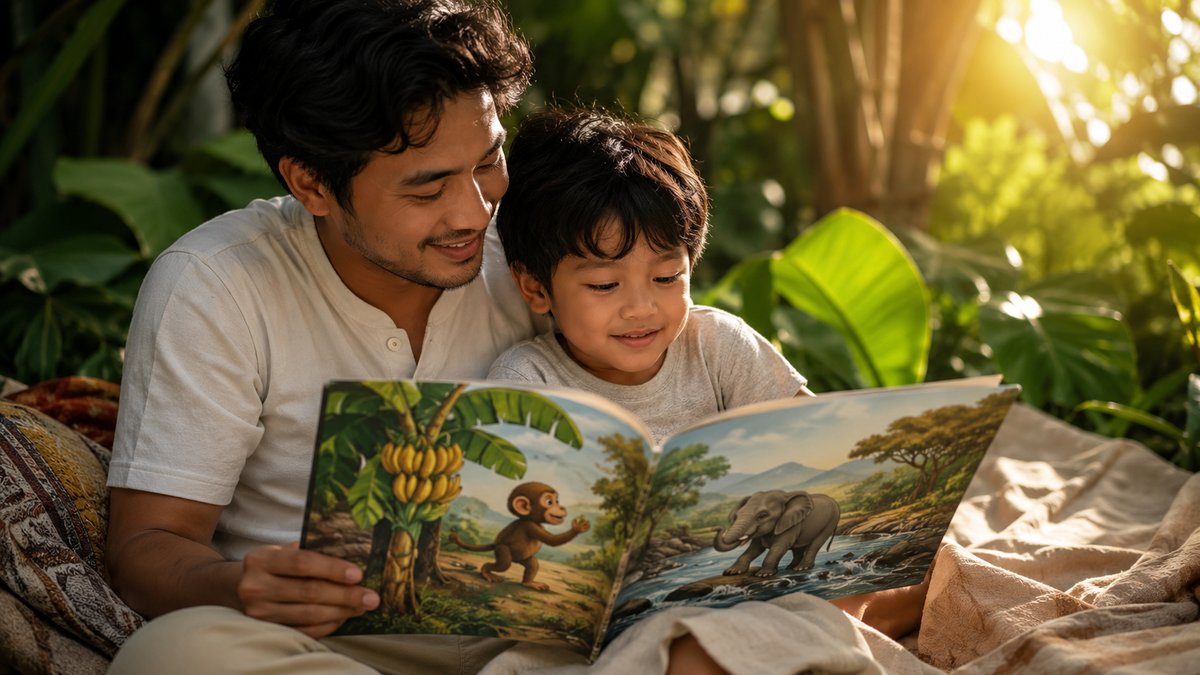
Children's picture books teach young readers through simple plots, vivid illustrations, repetition, and conversation. They build vocabulary, empathy, sequencing, and early decision-making, especially when adults read aloud and connect story events to real-life choices.
Key Takeaways
- Picture books teach best when text and illustrations work together to show feeling, action, and cause-and-effect.
- Repeated reading helps children notice new details, retell events, and remember key ideas such as safety and friendship.
- Adult prompts like "What happens next?" or "Why did the character do that?" turn a short story into active learning.
- Simple crafts and drawing activities help children process the story with their hands as well as their words.
- The Banana Tree course pairs the book with an author reading, a lesson plan on setting, and downloadable crafts.
Table of Contents
- Understanding Children's Picture Books
- Key Concepts and Techniques
- Who Benefits from Learning Children's Picture Books?
- What Do Students Say?
- Is This Course Worth It?
- About the Creator
- Picture Book Teaching Tools
- Watch Before You Enroll
- Frequently Asked Questions
- Conclusion
- Explore More on TGD
Understanding Children's Picture Books
Children's picture books are short, image-rich stories designed to help young readers understand language, emotion, and sequence at the same time. Their value comes from the way pictures carry meaning alongside the words, so a child can follow the story even before they can read every line. That makes picture books especially useful for teaching friendship, safety, routines, and problem-solving.
These books matter because they invite discussion, not just reading. An adult can pause on a page, ask what a character notices, and help a child predict what comes next. That simple routine strengthens comprehension, builds vocabulary, and gives children a low-pressure way to think about consequences. Picture books also make abstract ideas concrete, which is why they are often used to teach setting, behavior, and social choices.
Want to Learn Children's Picture Books Step by Step?
This course on The Great Discovery covers these fundamentals in a structured format, using a story, guided reading, and hands-on extensions.
The Great Discovery (TGD) is a global online course marketplace where creators publish courses and learners discover practical training across business, technology, wellness, and personal growth.
Key Concepts and Techniques
The strongest picture-book lessons use a few repeatable techniques: visual storytelling, guided talk, and simple follow-up activities. These techniques help children understand the story, remember it, and connect it to their own lives.
Visual Storytelling
Illustrations do more than decorate the page. They show emotion, setting, and action that the text may not spell out, which helps young readers infer meaning from context.
Repetition and Rhythm
Repeated phrases and familiar story patterns make a book easier to follow. They also give children a chance to join in, predict lines, and build confidence with language.
Cause and Consequence
Picture books are a simple way to show that choices lead to outcomes. A character who ignores a rule, for example, gives children a safe way to talk about risk before they face it themselves.
Guided Read-Aloud Questions
Questions such as "What do you notice?" or "What should the character do?" turn passive listening into active thinking. That style of reading is especially helpful when the story is about friendship, family guidance, or making responsible choices.
Craft and Reflection Activities
Hands-on follow-ups extend the story beyond the last page. Drawing, cutting, gluing, or coloring lets children rehearse the message visually, which is useful when the goal is memory and comprehension rather than memorization.
Who Benefits from Learning Children's Picture Books?
Picture-book learning is useful anywhere a short story needs to become a deeper conversation. It works well for families, classrooms, and anyone who wants to teach through story instead of lecture.
Parents and Caregivers
Parents who want to talk about friendship, safety, or following rules can use picture books to open the conversation naturally. This course is a strong fit because it includes an author reading, a lesson plan, and crafts that make the story easy to revisit at home.
Teachers and Homeschoolers
Teachers and homeschoolers often need material that is easy to structure around one lesson. The Banana Tree course is especially practical here because it already includes a setting lesson plan and activity ideas that can be adapted to a classroom or home-school routine.
Young Children Learning Social Rules
Children benefit when a story shows a choice, a consequence, and a repair. A character who ignores a safety rule gives adults a gentle way to discuss boundaries without turning the lesson into a lecture.
Storytime Leaders and Librarians
Library programs and storytime groups need books that invite participation. Picture books with clear characters, repeated ideas, and simple emotional stakes are easier to discuss aloud and easier for children to remember afterward.
What Do Students Say?
This course is new to the marketplace and hasn't collected reviews yet. Check back after launch for student feedback.
Is This Course Worth It?
Yes, if you want a story-led way to teach friendship, safety, and setting.
It is best for parents, caregivers, teachers, and homeschoolers who want a single picture book to support reading, discussion, and a few simple activities. The included author reading and crafts make the material easy to extend.
It is not for readers looking for a broad survey of children's literature or a heavy theory course. If you want a practical, story-based entry point that turns one book into a usable lesson, this is a strong next step on TGD.
About the Creator
Maggie van Galen created this course around The Adventures of Keeno & Ernest ~ The Banana Tree, a children's picture book that supports storytime, discussion, and hands-on learning. Available creator stats are sparse, so only limited profile data is listed here.
Courses created: not listed
Total learners: not listed
Average rating: not listed
You can view the creator profile here: Maggie van Galen on The Great Discovery.
Picture Book Teaching Tools
Picture books become stronger teaching tools when adults use a small set of repeatable prompts and activities. The table below shows how common classroom and home-reading techniques support comprehension.
| Tool | What It Teaches | How to Use It |
|---|---|---|
| Picture clues | Inference and observation | Ask children what they notice before reading the text. |
| Repeated phrases | Memory and participation | Invite children to join in when a line appears again. |
| Character choices | Cause and consequence | Pause and ask what may happen if a rule is ignored. |
| Setting details | Context and environment | Point out where the story happens and what makes that place unique. |
| Read-aloud questions | Comprehension and discussion | Use simple prompts like "Why?" "What next?" and "How does that feel?" |
| Craft follow-ups | Retention and expression | Let children draw, color, or build something from the story. |
That mix of story, talk, and making is exactly why this course works as a teaching aid. It gives you a ready-made way to move from reading the book to reinforcing the lesson.

Master Children's Picture Books with Expert Guidance
Maggie van Galen's course covers story reading, setting, and craft-based reinforcement in a simple format you can use at home or in a learning setting.
Enroll in The Adventures of Keeno & Ernest ~ The Banana Tree →
Watch Before You Enroll
Watch this short video overview to understand the main ideas behind The Adventures of Keeno & Ernest ~ The Banana Tree before you enroll.
This video introduces The Adventures of Keeno & Ernest ~ The Banana Tree and previews award-winning author, Maggie van Galen, presents her children's bookThe Adventures of Keeno & Ernest ~ The Banana Tree.
Frequently Asked Questions
What do children's picture books teach?
They teach vocabulary, sequencing, empathy, and social understanding. Because the images and words work together, children can absorb meaning even when they are still developing reading skills.
How do picture books help with emotional development?
Picture books show characters who feel worried, excited, disappointed, or proud. That makes it easier for children to name emotions and talk about them in a safe, familiar setting.
Why are read-alouds important for young children?
Read-alouds let adults slow the pace, ask questions, and explain unfamiliar words. They also help children practice listening, prediction, and retelling.
How can crafts reinforce a story lesson?
Crafts turn the story into a physical memory. When children draw, cut, or build something connected to the book, they are more likely to remember the characters, setting, and main idea.
What is a lesson plan for setting in a picture book?
A setting lesson plan helps children notice where a story happens and why that place matters. It usually asks them to identify the environment, compare it to real life, and explain how the setting affects the action.
What does the TGD course include?
The course includes an author reading, a lesson plan that teaches setting, and four downloadable crafts. It is built to help adults extend the story into a fuller learning experience.
Ready to Go Deeper?
You have learned how picture books teach through story, visuals, and guided discussion. This course takes those ideas and turns them into a ready-to-use reading and activity experience.
Start Learning Children's Picture Books on TGD →
Conclusion
Children's picture books work best when they combine clear storytelling, strong illustrations, and a lesson children can discuss afterward. The Adventures of Keeno & Ernest ~ The Banana Tree uses that format to explore friendship, family rules, and setting while adding an author reading and crafts that extend the learning. If you want a practical next step that turns one story into a fuller teaching moment, this course is a natural fit. Explore the course on The Great Discovery.
Explore More on TGD
Keep learning with related TGD categories and creator resources:
- Parenting courses on TGD
- Arts & Craft courses on TGD
- Kids Content courses on TGD
- TGD Success courses on TGD
- The Great Discovery homepage
- Maggie van Galen creator page
Share Your Knowledge on The Great Discovery
Join Maggie van Galen and hundreds of other creators sharing their expertise. Create and sell your own courses on TGD.