
Circle of Excellence with Mark Siegel | TGD
Circle of Excellence is a self-anchoring visualization exercise that links a physical or imagined circle to a confident resource state, so you can trigger that state on demand for presentations, interviews, performance, or other high-pressure moments.
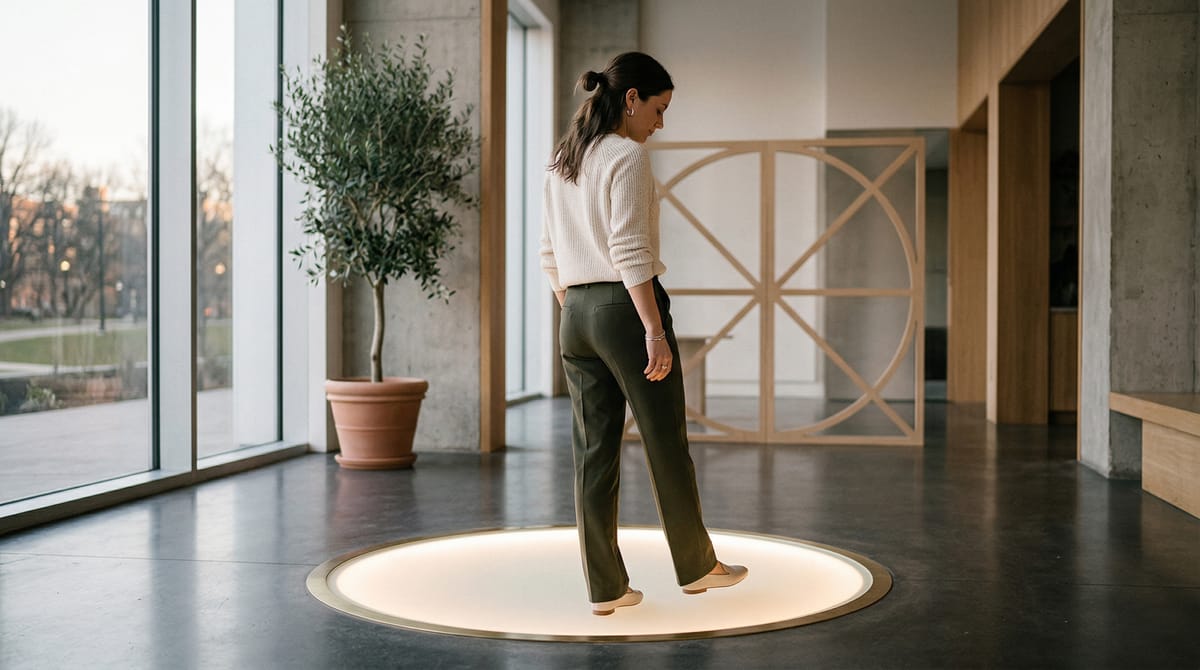
Circle of Excellence is a self-anchoring visualization exercise that links a physical or imagined circle to a confident resource state, so you can trigger that state on demand for presentations, interviews, performance, or other high-pressure moments.
Key Takeaways
- Circle of Excellence pairs a circle with a chosen resource state like confidence, calm, or focus.
- According to NLP World, the method uses spatial and kinaesthetic anchoring and was originally developed by Dr. John Grinder.
- A 2025 Frontiers in Sports and Active Living study summarized by PubMed found imagery, music, and combined cues are common in performance preparation.
- Mark Siegel's course applies the idea to a Wheel of Life framework across 10 life areas, including health, wealth, relationships, growth, and fun.
- The TGD course is a basic, beginner-friendly next step if you want structure instead of just theory.
Table of Contents
- Understanding Circle of Excellence
- Key Concepts and Techniques
- Who Benefits from Learning Circle of Excellence?
- What Do Students Say?
- Is This Course Worth It?
- About the Creator
- Circle of Excellence Techniques
- Watch Before You Enroll
- Frequently Asked Questions
- Conclusion
- Explore More on TGD
Understanding Circle of Excellence
Circle of Excellence is a self-anchoring technique for calling up a useful state on demand. You picture or mark a circle, step into it, and mentally connect that space with a feeling such as confidence, calm, or focus. Repeating the same sensory sequence helps the brain treat the circle like a cue.
According to NLP World, the method was originally developed by Dr. John Grinder and is built around spatial and kinaesthetic anchoring. According to NLP Zentrum Berlin, the circle can be layered with visual, auditory, and kinesthetic cues, then tested in situations such as presentations. That matters because performance states are not random; they can be rehearsed. A 2025 Frontiers in Sports and Active Living study summarized by PubMed found mental imagery was used by 62% of respondents, music by 66%, and both together by 27%. The research suggests that deliberate mental preparation is already a normal part of high-performance routines, and it helps close the gap between knowing a useful idea and using it in real time.
Want to Learn Circle of Excellence Step by Step?
This course on The Great Discovery breaks the circle, the anchoring process, and the life-balance reflection into a simple beginner-friendly path.
The Great Discovery (TGD) is a global online course marketplace where creators publish courses and learners discover practical training across business, technology, wellness, and personal growth.
Key Concepts and Techniques
These are the core parts of the method. They turn a helpful visualization into a repeatable practice you can use before a meeting, a performance, or a difficult decision.
Choose a Resource State
Start with one clear state, such as confidence, calm, curiosity, or focus. A vague goal is hard to recall under pressure, but a specific state gives your body and attention something concrete to reproduce. If you are preparing for a presentation, confidence may be the more useful target than generic positivity.
Build a Distinct Circle
Make the circle visually or physically obvious, even if you only imagine it. NLP Zentrum Berlin recommends pairing the circle with visual, auditory, and kinesthetic anchors so the cue is easier to retrieve later. In practice, that could mean picturing color, changing posture, and using a short phrase that reminds you of the state.
Step In and Rehearse
Once the circle is set, step into it and fully access the chosen state. Breathe the way you would breathe when calm, notice the posture that matches confidence, and let the memory feel present rather than theoretical. This repetition is what makes the anchor usable instead of symbolic.
Test the Anchor in Context
After a few rounds of practice, bring to mind a challenge and see whether the state returns. If it weakens, make the sensory cues more specific and practice again. The goal is not perfection; it is a dependable reset you can trust when the moment matters.
Map the Result to Life Areas
Mark Siegel's course connects the exercise to a Wheel of Life framework across health, wealth, relationships, personal growth, and fun. That matters because the same anchor can support more than one outcome: a steady state for a hard conversation, a cleaner mindset for a work goal, or more consistency in a daily routine.
Who Benefits from Learning Circle of Excellence?
This topic helps people who want a simple way to create a repeatable mental state. Because the course is marked Basic and sits in Self Improvement, Life Balance, Coaching, and TGD Success, it fits learners who want practical structure over advanced theory.
Professionals and Speakers
If you need to perform well in presentations, interviews, or meetings, this is a practical mental reset. The exercise gives you a pre-built cue for confidence, so you spend less time waiting to feel ready and more time using a state you have already rehearsed. Mark Siegel's TGD course is a sensible starting point if you want that process broken down clearly.
Athletes, Performers, and Creatives
Visualization is already part of high-performance culture, and recent research backs that up. According to a 2025 systematic review and multilevel meta-analysis in Behavioural Sciences, imagery practice may reduce anxiety and strengthen self-confidence, and 45-minute sessions once a week for 100 days may be associated with better outcomes. That makes Circle of Excellence a useful routine when you want a fast, repeatable mental state before a performance or game.
Beginners in Self-Improvement
If you are new to anchoring or life-balance work, the course's simple structure matters. The Wheel of Life framing turns a general exercise into something concrete, especially when you want to define success across health, wealth, relationships, growth, and fun. Because the course is basic, it works well as an entry point rather than an advanced detour.
Coaches and Mentors
Coaches often need a simple tool clients can actually remember and repeat. Circle of Excellence is useful because it is compact, sensory, and easy to translate into action. If you work in coaching or personal development, the framework can become a practical anchor you reuse across different goals and sessions.
What Do Students Say?
The available feedback is positive but limited. The one visible review suggests the course can produce useful results, while also hinting that some learners may want more multimedia support.
"Was pleased with my results. Would have appreciated it more if there were videos to go along with the explainations."— Annie Harmon
That is a practical signal rather than broad social proof. The feedback points to value in the framework itself, with a reasonable desire for richer explanation along the way.
Is This Course Worth It?
Yes, if you want a beginner-friendly way to turn a confidence exercise into a repeatable habit.
It is best for people who want a simple structure, want to link the exercise to real life areas, and prefer a practical self-improvement format. The Wheel of Life framing makes it easier to see where a small shift could have an outsized effect.
It is not for people who want deep NLP theory, a clinical intervention, or a heavy multimedia learning experience. The strongest fit is someone who values clarity, direction, and a method they can actually use before stressful moments.
On balance, this is a strong next step on TGD when you want to move from understanding the idea to applying it across daily life. The course's beginner level, focused scope, and personal-growth angle make it a sensible starting point for that kind of work.
About the Creator
Mark Siegel is a small-course creator focused on personal growth and self-design. His bio, Designing The Ultimate You, fits the course's emphasis on defining success in everyday life.
- Courses created: 3
- Total learners: 8
- Average rating: 4.0
Visit Mark Siegel's creator page to see his full catalog and profile.
Circle of Excellence Techniques
These techniques show how the method moves from a nice idea to a repeatable mental routine. Use the table as a quick reference for practice and review.
| Technique | What It Does | When to Use It | Why It Helps |
|---|---|---|---|
| Choose a resource state | Names the feeling you want to access, such as confidence or calm | Before you build the anchor | Gives the exercise a clear target |
| Mark or imagine the circle | Creates a distinct spatial cue on the floor or in the mind | During setup and rehearsal | Makes the anchor easier to remember |
| Step in fully | Pairs posture, breath, and imagery with the chosen state | While practicing the exercise | Strengthens the link between body and state |
| Layer extra senses | Adds color, sound, or a phrase to the circle | When the anchor feels weak | Creates multiple retrieval paths |
| Test under pressure | Checks whether the state returns in a challenge | After several rounds of practice | Shows whether the anchor works in context |
| Reuse as a reset | Brings you back to the anchor before a stressful moment | Before meetings, talks, or performances | Makes the method portable across situations |
Mark Siegel's course takes this kind of practice and shows how to fold it into the Wheel of Life, so the anchor supports more than one situation. That turns a single confidence tool into a broader personal-direction system.
Master Circle of Excellence with Expert Guidance
Mark Siegel's course connects these techniques to the Wheel of Life, so you can turn one useful state into a broader system for health, relationships, growth, and more.
Enroll in Circle of Excellence →
Watch Before You Enroll
Learn how to become an affiliate on The Great Discovery — the best affiliate program for course creators and marketers in 2026. Start earning commissions by sharing courses you believe in.
Ready to Go Deeper?
You've learned the mechanics of Circle of Excellence and how it fits into confidence, imagery, and life-balance work. This course is the natural next step if you want a structured way to practice it.
Start Learning Circle of Excellence on TGD →
Frequently Asked Questions
What is Circle of Excellence?
Circle of Excellence is a self-anchoring exercise that links a circle with a desired state such as confidence, calm, or focus. According to NLP World, the method uses spatial and kinaesthetic anchoring to stabilize those states.
How does Circle of Excellence work?
You choose a resource state, step into the circle, and mentally access that state until the cue feels repeatable. NLP Zentrum Berlin notes that the circle can be built with visual, auditory, and kinesthetic anchors, then tested in difficult situations.
Can Circle of Excellence help with presentations?
Yes, because it gives you a pre-built state to call up before you speak. Psychology Today's 2025 overview of visualization describes performance-enhancing visualization as useful for athletes, musicians, and people preparing for work presentations.
Is visualization common in performance training?
Yes. According to a 2025 Frontiers in Sports and Active Living study summarized by PubMed, 62% of respondents used mental imagery, 66% used music, and 27% used both. A 2025 Behavioural Sciences review also linked imagery practice with less anxiety and stronger self-confidence.
Who is the TGD course best for?
It is best for beginners who want a simple, structured way to apply the exercise across health, wealth, relationships, personal growth, and fun. The course is labeled basic, so it suits learners who want an accessible self-improvement starting point.
What should I expect from the course?
Expect a practical framework built around the Wheel of Life and personal success criteria. The course is useful when you want clarity and direction, not a dense theory-heavy treatment.
Share Your Knowledge on The Great Discovery
Join Mark Siegel and hundreds of other creators sharing their expertise. Create and sell your own courses on TGD.
Conclusion
Circle of Excellence is a practical way to attach a chosen state to a repeatable cue. You learned that the method uses anchoring, sensory rehearsal, and testing to make confidence, calm, or focus easier to access when it matters. The research context also shows that imagery is common in performance settings and can support confidence and anxiety control. If you want a beginner-friendly structure for applying the idea across real life, start with Circle of Excellence on The Great Discovery.
Explore More on TGD
Use these TGD links to keep exploring adjacent self-improvement topics. Because no related courses were provided, the category pages below are the best internal starting points.