Learn Course Creator’s Toolkit with Jenny Rice on TGD
Course creator’s toolkit is the practical mix of adult-learning principles, experience-based activities, simple engagement methods, and clear course structure that helps you design lessons people actually complete, remember, and apply.

Course creator’s toolkit is the practical mix of adult-learning principles, experience-based activities, simple engagement methods, and clear course structure that helps you design lessons people actually complete, remember, and apply.
Key Takeaways
- Adult learners respond best when lessons feel relevant, self-directed, and immediately useful.
- Experience-based learning improves retention because people learn more when they apply ideas, not just read them.
- The T.A.S.K. model helps creators structure lessons around Teach, Apply, Summary, and Knowledge Check.
- According to LinkedIn’s 2025 Workplace Learning Report, 49% of learning and talent development professionals feel pressure from the skills crisis.
- Jenny Rice’s Basic-level TGD course is a practical starting point if you want a repeatable framework for course design.
Table of Contents
- Understanding Course Creator’s Toolkit
- Key Concepts and Techniques
- Who Benefits from Learning Course Creator’s Toolkit?
- What Do Students Say?
- About the Creator
- Topic Deep-Dive Table
- Watch Before You Enroll
- Frequently Asked Questions
- Conclusion
- Explore More on TGD
Understanding Course Creator’s Toolkit
Course creator’s toolkit is the set of methods that turns expertise into learning people can use. It matters because the job of teaching is changing fast. According to the World Economic Forum, 39% of core skills will change by 2030, and 63% of employers say skills gaps are the biggest barrier to transformation. That makes course design a practical skill, not just a creative one.
According to LinkedIn’s 2025 Workplace Learning Report, 84% of employees agree that learning adds purpose to their work. That is why strong courses connect content to real goals, real use cases, and real progress. Adult learning works best when people can see relevance, move at a manageable pace, and practice what they are learning. A good toolkit helps creators replace information overload with structure, application, and clear checkpoints. The result is learning that feels useful on day one and stays useful after the lesson ends.
Want to Learn Course Creator’s Toolkit Step by Step?
This course on The Great Discovery covers adult learning, experience-based learning, simple engagement strategies, and the T.A.S.K. model in a practical format.
Key Concepts and Techniques
Good course design is built from a few repeatable patterns, not from a pile of slides. These concepts are the difference between content that gets watched once and learning that creates real change.
1. Adult Learning Principles
Adults learn best when the material solves a problem they already care about. That means course creators should explain why the lesson matters before they explain how it works.
Practical examples, short explanations, and immediate application all help adults stay engaged. If a learner cannot connect the lesson to work, money, confidence, or a clear outcome, attention drops quickly.
2. Experience-Based Learning
Experience-based learning asks learners to do something with the idea, not just hear about it. This can include reflection prompts, case studies, quick exercises, or small implementation tasks.
The value is retention. People remember what they practice, and they trust what they can test in their own context.
3. Engagement Design
Engagement is not a bonus layer added after the lesson is built. It starts with how the content is sequenced, where examples appear, and when learners are asked to think or respond.
Simple engagement strategies can be more effective than flashy production. A clear question, a short activity, or a focused knowledge check often does more than extra visuals.
4. The T.A.S.K. Structure
T.A.S.K. stands for Teach, Apply, Summary, and Knowledge Check. It gives creators a clean lesson pattern that moves from explanation to practice to recall.
That structure is useful because it reduces confusion for both the creator and the learner. Each lesson has a job, and each job supports completion.
5. Clear Course Flow
A course needs more than isolated lessons. It needs a flow that makes the learner feel progress from the first step to the last.
Clear sequencing lowers friction. When each module builds on the previous one, learners are less likely to feel lost or overwhelmed.
Who Benefits from Learning Course Creator’s Toolkit?
This topic helps anyone who wants to turn knowledge into something teachable, usable, and structured. The course sits in TGD Success, Entrepreneurship and Business, and Content Creator, so it speaks to both business builders and educators.
Aspiring Course Creators
If you want to build your first course, the biggest challenge is usually structure, not expertise. A Basic-level course like this one is a strong starting point because it gives you a practical way to organize what you already know.
Because the course is included through Genius Club membership rather than a standalone USD price, it is a low-friction way to start learning without overcommitting.
Coaches, Consultants, and Service Providers
Service providers often know a lot, but they struggle to package it into a teachable framework. This topic helps you turn repeatable client wisdom into lessons, tools, and course assets.
If you already work in entrepreneurship or business, Jenny Rice’s course is a natural fit because it focuses on practical design, not theory alone.
Content Creators and Educators
Creators need teaching systems that hold attention and encourage completion. Adult-learning design helps you make lessons that feel helpful instead of noisy.
This matters even more now, because LinkedIn says 49% of learning professionals feel pressure from the skills crisis and the World Economic Forum says 39% of core skills will change by 2030.
Teams and Internal Trainers
If you train employees, the goal is usually transfer, not entertainment. Experience-based learning and knowledge checks help people remember what matters and apply it at work.
Courses built this way support faster onboarding, clearer upskilling, and better alignment with changing business needs.
What Do Students Say?
Students describe this course as practical, structured, and immediately usable. The feedback points to a course that helps people move from ideas to action without unnecessary complexity.
"Great content and Ideas. I liked the graphics and automation. The tool kit is pretty amazing and I think this is something to use right away. Thanks for sharing. Enjoy!"— Sheryl McBride
"Mahalo! Jenny. This really helps in course creations."— Leigh Kadooka
"Jenny’s course is a powerhouse of practical strategies for creating impactful, engaging, and transformational online courses. The T.A.S.K model and experience-based learning tips are invaluable, and her clear, passionate teaching makes everything easy to apply."— Glanny Joy Santos
The pattern is consistent: learners value the structure, the usefulness, and the fact that the ideas are easy to apply right away. That is a strong signal for anyone who wants a course that teaches process, not just inspiration.
About the Creator
Jenny Rice is a Course Design Expert with 20+ years of experience. She has created 14 courses for 141 learners and holds a 5.0 average rating. Her bio positions her as a practical builder rather than a purely theoretical teacher.
That matters for this topic because course design improves when the teacher has lived through the common mistakes. Jenny’s background suggests a focus on clear structure, learner engagement, and simple implementation.
Visit Jenny Rice’s creator page on The Great Discovery
Essential Course Design Elements
These elements are the building blocks of courses that people finish and remember. They work together to keep learners oriented, active, and confident.
| Element | What It Does | Why It Matters |
|---|---|---|
| Teach | Introduces the concept clearly and sets up the lesson. | Gives learners the core idea without overload. |
| Apply | Asks learners to use the concept in a small task. | Turns passive viewing into active learning and better retention. |
| Summary | Condenses the lesson into the key points. | Helps learners remember the lesson and organize it mentally. |
| Knowledge Check | Tests understanding with a question or quick review. | Shows whether the learner can recall and explain the idea. |
| Example | Shows how the idea works in real life. | Makes abstract lessons feel concrete and credible. |
| Sequence | Orders lessons so one idea leads naturally to the next. | Reduces confusion and helps learners finish the course. |
These patterns are exactly why structured course design performs better than a simple content dump. Jenny Rice’s course shows how to combine them into a usable framework.
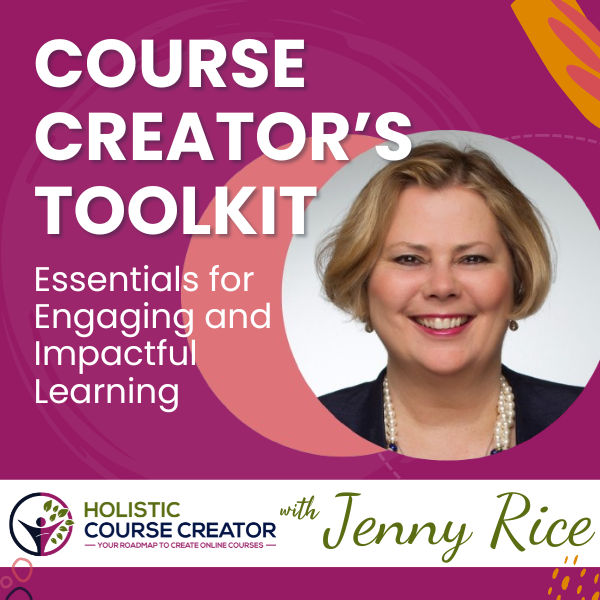
Master Course Creator’s Toolkit with Expert Guidance
Jenny Rice’s course turns these teaching patterns into a simple, repeatable system you can use at your own pace.
Enroll in Course Creator’s Toolkit: Essentials for Engaging and Impactful Learning →
Watch Before You Enroll
Watch this short video overview to understand the main ideas behind Course Creator’s Toolkit: Essentials for Engaging and Impactful Learning before you enroll.
This video introduces Course Creator’s Toolkit: Essentials for Engaging and Impactful Learning and previews you will learn: 1.Discover Key Strategies for Crafting Transformational Courses 2.Master the Science of Adult Learning for Maximum Impact 3.Integrate Essential Experience-Based Learning Elements 4.Implement Simple Solutions for Maximum Engagement 5.Leverage the T.A.S.K Model to Structure Your Course Effectively.
Frequently Asked Questions
These are the questions people usually ask before they build or buy a course about course design.
What is a course creator’s toolkit?
A course creator’s toolkit is the collection of methods, structures, and teaching choices that help turn expertise into a course people can actually use. It usually includes lesson planning, engagement strategies, examples, practice, and checks for understanding.
What is the T.A.S.K. model in course design?
T.A.S.K. stands for Teach, Apply, Summary, and Knowledge Check. It gives each lesson a simple path from explanation to practice to reinforcement, which helps learners stay oriented and remember more.
Why does adult learning matter in online courses?
Adult learners want relevance, autonomy, and practical value. According to LinkedIn’s 2025 Workplace Learning Report, 84% of employees agree that learning adds purpose to their work, so courses work best when they connect to real goals.
How do you make lessons more engaging?
Use short explanations, real examples, reflection prompts, and small application tasks. Engagement rises when learners are asked to do something with the content instead of only consuming it.
Is Course Creator’s Toolkit good for beginners?
Yes. The course is marked Basic, and that makes it a sensible starting point for new creators who want a practical structure. The focus on adult learning and simple engagement also reduces the chance of overcomplicating the first draft.
How much does the TGD course cost?
The course is listed with Genius Club membership access rather than a standalone USD price. That means the pricing is tied to membership access, not a separate checkout amount.
Ready to Go Deeper?
You’ve learned the core ideas behind course creator’s toolkit design. This course takes you from understanding the framework to using it in real course building.
Start Learning Course Creator’s Toolkit on TGD →
Conclusion
Course creator’s toolkit is really about making learning clear, useful, and worth finishing. You learned why adult learning matters, how experience-based practice improves retention, and why a structure like T.A.S.K. can make a course easier to follow. You also saw that the market rewards purpose-driven learning, not information overload.
If you want to turn those ideas into a working course, Jenny Rice’s Course Creator’s Toolkit on The Great Discovery is a logical next step. It gives you a simple framework you can apply immediately, especially if you want to build with more confidence and less guesswork. Explore the course on The Great Discovery
Explore More on TGD
Keep learning with related paths across The Great Discovery.
- Browse TGD Success courses
- Browse Entrepreneurship and Business courses
- Browse Content Creator courses
- Visit The Great Discovery homepage
- Visit Jenny Rice’s creator page
Share Your Knowledge on The Great Discovery
Join Jenny Rice and hundreds of other creators sharing their expertise. Create and sell your own courses on TGD.