Cultural Accessibility with Angela Fowler | TGD
Cultural accessibility is the practice of making museums, performances, heritage sites, and digital cultural experiences usable, understandable, and welcoming for people with different physical, sensory, cognitive, and communication needs, so more people can participate without hidden barriers.
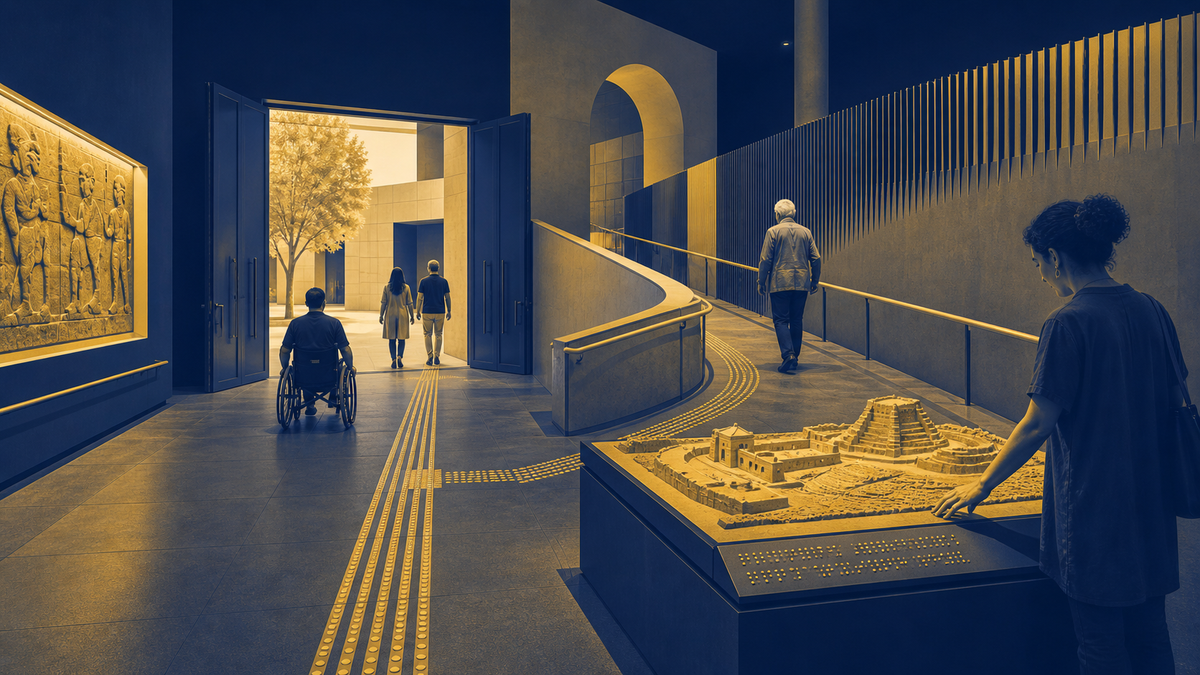
Cultural accessibility is the practice of making museums, performances, heritage sites, and digital cultural experiences usable, understandable, and welcoming for people with different physical, sensory, cognitive, and communication needs, so more people can participate without hidden barriers.
Key Takeaways
- Cultural accessibility covers physical, digital, sensory, and communication access, not just ramps or elevators.
- According to Indigo, 71% of disabled visitors struggle to find clear access information before attending venues.
- According to NEMO, 17 European museum websites averaged 54% digital accessibility in a 2026 audit.
- Good cultural design treats difference as ordinary, which makes participation feel expected instead of exceptional.
- Angela Fowler's course is a practical next step when you want a structured, self-paced way to apply these ideas.
Table of Contents
- Understanding Cultural Accessibility
- Key Concepts and Techniques
- Who Benefits from Learning Cultural Accessibility?
- What Do Students Say?
- About the Creator
- Cultural Accessibility in Practice
- Watch Before You Enroll
- Frequently Asked Questions
- Conclusion
- Explore More on TGD
Understanding Cultural Accessibility
Cultural accessibility matters because culture should be usable before a visitor arrives, not only after they ask for help. It includes access information, route planning, language clarity, sensory considerations, and digital usability. According to Indigo, 71% of disabled visitors struggle to find clear accessibility information before attending venues, so many barriers start online.
According to NEMO, a 2026 audit found only 54% digital accessibility across 17 European museum websites, and 8 of those sites lacked image text alternatives. The U.S. Government Accountability Office also reported in March 2026 that about 73% of museums had at least one building issue posing a potential health or safety concern, while nearly half identified physical accessibility as a concern.
UNESCO's 2025 update to its Framework for Cultural Statistics shows the field is now part of how culture is measured and improved globally. The practical takeaway is simple: accessibility is not a special feature. It is part of the core visitor experience, and every missing detail can decide whether someone participates or stays home.
Want to Learn Cultural Accessibility Step by Step?
This course on The Great Discovery turns those core ideas into a structured path you can follow at your own pace.
Key Concepts and Techniques
Strong cultural accessibility combines information design, physical access, digital usability, and respectful communication. When these pieces work together, visitors can plan, arrive, participate, and leave with fewer surprises.
Accessibility Information
Clear access information should answer the questions people ask before they travel. Publish step-free routes, seating, toilets, captions, quiet spaces, parking, and contact details in plain language.
Physical and Wayfinding Access
Physical access is more than a ramp at the front door. It also includes signage, ticket desks, circulation space, seating, and staff who can guide visitors when the obvious route fails.
Digital Accessibility
Websites and booking systems should use proper headings, alt text, readable contrast, and simple forms. NEMO's 54% digital accessibility finding shows that many cultural sites still lose visitors before they ever arrive.
Sensory and Communication Access
Not every barrier is visible. Loud acoustics, unclear announcements, dense text, and uncaptioned media can exclude visitors with sensory or cognitive needs, so multiple ways to receive information matter.
Difference as Ordinary
The course's core premise is practical: difference is ordinary. That mindset shifts accessibility from a one-off exception to a normal design constraint, which makes planning cleaner and more consistent.
Who Benefits from Learning Cultural Accessibility?
This topic helps anyone who designs experiences for the public, especially when they need to serve mixed abilities without guessing. The supplied data does not list a skill level or price, but it does mark the course as General Audiences and place it in Entrepreneurship and Business, Mindset, TGD Success, and Professional Studies.
Museum and Venue Operators
If you run a site, you need to know where people get stuck before they complain. This is a practical starting point for teams that want common-sense fixes instead of jargon-heavy theory, and Angela Fowler's course fits that need well.
Marketers, Web Teams, and Content Creators
Visitors often decide whether to attend from a web page. Clear access information, plain language, and accessible media help digital teams reduce drop-off and answer the questions people already have.
Program Curators and Educators
Curators and educators shape the experience after people arrive. Cultural accessibility helps them plan interpretation, pacing, and participation so the program welcomes more than one kind of learner.
Community Advocates and Small-Business Owners
If you are building a cultural or community-facing business, this course is a good match because it sits inside business and mindset categories while staying broad enough for general audiences. It is most useful when you want a practical first framework and can work without a stated price or skill level.
What Do Students Say?
This course is new to the marketplace and hasn't collected reviews yet. Check back after launch for student feedback.
About the Creator
Angela Fowler brings a practical accessibility lens to the course, with a profile focused on common-sense solutions. Her creator page lists 4 courses, 9 total learners, and an average rating of 0.0 in the supplied data.
Her bio is short and direct: Common sense accessibility solutions. That fits a topic where clear, usable adjustments usually matter more than grand theory.
Visit Angela Fowler's creator page
Cultural Accessibility in Practice
The easiest way to understand cultural accessibility is to break it into recurring barriers and practical fixes. This table shows the kinds of issues people encounter most often and what to do about them.
| Barrier | What It Looks Like | Practical Fix |
|---|---|---|
| Unclear access information | Visitors cannot tell whether they can enter, park, sit, or ask for help. | Create one plain-language access page that lists the essentials before the visit. |
| Missing alt text | Images and icons are invisible to screen readers. | Add concise alt text for informative images and skip decorative clutter. |
| Inaccessible entrances | Stairs, narrow doors, or heavy doors block entry. | Mark the accessible route clearly and keep it open and unobstructed. |
| Sensory overload | Bright lights, loud audio, or dense crowds make participation difficult. | Offer quiet hours, reduced stimulation, and advance warnings. |
| Confusing booking flow | Too many steps, forms, or jargon make reservations hard to complete. | Simplify fields, reduce friction, and show help options early. |
| Staff uncertainty | Team members do not know what support is available or how to describe it. | Train staff on the actual accommodations you offer and how to explain them clearly. |
This table shows why cultural accessibility is operational, not abstract. Angela Fowler's course builds on these realities with a practical framework you can apply to venues, programs, and digital touchpoints.

Master Cultural Accessibility with Expert Guidance
Angela Fowler's course covers the practical ideas behind inclusive culture, accessible communication, and ordinary difference. It builds on the table above with a clear, self-paced format.
Enroll in Access for Everyone: Cultural Accessibility →
Watch Before You Enroll
Watch this short video overview to understand the main ideas behind Access for Everyone: Cultural Accessibility before you enroll.
This video introduces Access for Everyone: Cultural Accessibility and previews the term “Cultural accessibility” means creating an environment where all people can show up as their best selves.
Frequently Asked Questions
These are the most common questions people ask when they search for cultural accessibility. The answers below focus on practical, citable guidance.
What is cultural accessibility?
Cultural accessibility is the practice of making cultural places and experiences usable for people with different physical, sensory, cognitive, and communication needs. It includes access information, wayfinding, content design, and staff support.
Why does cultural accessibility matter for museums and venues?
It matters because many barriers begin before the visit. According to Indigo, 71% of disabled visitors struggle to find clear accessibility information, and NEMO reported only 54% digital accessibility across 17 European museum websites.
What are the biggest barriers to cultural accessibility?
The biggest barriers are unclear information, inaccessible entrances, missing alt text, poor contrast, confusing booking flows, and sensory overload. The U.S. Government Accountability Office found in March 2026 that about 73% of museums had at least one building issue posing a potential health or safety concern.
How can a small organization improve cultural accessibility quickly?
Start with one clear access page, plain language, alt text, captions, and a staff briefing. Small fixes remove the friction people notice first and often improve both digital and in-person visits.
Is cultural accessibility only about wheelchair access?
No. Wheelchair access is important, but cultural accessibility also includes sensory, cognitive, communication, and digital access. A culturally accessible space treats difference as ordinary instead of exceptional.
Is the TGD course beginner-friendly and what does it cost?
The supplied data marks the course as General Audiences, which suggests a broad introductory level. A price is not included in the supplied listing, so check the course page for current details.
Ready to Go Deeper?
You've learned the core principles of cultural accessibility, from access information to digital and physical barriers. This course takes you from awareness to practical application.
Start Learning Cultural Accessibility on TGD →
Conclusion
Cultural accessibility is the work of removing friction before people experience exclusion. It combines clear access information, accessible websites, usable spaces, and communication that treats difference as ordinary. The research is consistent: Indigo found 71% of disabled visitors struggle to find access information, NEMO reported 54% digital accessibility across a museum sample, and the U.S. Government Accountability Office found nearly half of museums still flag physical accessibility concerns.
If you want a structured way to apply those lessons, start with Access for Everyone: Cultural Accessibility on TGD.
Explore More on TGD
Keep learning with related TGD paths that fit this topic and its broader business-and-mindset context. Because no related courses were supplied, the links below point to category pages and creator resources instead.
- Entrepreneurship and Business courses
- Mindset courses
- TGD Success courses
- Professional Studies courses
- The Great Discovery homepage
- Angela Fowler creator page
Share Your Knowledge on The Great Discovery
Join Angela Fowler and hundreds of other creators sharing their expertise. Create and sell your own courses on TGD.