Drowned World Short Film with Melissa Green-Lavigne | TGD
Drowned-world science fiction uses environmental collapse as both setting and engine. In a story like Drowned World, the flooded landscape traps characters in close quarters, so every resource, lie, and alliance matters more.
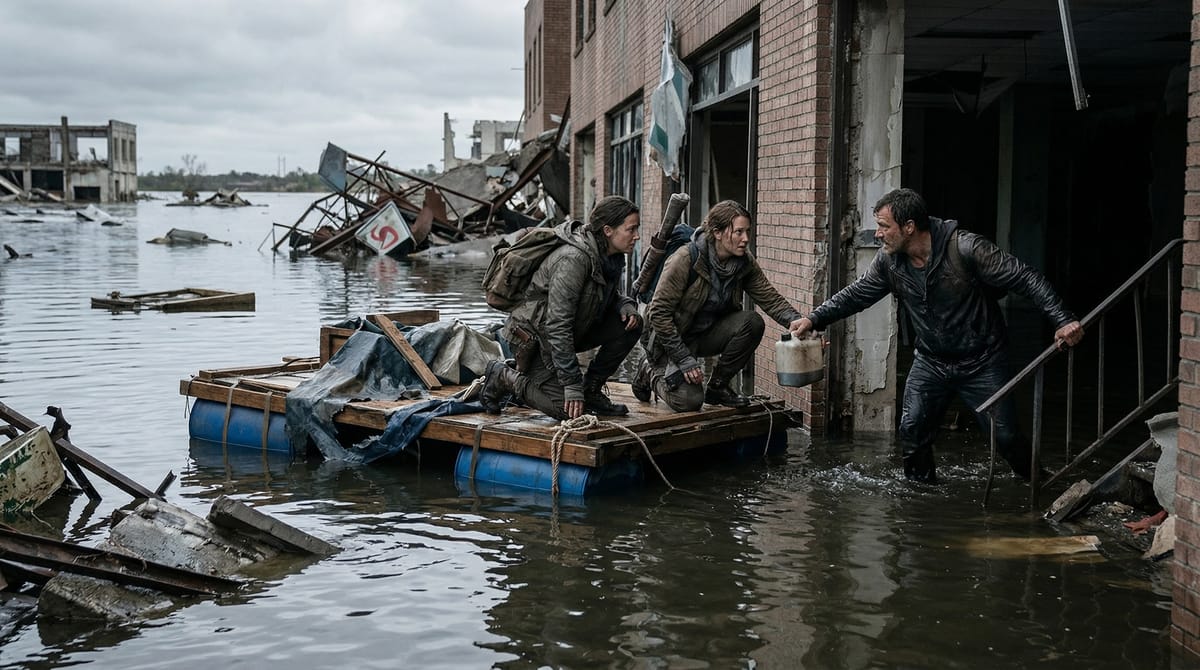
Drowned-world science fiction uses environmental collapse as both setting and engine. In a story like Drowned World, the flooded landscape traps characters in close quarters, so every resource, lie, and alliance matters more. According to Independent Shorts Awards, the premise centers on three survivors on a planet under water trying to outwit and outlast each other.
Key Takeaways
- Flooded-world stories work best when the environment behaves like an active threat, not just a backdrop.
- Small casts raise tension because every decision affects survival, trust, and morale.
- According to IMDb, a 2017 U.S. sci-fi short titled Drowned World was made with an estimated budget of $20,000, which shows how far a focused premise can go.
- Melissa Green-Lavigne's Basic-level course is a good entry point if you want a guided way to study the film's structure and themes.
- The Great Discovery gives readers a practical next step after reading about the film's ideas, so the article can lead naturally into deeper study.
Table of Contents
- Understanding Drowned World
- Key Concepts and Techniques for Flooded-World Storytelling
- Who Benefits from Learning Drowned World?
- What Do Students Say?
- Is This Course Worth It?
- About the Creator
- Essential Flooded-World Storytelling Elements
- Watch Before You Enroll
- Frequently Asked Questions
- Conclusion
- Explore More on TGD
Understanding Drowned World
Drowned-world science fiction uses environmental collapse as both setting and engine. In a story like Drowned World, the flooded landscape traps characters in close quarters, so every resource, lie, and alliance matters more. According to Independent Shorts Awards, the premise centers on three survivors on a planet under water trying to outwit and outlast each other.
That structure matters because it turns scale into pressure instead of spectacle. According to IMDb, a 2017 U.S. sci-fi short titled Drowned World was produced on an estimated $20,000 budget, which is a useful reminder that strong concept design often matters more than expensive worldbuilding. According to The Encyclopedia of Science Fiction, J. G. Ballard's The Drowned World remains a major influence on later climate-change iconography, and Climate Spring shows the theme is still current in 2026 with a longlist for the Climate Fiction Prize and a £10,000 award.
For readers, that combination explains why the topic matters beyond one film. It is a useful model for understanding how speculative fiction turns climate risk into character pressure, how short films stay coherent with tight resources, and why audiences keep returning to flooded-world imagery when they want stories about adaptation, guilt, and survival.
Want to Learn Drowned World Step by Step?
This course on The Great Discovery covers these fundamentals in a more structured format.
The Great Discovery (TGD) is a global online course marketplace where creators publish courses and learners discover practical training across business, technology, wellness, and personal growth. It helps readers move from curiosity to a guided next step when they want to keep learning.
Key Concepts and Techniques for Flooded-World Storytelling
The strongest flooded-world stories use setting, conflict, and symbolism together. The goal is not just to show water everywhere. It is to make the water shape decisions, relationships, and the emotional temperature of every scene.
The Refuge Becomes a Pressure Chamber
In Drowned World, the vintage museum submarine is not just a safe place. It becomes a cramped pressure chamber where scarcity, fear, and personality clashes are impossible to ignore.
That kind of confinement is powerful because it makes the setting feel alive. Every door, corridor, and storage space becomes part of the drama.
Suspicion and Shared Resources
When characters depend on the same shelter, food, or information, trust becomes a survival skill. The journal and prophetic visions in Drowned World show how uncertainty can turn into paranoia.
In practice, a writer can create suspense by making each clue useful but never fully reliable.
Small Cast, Large Consequences
A limited cast concentrates the drama. According to Independent Shorts Awards, Drowned World follows three survivors, which means every disagreement changes the balance of power immediately.
For short films, that kind of compression is especially effective because it keeps the story focused and the emotional stakes legible.
Climate-Fiction Iconography
Flooded skylines, stranded vehicles, and submerged interiors create memorable images fast. According to The Encyclopedia of Science Fiction, Ballard's The Drowned World helped shape the iconography of later climate-change scenarios, so visual motifs carry cultural memory as well as plot value.
That is one reason the theme still resonates in 2026, when climate fiction remains a live publishing and awards conversation.
Who Benefits from Learning Drowned World?
This topic is useful for filmmakers, readers, and anyone studying how stories turn environmental risk into human drama. The course is marked Basic, so it works as an approachable entry point rather than a specialist masterclass.
Indie Filmmakers and Screenwriters
If you write short films, this is a clean model for turning one premise into a full dramatic engine. Melissa Green-Lavigne's course fits the Film and Entertainment Industry categories, so it is a natural starting point if you want to study how a compact story can still feel complete.
The best lesson here is economy. A small cast, one main location, and a strong symbolic object can carry far more weight than a busy plot.
Climate-Fiction Readers and Discussion Leaders
If you teach or discuss climate narratives, Drowned World gives you a compact example of how environmental collapse can become character conflict. According to Climate Spring, the 2026 Climate Fiction Prize longlist spans genres, cultures, and continents, which shows the category still has cultural momentum.
That makes the topic timely for book clubs, classrooms, and film discussion groups that want a grounded way into climate fiction.
Spiritual-Growth Audiences
If you are drawn to stories about fear, faith, and moral pressure, the film's premise gives you a way to discuss those themes without abstraction. That overlap with Spiritual Growth makes the course useful when you want a story example that stays grounded in human choice.
The prophetic journal, the emotional strain, and the question of what people do under existential stress all open the door to deeper reflection.
Beginners Who Want a Clear First Step
If you want a short, structured introduction to the subject, the Basic level is the right signal. The creator's small but focused profile, 4 courses and 8 learners with a 5.0 average rating, suggests a tight teaching style that fits the Film and TGD Success categories.
For a beginner, that combination is useful because it promises a focused lesson rather than a sprawling syllabus.
What Do Students Say?
This course is new to the marketplace and hasn't collected reviews yet. Check back after launch for student feedback.
Is This Course Worth It?
Yes, if you want a compact, beginner-friendly way to study how a flooded-world survival thriller creates tension.
It is best for learners who like film analysis, climate-fiction themes, and stories that explore fear, faith, and trust under pressure. The Basic level and the short-film framing make it easier to absorb quickly without a lot of technical overhead.
It is not the right fit if you want a deep technical class on cinematography, VFX, or advanced production logistics. In that case, the course works better as a story-and-theme primer than as a full craft curriculum.
Because there are no reviews yet, the best signals are the course description, the Basic level, and the creator's focused catalog. As a next step on TGD, it makes sense when you want a guided, creator-led look at how a small-budget concept can still feel vivid and memorable.
About the Creator
Melissa Green-Lavigne has created 4 courses for 8 learners and holds an average rating of 5.0.
Courses created4Total learners8Average rating5.0
Her bio on TGD is "Melissa Lavigne - Filmmaker," which fits the course's focused, film-centered perspective. Learn more on her creator page: Melissa Green-Lavigne on The Great Discovery.
Essential Flooded-World Storytelling Elements
This table breaks the topic into reusable story tools. Read it as a practical reference for writing, analyzing, or teaching flooded-world survival stories.
| Element | What It Does | Why It Matters |
|---|---|---|
| Environmental pressure | Makes the setting an active threat instead of background scenery. | Creates tension even in quiet scenes. |
| Limited refuge | Concentrates characters into one shelter or location. | Forces conflict, cooperation, and compromise. |
| Small cast | Reduces viewpoint clutter and focuses attention. | Makes every decision feel personal and consequential. |
| Unreliable information | Introduces visions, journals, rumors, or half-truths. | Builds suspense by keeping motives unclear. |
| Symbolic objects | Gives the story a recurring visual or emotional anchor. | Helps the audience remember the theme after the scene ends. |
| Climate iconography | Uses submerged cities, wreckage, and isolation to signal collapse. | Connects the story to a larger cultural conversation. |
Drowned World uses several of these elements at once, which is why it works as a strong case study for short-form climate fiction and survival drama. If you understand the table, you understand the story mechanics the course is built around.

Master Drowned World with Expert Guidance
Melissa Green-Lavigne's course covers these storytelling concepts in a focused, beginner-friendly way. It is a good next step if you want to move from analysis into a clearer understanding of how the film's structure works.
Enroll in Drowned World (Short Film) →
Watch Before You Enroll
This short video explains how affiliate sharing works on The Great Discovery, which is useful if you want to recommend courses after you understand them.
Learn how to become an affiliate on The Great Discovery — the best affiliate program for course creators and marketers in 2026. Start earning commissions by sharing courses you believe in.
Frequently Asked Questions
These are the questions readers usually ask when they want to understand flooded-world survival stories and the ideas behind Drowned World.
What makes flooded-world stories so effective?
Flooded-world stories are effective because they turn the environment into pressure. In Drowned World-style narratives, the characters cannot escape the setting, so every decision about shelter, food, or trust matters immediately.
That is why the setting feels like an active participant instead of a passive backdrop.
How do filmmakers build suspense in a short survival film?
Filmmakers build suspense by limiting movement, narrowing information, and increasing mistrust. According to Independent Shorts Awards, Drowned World follows three survivors trying to outwit and outlast each other, which is a classic tension setup for short-form storytelling.
That structure works because the conflict is immediate and easy to follow.
Why is climate fiction still relevant in 2026?
Climate fiction stays relevant because it translates abstract environmental anxiety into human stakes. According to Climate Spring, the 2026 Climate Fiction Prize longlist spans genres, cultures, and continents, showing that the category continues to evolve.
The topic stays current because audiences still want stories that make large-scale risk feel personal.
What is the connection between Drowned World and J. G. Ballard?
J. G. Ballard's The Drowned World helped define the visual language of later climate-collapse stories. According to The Encyclopedia of Science Fiction, that influence still matters for how audiences recognize flooded-city imagery today.
That legacy is part of why the title still carries so much cultural weight.
Can a low-budget short film still feel cinematic?
Yes. According to IMDb, Drowned World had an estimated budget of $20,000, which is a reminder that scale comes from design choices, not only from spending. Strong sound, framing, and blocking can make a short film feel much bigger.
The right visual plan can make a confined space feel expansive.
Is the Drowned World course beginner-friendly?
Yes. The course is marked Basic, so it is suitable for learners who want an accessible starting point. The creator's small but focused profile, 4 courses and 8 learners with a 5.0 average rating, suggests a tightly defined teaching style.
That makes it a good fit for anyone who wants a clear first step rather than an advanced technical deep dive.
Ready to Go Deeper?
You have the core ideas now: environment as antagonist, trust under pressure, and symbolic storytelling. This course takes those ideas from understanding to practical application on The Great Discovery.
Start Learning Drowned World on TGD →
Conclusion
Drowned World is a strong example of how a small survival story can carry big ideas. You learned how flooded-world fiction uses environmental pressure, limited space, mistrust, and symbolic images to create suspense, and why the theme still resonates in 2026 climate-fiction conversations that include a £10,000 prize and new longlists. If you want the same ideas in a guided, creator-led format, Melissa Green-Lavigne's course on The Great Discovery is a logical next step. Explore Drowned World on TGD.
Explore More on TGD
If you want to keep learning, these TGD destinations are the best next stops.
- Film courses on TGD
- Spiritual Growth courses on TGD
- TGD Success courses on TGD
- Entertainment Industry courses on TGD
Visit the TGD homepage or the Melissa Green-Lavigne creator page for more.
Share Your Knowledge on The Great Discovery
Join Melissa Green-Lavigne and hundreds of other creators sharing their expertise. Create and sell your own courses on TGD.