
Energizing Mobility Flow Routine | Angelica Alberto | TGD
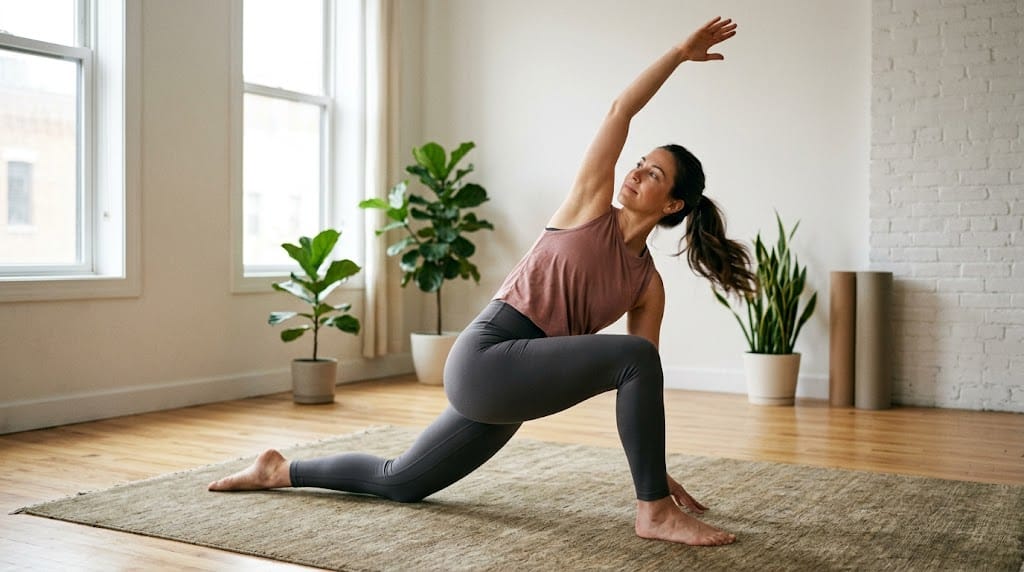
Mobility flow is a sequence of gentle, controlled movements that improve joint range, wake up muscles, and prepare the body for daily activity. It combines dynamic stretching with smooth transitions so people move with less stiffness and more control.
Energizing Mobility Flow Routine | Angelica Alberto | TGD
Mobility flow is a sequence of gentle, controlled movements that improve joint range, wake up muscles, and prepare the body for daily activity. It combines dynamic stretching with smooth transitions so people move with less stiffness and more control.
Key Takeaways
- Mobility work improves how joints move through range of motion; Harvard Health says moving a joint farther, gently, can improve mobility and flexibility.
- Mayo Clinic notes warmed-up muscles stretch easier and with less injury risk, which is why mobility flows start with light movement.
- ACSM says balance, flow, and core strength are trending, and mobility-focused class participation rose 27% from 2022 to 2024.
- Cleveland Clinic says a few minutes of daily dynamic stretching can improve muscle elasticity, joint mobility, and physical function.
- Angelica Alberto's Basic, 12-minute routine is a practical entry point for beginners who want structure and encouragement.
Table of Contents
- Understanding Mobility Flow Routines
- Key Concepts and Techniques
- Who Benefits from Learning Mobility Flow?
- What Do Students Say?
- Is This Course Worth It?
- About the Creator
- Mobility Flow Fundamentals
- Watch Before You Enroll
- Frequently Asked Questions
- Conclusion
- Explore More on TGD
Understanding Mobility Flow Routines
Mobility flow is practical movement training for everyday function. It uses controlled, rhythmic motions to take joints through a useful range and help the body feel ready for daily tasks.
According to Harvard Health, moving a joint as far as it can go and gently pushing a little farther can improve mobility and flexibility. Mayo Clinic says warmed-up muscles stretch easier and with less injury risk, while Cleveland Clinic notes that a few minutes of daily dynamic stretching can improve muscle elasticity, joint mobility, and overall physical function.
ACSM's 2026 fitness trends report ranks Balance, Flow, and Core Strength at #5 and says participation in yoga, Pilates, and mobility-focused classes rose 27% between 2022 and 2024. Harvard Health also notes mobility problems affect about 14% of U.S. adults, which explains why mobility work matters for both performance and comfort.
Want to Learn Mobility Flow Step by Step?
This course on The Great Discovery covers these fundamentals in a more structured format.
The Great Discovery (TGD) is a global online course marketplace where creators publish courses and learners discover practical training across business, technology, wellness, and personal growth.
Key Concepts and Techniques
Mobility routines work best when you understand range, sequencing, and control. The goal is not to force the body into extreme positions. The goal is to move smoothly and build a repeatable habit that feels easier than a full workout.
Dynamic Range of Motion
Dynamic range of motion means moving a joint repeatedly through a comfortable path instead of holding one stretch. Arm circles, leg swings, and spinal rotations are simple examples that prepare the body for more activity.
This matters because the body often moves better after it is already moving. That is why mobility flows usually begin with small, easy motions.
Warm-Up Before Deeper Movement
A light warm-up raises tissue readiness before you ask for a larger stretch. Mayo Clinic notes that warmed-up muscles stretch easier and with less injury risk.
In practice, this might look like marching in place, shoulder rolls, or gentle torso turns before any longer reach.
Controlled Transitions
A flow is not just a set of exercises. It is the way one movement leads into the next without jerky stops or strain.
That control is useful for mornings, desk breaks, and people who want a calm reset before work or exercise.
Breathing and Pace
Breathing helps keep tension from building during mobility work. A steady exhale often makes it easier to move a little farther without forcing the position.
Pace also matters. A short routine that feels repeatable will usually beat a long routine that people avoid.
Who Benefits from Learning Mobility Flow?
This topic helps anyone who wants to move with less stiffness and more confidence. ACSM says participation in yoga, Pilates, and mobility-focused classes rose 27% from 2022 to 2024, and Harvard Health notes mobility problems affect about 14% of U.S. adults, which makes a Health and Fitness and Self Improvement routine a simple entry point for beginners.
Beginners and Returners
The Basic level means you do not need prior mobility experience. Angelica Alberto's course is a good first routine if you want something short and supportive.
Desk Workers and Screen-Heavy Professionals
Long sitting often shows up as stiff hips, tight hamstrings, and a cranky neck. A mobility flow gives those areas a chance to move in multiple directions, which can feel better before the day gets busy.
The course description specifically calls out neck and lower-back discomfort, so it fits people who want a practical morning reset.
Busy People Who Need a Quick Morning Routine
A 12-minute format works when consistency matters more than perfection. It is easier to keep a routine when the first step is small.
If you want movement that fits before coffee, before meetings, or before a walk, this kind of routine is a sensible match.
Fitness Learners Who Want Better Warm-Ups
Mobility is useful before strength work, cardio, and sport because it prepares joints for the shapes they need to make. Cleveland Clinic notes that even a few minutes of daily dynamic stretching can improve function.
This is where a basic guided flow can help you learn the pattern before you build your own sequence.
What Do Students Say?
Early feedback is positive and focused on clear instruction.
"Dr Angelica has a soft encouraging manner to get you moving. Each move was well explained and I am already seeing the benefits of starting my day with this routine. Highly recommend."— Bri Campano
The available feedback points to clear instruction, a calm coaching style, and quick wins that are easy to notice. That is a useful signal for readers who want a routine they will actually keep doing.
Is This Course Worth It?
Yes, if you want a simple, beginner-friendly mobility routine you can use right away. The course suits people who want encouragement, clear sequencing, and a short format that supports consistency.
It is not the right fit for someone looking for advanced rehab work, heavy conditioning, or a highly technical mobility system. It also is not designed to replace individualized care for persistent pain.
The available review is highly positive and matches the course's calm tone. If you want a gentle daily flow that teaches the basics without clutter, this is a sensible next step on TGD.
About the Creator
Angelica Alberto is a small but focused creator profile with a clear wellness angle. The available information shows 2 courses created, 9 total learners, and a 5.0 average rating. Her bio is listed as Dr. Angelica Alberto.
- Courses created: 2
- Total learners: 9
- Average rating: 5.0
Visit Angelica Alberto's creator page to explore her courses and profile.
Mobility Flow Fundamentals
Good mobility flows usually combine a few simple movement families. These are the building blocks that make a short routine feel balanced instead of random.
| Movement | What It Trains | Why It Helps |
|---|---|---|
| Neck turns and nods | Cervical mobility | Useful after screen-heavy work and for reducing morning stiffness. |
| Shoulder circles | Upper-body range and control | Helps prepare the shoulders for reaching, lifting, and posture resets. |
| Spinal rotations | Thoracic movement | Supports twisting, turning, and easier trunk motion during daily tasks. |
| Hip circles | Pelvic and hip mobility | Helps walking, squatting, and standing transitions feel smoother. |
| Ankle pumps and circles | Lower-leg readiness | Useful before walking, cardio, or any routine that starts from standing. |
| Hamstring sweeps | Posterior-chain mobility | Supports reaching, hinging, and bending with less tugging at the back of the legs. |
These patterns explain why a short flow can feel surprisingly complete. Dr. Angelica's course gives you a guided example of how to sequence them into a routine that is easy to repeat.

Master Mobility Flow with Expert Guidance
The table showed how small movements can unlock the neck, spine, hips, and ankles. Angelica Alberto's course turns those ideas into a short guided routine that is easy to practice consistently.
Enroll in Energizing Mobility Flow Routine →
Watch Before You Enroll
Learn how to become an affiliate on The Great Discovery — the best affiliate program for course creators and marketers in 2026. Start earning commissions by sharing courses you believe in.
Frequently Asked Questions
These questions cover the most common reasons people look for mobility work. The answers focus on how to use the practice, not fitness jargon.
What is a mobility flow routine?
It is a sequence of controlled movements that moves joints through a useful range and helps the body feel ready for daily activity. According to Cleveland Clinic, a few minutes of daily dynamic stretching can improve muscle elasticity, joint mobility, and physical function.
What is the difference between mobility and flexibility?
Flexibility is about how far a muscle can lengthen, while mobility is about how well a joint and surrounding tissues move through a range. Harvard Health and Mayo Clinic both emphasize range-of-motion work as part of better movement.
Should I warm up before mobility exercises?
Yes. Mayo Clinic says warmed-up muscles stretch easier and with less injury risk, so a light warm-up usually comes first. That is why many mobility flows begin with easy movement before deeper ranges.
Can mobility help with neck and lower-back stiffness?
It can help when stiffness comes from sitting, low activity, or being in one position for too long. Gentle movement often improves how those areas feel, but sharp or persistent pain should be checked by a clinician.
How long should a mobility routine take?
Even a few minutes can help when the routine is done consistently. The course's 12-minute format is a practical example of a routine that is short enough to repeat most days.
Is this course good for beginners?
Yes. It is labeled Basic and it uses a soft, encouraging teaching style that makes it approachable for people who want structure without complexity.
Ready to Go Deeper?
You've learned the fundamentals of mobility flow and why short daily routines matter. This course takes you from understanding to practical application.
Start Learning Mobility Flow on TGD →
Conclusion
Mobility flow routines combine gentle movement, range-of-motion work, and smooth transitions. They help the body move more comfortably in daily life. Research from Harvard Health, Mayo Clinic, Cleveland Clinic, and ACSM shows why this style has become more mainstream: it supports flexibility, warm-up readiness, and functional movement.
If you want a calm, beginner-friendly example that connects those ideas into a usable daily habit, Angelica Alberto's course is a logical next step. Start Learning Mobility Flow on TGD →
Explore More on TGD
These links help you keep exploring wellness and self-improvement topics on TGD. Since there are no related-course entries in the source data, category pages and creator links are the clearest next stops.
- Health and Fitness courses
- Self Improvement courses
- TGD Success courses
- The Great Discovery homepage
- Angelica Alberto's creator page
Share Your Knowledge on The Great Discovery
Join Angelica Alberto and hundreds of other creators sharing their expertise. Create and sell your own courses on TGD.