Learn Muscle Testing with Dani Green on TGD
Muscle testing is a manual yes-or-no assessment method that asks whether a body position or response changes under pressure. It is highly technique-sensitive, so setup, force, timing, and interpretation matter as much as the question being asked.
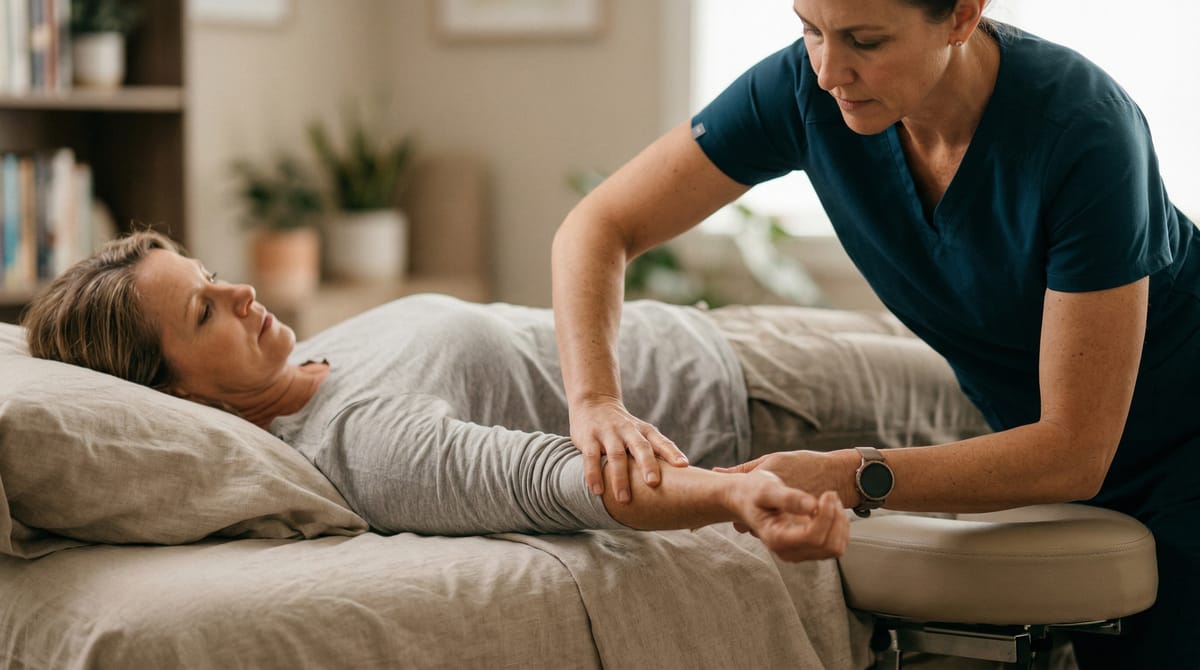
Muscle testing is a manual yes-or-no assessment method that asks whether a body position or response changes under pressure. It is highly technique-sensitive, so setup, force, timing, and interpretation matter as much as the question being asked.
Key Takeaways
- Muscle testing is usually taught as a submaximal manual break test, not a magic shortcut.
- According to NCBI MeSH, applied kinesiology frames muscle testing as a diagnostic and therapeutic system, but the method remains controversial.
- A 2025 review screened 8,720 records and included 7 studies, with reliability ranging from nonexistent to very strong.
- Beginners get better results when they standardize posture, pressure, timing, and the exact wording of questions.
- Dani Green's Basic-level Genius Club course is a practical next step if you want guided practice instead of guessing your way through the technique.
Table of Contents
- Understanding Muscle Testing
- Key Concepts and Techniques
- Who Benefits from Learning Muscle Testing?
- What Do Students Say?
- About the Creator
- Essential Muscle Testing Reference Table
- Watch Before You Enroll
- Frequently Asked Questions
- Conclusion
- Explore More on TGD
Understanding Muscle Testing
Muscle testing is a way of reading a yes-or-no response from the body through manual resistance. According to NCBI MeSH, applied kinesiology defines the practice as applying muscle testing diagnostically and therapeutically, but that definition does not prove the method works reliably in every context. What matters for readers is the gap between the idea of a readable body response and the evidence supporting it.
According to a 2025 systematic review in PubMed, researchers screened 8,720 records and included only 7 studies. Reliability ranged from nonexistent to very strong, and nonmusculoskeletal challenge procedures were not recommended for clinical use. A 2008 NCBI Bookshelf review likewise concluded there was insufficient evidence for diagnostic accuracy, therapeutic benefit, or established validity.
That means muscle testing is best understood as a technique-sensitive assessment method rather than a proven diagnostic shortcut. It can still be useful as a self-observation practice, but the results depend heavily on how the test is performed, what question is asked, and how the response is interpreted.
Want to Learn Muscle Testing Step by Step?
This course on The Great Discovery covers the basics of reading yes-or-no responses and practicing the technique with more structure.
Key Concepts and Techniques
The core skill in muscle testing is consistency. If the setup changes, the result can change too, which is why the method has to be learned carefully.
Submaximal Manual Break Tests
Applied kinesiologists often use submaximal break tests, where the tester applies pressure until the muscle response changes. The 2011 review in PMC notes that studies should report exact force, duration, and timing so results can be replicated.
Standardized Questions
Muscle testing works best when questions are simple and binary. A clear yes-or-no prompt reduces ambiguity, while vague or emotionally loaded wording can make the response harder to interpret.
Replication and Reliability
The same question can produce different outcomes if posture, breathing, fatigue, or tester expectations differ. That is why the 2025 review matters: it found reliability ranging from nonexistent to very strong, which is a warning against assuming every muscle test means the same thing.
Self-Observation, Not Instant Certainty
For beginners, muscle testing can be used as a reflective tool to notice tension, hesitation, or internal consistency. It should not be treated as a replacement for professional evaluation when health decisions are involved.
Who Benefits from Learning Muscle Testing?
Different people approach muscle testing for different reasons, and the topic matters most when the goal is better self-awareness or more structured practice. Because the course is listed as Basic level and falls under TGD Success, Mindset, Self Improvement, and Habit Change, it is aimed at learners who want a simple entry point.
Curious Beginners
If you are new to the subject, the biggest benefit is learning the mechanics without adding unnecessary complexity. Dani Green's Genius Club course is a good starting point for people who want guided practice and do not want to invent their own system from scratch.
Coaches and Bodywork Practitioners
Practitioners may use muscle testing as a conversation starter about awareness, habit patterns, or client feedback. The literature cautions against overclaiming diagnostic power, so the value is in structured observation, not certainty.
Mindset and Habit-Change Learners
People working on habits often want a quick way to check internal resistance or alignment. Muscle testing can feel useful in that context because it invites a pause before action, which fits the Habit Change category of the course.
Evidence-Minded Skeptics
If you want to understand why the method is controversial, this topic is worth learning even if you stay unconvinced. The evidence is mixed, but the technique itself is influential enough that informed readers should know what it claims and where it falls short.
What Do Students Say?
The available feedback is positive, but the review sample is very small. The course currently shows a 5.0 rating and one review, so the written feedback should be read as a useful signal rather than a broad consensus.
"Dani continues to amaze me with her skill and ability to explain the unexplainable. Thank you, Dani!"— Denise Nickel
The sentiment is enthusiastic and personal. It suggests that the course may be strongest for learners who value clear instruction and a supportive teaching style.
About the Creator
Dani Green is the creator behind this course and brings a body-centered, practical lens to the topic. Her creator bio identifies her as the creator of Higher Path Hypnosis, which fits a broader interest in self-regulation and inner awareness.
Courses created: 8
Total learners: 9
Average rating: 5.0
If you want to explore more of her work, visit her creator page on The Great Discovery: Dani Green on TGD.
Essential Muscle Testing Reference Table
Use this table as a practical reference for what muscle testing is trying to measure and why results can vary. The method becomes easier to understand when you separate the test format from the interpretation.
| Concept | What It Means | Why It Matters |
|---|---|---|
| Manual break test | The tester applies gentle force while the person resists. | It is the core mechanic behind many muscle-testing demonstrations. |
| Binary prompt | The question is framed as a yes-or-no choice. | Simple wording reduces ambiguity and makes patterns easier to notice. |
| Standardization | Force, posture, and timing stay as consistent as possible. | According to the 2011 PMC review, exact force, duration, and timing should be reported for replication. |
| Challenge procedure | A stimulus is introduced before the test is repeated. | The 2025 PubMed review found challenge-based methods could show nonexistent reliability and were not recommended for clinical use. |
| Expectation bias | Beliefs about the answer influence how the test is read. | It helps explain why the same technique can produce different results in different hands. |
| Self-observation | The test is used to notice internal tension or hesitation. | This is the most responsible way beginners can use the method without overclaiming diagnosis. |
This framework is exactly why a guided course can help. Dani Green's lesson structure can make the technique easier to practice while keeping the method simple enough to observe honestly.
Master Muscle Testing with Expert Guidance
Dani Green's course covers these basics in a structured format, which is useful if you want to practice with more confidence and less guesswork.
Enroll in Muscle Testing: Reading the Yes or No Response of Your Brain and Body →
Watch Before You Enroll
Watch this short video overview to understand the main ideas behind Muscle Testing: Reading the Yes or No Response of Your Brain and Body before you enroll.
This video introduces Muscle Testing: Reading the Yes or No Response of Your Brain and Body and previews practice muscle testing.
Frequently Asked Questions
What is muscle testing?
Muscle testing is a manual technique that looks for a yes-or-no response through resistance or weakness under pressure. According to NCBI MeSH, applied kinesiology uses it diagnostically and therapeutically, but the evidence base remains debated.
Is muscle testing scientifically proven?
Not as a broad diagnostic shortcut. A 2025 systematic review screened 8,720 records, included 7 studies, and found reliability ranging from nonexistent to very strong, while a 2008 NCBI Bookshelf review found insufficient evidence for diagnostic accuracy or therapeutic benefit.
Why do muscle testing results vary so much?
Results vary because the method depends on force, timing, posture, and interpretation. The 2011 PMC review specifically called for exact reporting of those variables so studies can be replicated, which shows how sensitive the technique is to setup.
Can muscle testing diagnose health problems?
It should not be treated as a stand-alone medical diagnostic tool. The 2025 review found that nonmusculoskeletal challenge procedures showed nonexistent reliability and were not recommended for clinical use, so caution is appropriate.
How should beginners practice muscle testing?
Start with simple yes-or-no questions and keep the process consistent. Use the technique for observation first, not for big decisions, and compare your impressions against more reliable sources when health is involved.
Is the TGD course beginner friendly and what does it cost?
Yes. The course is marked Basic level and is available through Genius Club membership rather than a listed cash price, which makes it easy to approach as a guided starter course.
Ready to Go Deeper?
You have learned the fundamentals of muscle testing and the limits of the evidence behind it. This course takes you from curiosity to structured practice on The Great Discovery.
Start Learning Muscle Testing on TGD →
Conclusion
Muscle testing is best understood as a technique-sensitive yes-or-no assessment method, not a guaranteed diagnostic shortcut. The evidence base is mixed, and the newest review found reliability that ranged from nonexistent to very strong, which means setup and interpretation matter enormously.
If you want to learn the practice with a guided structure, Dani Green's course on The Great Discovery is a sensible next step. It gives you a beginner-friendly way to explore the method while keeping the focus on practice, not hype. Explore the course on The Great Discovery →
Explore More on TGD
There are no related courses attached to this listing, so the best next step is to explore the broader TGD categories and the creator’s catalog.
- Browse TGD Success courses
- Browse Mindset courses
- Browse Self Improvement courses
- Browse Habit Change courses
- Visit The Great Discovery homepage
- Visit Dani Green's creator page
Share Your Knowledge on The Great Discovery
Join Dani Green and hundreds of other creators sharing their expertise. Create and sell your own courses on TGD.