Learn NAD with Janet MAUS on TGD
NAD, or nicotinamide adenine dinucleotide, is a coenzyme found in every cell that helps turn food into energy, supports DNA repair, and powers hundreds of enzymes. It matters because cellular energy, signaling, and recovery depend on it.
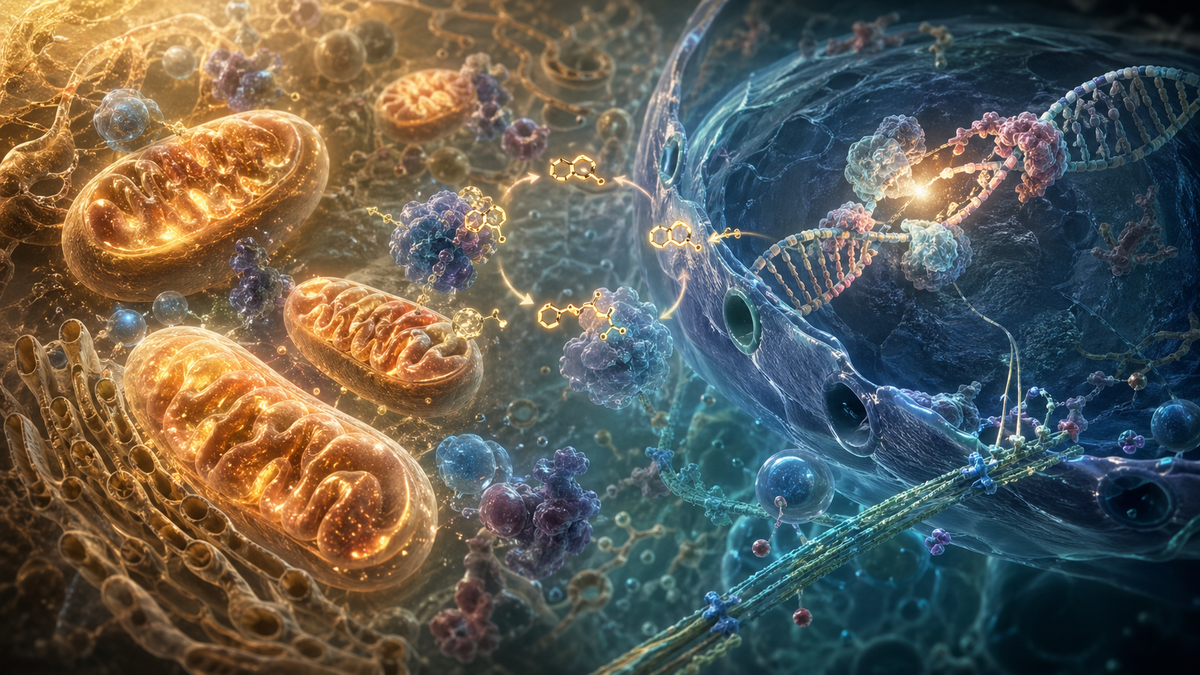
NAD, or nicotinamide adenine dinucleotide, is a coenzyme found in every cell that helps turn food into energy, supports DNA repair, and powers hundreds of enzymes. It matters because cellular energy, signaling, and recovery depend on it.
Key Takeaways
- According to the NIH Office of Dietary Supplements, more than 400 enzymes require NAD, which shows how central it is to metabolism.
- According to npj Metabolic Health and Disease, most tissues rely on salvage pathways to recycle nicotinamide into NAD, while only the liver and kidneys can make it de novo from tryptophan.
- According to Nature Metabolism, NAD+ precursor supplementation is promising, but human trial results are still limited and tissue-level data remain sparse.
- The FDA warning letter on compounded NAD+ injections is a reminder that product quality and delivery route matter as much as the ingredient itself.
- Janet MAUS, PhD's TGD course gives general audiences a structured way to understand the science before they decide whether NAD belongs in their wellness routine.
Table of Contents
- Understanding NAD
- Key Concepts and Techniques
- Who Benefits from Learning NAD?
- What Do Students Say?
- About the Creator
- NAD Pathways Deep Dive
- Watch Before You Enroll
- Frequently Asked Questions
- Conclusion
- Explore More on TGD
Understanding NAD
NAD is a cellular coenzyme that helps move energy through metabolism and supports repair, signaling, and enzyme activity. According to the NIH Office of Dietary Supplements, more than 400 enzymes require NAD to catalyze reactions in the body, which makes it one of the most broadly used coenzymes in human biology.
According to a 2025 review in npj Metabolic Health and Disease, only the liver and kidneys can produce NAD+ de novo from tryptophan, while most tissues rely mainly on salvage pathways that recycle nicotinamide. That matters because it shows NAD is not a single-purpose molecule; it is part of a recycling system that keeps cells working.
Interest in NAD has surged because people connect it with energy, aging, and resilience. But a 2025 Nature Metabolism review found that human clinical trials of NAD+ precursors have shown limited efficacy so far, and published data on NAD+ dynamics in human tissues remain sparse. That means NAD is important, but the strongest claims still need careful evidence.
Want to Learn NAD Step by Step?
This free course on The Great Discovery covers the biology, context, and practical questions behind NAD in one guided path.
Key Concepts and Techniques
The most useful NAD concepts are energy metabolism, salvage pathways, precursor evidence, and product quality. Once you understand these ideas, it becomes easier to separate real biology from marketing language.
1. NAD as an energy shuttle
NAD helps move electrons during reactions that release energy from food. That is why it is linked to fatigue, mitochondrial function, and general vitality, even though it is not an energy drink in molecular form.
2. Salvage pathways matter more than most people realize
Most tissues recycle nicotinamide into NAD instead of building it from scratch. In practical terms, that means the body depends on continuous recycling, not just one-time intake.
3. Precursor supplements are not the same as proven outcomes
Products that supply NAD+ precursors are often marketed as longevity tools. According to Nature Metabolism, the human evidence is still limited, so the sensible approach is to treat these products as interesting but unproven.
4. Delivery method changes the risk profile
Oral supplements, compounded injections, and IV protocols are not interchangeable. The FDA warning letter on contaminated compounded NAD+ injections shows that sterility, sourcing, and handling are not minor details.
Who Benefits from Learning NAD?
NAD education helps anyone who wants to understand energy, longevity, and wellness claims with more precision. The course is rated for General Audiences, but the supplied data does not list a skill level or price, so it is best viewed as an accessible starting point rather than a technical reference.
Curious beginners
If you keep seeing NAD in articles, podcasts, or supplement ads, you need a plain-language map of the topic. Janet MAUS, PhD's course is a reasonable starting point because it fits the Health and Fitness and Academic Learning categories while staying approachable.
People exploring habit change
If you are trying to improve energy through sleep, nutrition, and daily routines, NAD is worth understanding because it connects biology to behavior. This course can help you evaluate which wellness habits are grounded in evidence and which ones are mostly hype.
Health-conscious readers
If you care about aging, cognitive vitality, or supplement safety, NAD deserves a closer look. The content is especially useful for readers who want a structured overview before buying products or trying advanced delivery methods.
Coaches and wellness communicators
If you explain health topics to other people, you need a source that covers the basics cleanly. The TGD course can serve as a teaching scaffold, especially when you want to discuss NAD without overclaiming what the evidence can prove.
What Do Students Say?
This course is new to the marketplace and hasn't collected reviews yet. Check back after launch for student feedback.
About the Creator
Janet MAUS, PhD is listed as a Natural Health Doctor who creates education around wellness topics. The creator profile data shows 5 courses created, 3 total learners, and an average rating of 0.0.
That sparse audience data suggests the profile is still early in its growth, which makes the course even more useful as a straightforward introduction rather than a community-driven advanced program. You can view the creator profile here: Janet MAUS, PhD on The Great Discovery.
NAD Pathways and Practical Implications
| Concept | What It Means | Why It Matters | Practical Takeaway |
|---|---|---|---|
| NAD/NADH cycle | NAD switches between oxidized and reduced states during metabolism. | This cycle helps cells extract usable energy from food. | Energy support is about cellular chemistry, not quick stimulation. |
| Salvage pathway | Cells recycle nicotinamide back into NAD. | Most tissues depend on recycling to maintain levels. | Support habits that reduce unnecessary metabolic stress. |
| De novo synthesis | The body can build NAD from tryptophan. | According to npj Metabolic Health and Disease, this is mainly done by the liver and kidneys. | Dietary inputs matter, but not every tissue makes NAD the same way. |
| Precursors | NR and NMN are common NAD-related supplements. | They are popular because they feed the salvage pathway. | Look for human data before assuming a product will work. |
| Delivery route | Oral, injectable, and IV formats deliver compounds differently. | Safety and quality vary widely across formats. | Never treat compounding and supplementation as the same thing. |
This table gives you the vocabulary to read NAD claims critically. The course uses that kind of foundation to make the topic easier to apply in real life.

Master NAD with Expert Guidance
Janet MAUS, PhD's course covers the main pathways, evidence questions, and practical concerns behind NAD. It is a structured way to move from broad understanding into focused learning at your own pace.
Enroll in NAD - Nicotinamide Adenine Dinucleotide →
Watch Before You Enroll
Watch this short video overview to understand the main ideas behind NAD - Nicotinamide Adenine Dinucleotide before you enroll.
This video introduces NAD - Nicotinamide Adenine Dinucleotide and previews welcome!.
Frequently Asked Questions
What does NAD do in the body?
NAD helps cells transfer electrons during metabolism, which is central to energy production. According to the NIH Office of Dietary Supplements, more than 400 enzymes depend on it, so it has a much broader role than many wellness trends suggest.
Why do NAD levels matter with age?
NAD is often discussed in the context of aging because it supports repair and energy pathways that are linked to cellular resilience. However, a 2025 Nature Metabolism review found that human clinical evidence for NAD+ precursor supplementation is still limited.
Can you get NAD from food?
You do not usually consume NAD directly as a dietary goal; the body mainly builds and recycles it from nutrients such as niacin and tryptophan. According to npj Metabolic Health and Disease, most tissues rely on salvage pathways rather than making NAD from scratch.
Are NAD supplements proven to work?
The current answer is not fully. According to Nature Metabolism, preclinical results are promising, but human trials have shown limited efficacy so far and tissue-level NAD data remain sparse.
Are NAD injections safe?
Safety depends on product quality, sterility, and who is preparing the compound. The FDA warning letter in January 2026 described three patients who received compounded NAD+ from the same vial and later needed emergency care, which shows why route and sourcing matter.
Is the TGD NAD course beginner-friendly?
Yes. It is listed for General Audiences and sits in the Habit Change, TGD Success, Academic Learning, and Health and Fitness categories. The supplied data does not list a price, so the best way to judge fit is to review the syllabus and learning goals.
Conclusion
You now have the core NAD picture: it is a foundational coenzyme, most tissues recycle it through salvage pathways, and the research on supplements is still developing. You also know why delivery quality matters and why strong marketing should not outrun the evidence. If you want a guided next step that turns this overview into structured learning, Janet MAUS, PhD's course is the logical place to continue: NAD - Nicotinamide Adenine Dinucleotide on The Great Discovery.
Explore More on TGD
Visit the The Great Discovery homepage or see more from Janet MAUS, PhD.
Share Your Knowledge on The Great Discovery
Join Janet MAUS, PhD and hundreds of other creators sharing their expertise. Create and sell your own courses on TGD.