
Learn Networking Event Creation with Leigh Kadooka | TGD
A networking event is a planned gathering that helps people meet, exchange ideas, and build useful relationships. The best events use clear goals, conversation prompts, and a comfortable flow so attendees move past awkward small talk and make real connections.

A networking event is a planned gathering that helps people meet, exchange ideas, and build useful relationships. The best events use clear goals, conversation prompts, and a comfortable flow so attendees move past awkward small talk and make real connections.
Key Takeaways
- A successful networking event starts with a clear outcome, such as referrals, partnerships, or community building.
- According to Eventbrite, 95% of Gen Z and Millennials want to explore their online interests through in-person events, so demand for live connection is strong.
- According to Freeman, 40% of attendees ages 23-46 say networking feels awkward, which is why icebreakers and guided conversation matter.
- Hilton found that 54% of event goers feel more comfortable with icebreaker questions and 62% feel more at ease in smaller meetings.
- Leigh Kadooka's 2-hour consultation gives you a practical way to turn planning ideas into a usable event structure under TGD's business and networking categories.
Table of Contents
- Understanding Networking Events
- Key Concepts and Techniques
- Who Benefits from Learning Networking Event Creation?
- What Do Students Say?
- About the Creator
- Essential Networking Event Planning Elements
- Watch Before You Enroll
- Frequently Asked Questions
- Conclusion
- Explore More on TGD
Understanding Networking Events
Networking events matter because they turn interest into relationships. According to Eventbrite, 95% of Gen Z and Millennials are interested in exploring their online interests through in-person events. The same study found that 84% of interest-based attendees formed close friendships, and 73% of 18-to-35-year-olds planned to attend live events in the next six months.
That demand creates opportunity, but only if the format feels easy to enter. According to Freeman, 51% of attendees consider effective networking a strong reason to return, while 40% of ages 23-46 say networking feels awkward and 30% struggle to start conversations. Hilton adds that 54% feel more comfortable with icebreaker questions, 62% feel more at ease in smaller meetings, and 78% sometimes need a break. The pattern is clear: successful networking events are designed, not improvised.
Want to Learn Networking Event Creation Step by Step?
This course on The Great Discovery breaks these fundamentals into a practical 2-hour consultation you can use to plan a better event.
Key Concepts and Techniques
A strong networking event depends on structure. The right format, prompts, and pacing help attendees relax, talk, and remember each other after the event ends.
Define the event outcome
Start with one clear purpose, such as making referrals, finding partners, or helping a community meet face to face. If the goal is vague, every other decision becomes harder.
A focused outcome also makes promotion easier because people know why they should attend.
Design conversation scaffolding
Use icebreaker questions, topic prompts, or roundtable themes to reduce awkwardness. Freeman reported that 40% of attendees ages 23-46 feel networking is awkward, and Hilton found that 54% feel more comfortable when they receive icebreaker questions.
Prompts do not force connection; they simply give people a better starting point.
Plan the room for movement and comfort
Small-group tables, standing zones, and quiet corners create different social speeds inside the same event. Hilton found that 62% of respondents feel more at ease speaking in smaller meetings, so a room that supports both small circles and open mingling usually works best.
Good layout keeps people from feeling trapped in one style of interaction.
Build pacing and breaks into the agenda
Networking works better when it has a rhythm. Hilton reported that 78% of respondents sometimes need a break or time to themselves at work events, which means short pauses can improve energy instead of weakening it.
Mix structured time, open mingling, and reset moments so attendees do not burn out before the useful conversations happen.
Close with follow-up in mind
An event is only the beginning if you want lasting value. Capture names, topics, and next steps so attendees can follow up while the conversation is still fresh.
Without follow-up, even a lively room can disappear into forgotten contact lists.
Who Benefits from Learning Networking Event Creation?
This topic helps anyone who needs people to talk, trust, and keep in touch. The course is listed under Entrepreneurship and Business, Network Marketing Mastery, Networking Skills, and TGD Success. The data does not show a price or a skill_level field, so check the listing for current details if you want the most accurate purchase information.
Community builders and creators
If you run a membership, local group, or online audience, networking events help turn passive followers into active relationships. Eventbrite's 2025 findings show that people increasingly want in-person spaces that bridge digital interests and real-world connection.
This TGD consultation is a practical starting point if you want a guided framework instead of trial-and-error planning.
Entrepreneurs and network marketers
Business owners need events that create trust quickly, not just polite introductions. When attendees leave with real contacts and clear next steps, the event becomes a lead-generation asset rather than a one-time social activity.
If you are building in the Network Marketing Mastery category, this course fits the kind of relationship-first strategy those businesses depend on.
Event planners and team leads
Planners need repeatable systems, especially when attendance, energy, and room layout all affect the experience. Freeman's finding that 51% of attendees return because of effective networking shows that the networking design itself can shape event success.
A consultation format is useful here because it helps you refine the event mechanics before you commit budget or venue time.
Career-focused professionals and sales teams
If your work depends on introductions, partnerships, or referrals, networking is a skill that compounds over time. Hilton found that 71% of respondents had met someone at a work event who helped advance their career, which makes the ability to structure those moments valuable.
The faster you can create low-pressure conversation, the more likely people are to remember you and follow up later.
What Do Students Say?
This course is new to the marketplace and hasn't collected reviews yet. Check back after launch for student feedback.
About the Creator
Leigh Kadooka is a Digital Learning Consultant & Promoter. She has created 5 courses for 41 learners, and her creator profile shows an average rating of 5.0. You can view her catalog here: Leigh Kadooka on The Great Discovery.
That profile is a useful signal if you want guidance from someone already publishing across multiple learning topics. The combination of creator experience and a focused consultation format makes the course easy to evaluate for practical business learning.
Essential Networking Event Planning Elements
Networking events work best when the planning details support human behavior. The table below breaks the topic into the parts that most often determine whether people connect or drift apart.
| Planning Element | What It Does | Why It Matters |
|---|---|---|
| Event purpose | Gives the gathering one clear outcome | Helps you choose the right audience, venue, and format |
| Guest mix | Balances familiarity and new connections | Creates enough comfort for conversation without making the room too cliquey |
| Icebreakers | Provides a starting point for talking | Reduces awkwardness and helps people move into real discussion faster |
| Room layout | Shapes how people move and gather | Supports both small-group discussion and broader mingling |
| Pacing | Controls when people talk, reset, and reconnect | Keeps energy high and prevents social fatigue |
| Follow-up plan | Captures next steps after the event | Turns a good conversation into an ongoing relationship |
These planning elements are the difference between a crowded room and a meaningful event. Leigh Kadooka's consultation can help you turn those ideas into a simple, usable event strategy.
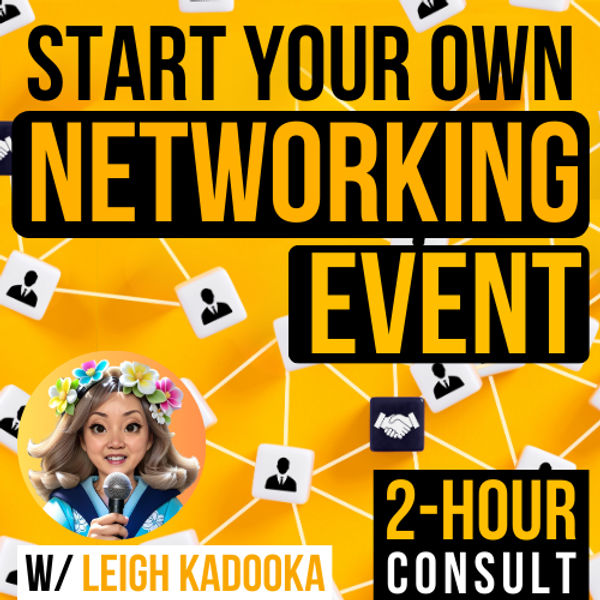
Master Networking Event Creation with Expert Guidance
Leigh Kadooka's consultation covers the planning choices above and more, so you can build a networking event with a clearer structure and better attendee flow.
Enroll in How to Create a Networking Event - 2 Hour Consultation →
Watch Before You Enroll
Watch this short video overview to understand the main ideas behind How to Create a Networking Event - 2 Hour Consultation before you enroll.
This video introduces How to Create a Networking Event - 2 Hour Consultation and previews what You’ll Learn: 2-Hour Consultation Includes: Why Choose This Consultation?Skip the guesswork and fast-track your networking success.
Frequently Asked Questions
What makes a networking event successful?
A successful networking event has a clear purpose, a defined audience, and enough structure to help people start talking. Freeman reported that 51% of attendees see effective networking as a strong reason to return, which means the quality of the interaction affects event value.
How many people should attend a networking event?
There is no single ideal number, but smaller groups often make conversation easier. Hilton found that 62% of respondents feel more at ease speaking in smaller meetings, so choose a size that supports the type of interaction you want.
How do you reduce awkwardness at networking events?
Use icebreaker questions, conversation prompts, and a clear schedule. According to Freeman, 40% of ages 23-46 say networking feels awkward, and Hilton found that 54% feel more comfortable when icebreakers are provided.
What activities work best at a networking event?
Roundtables, guided introductions, and topic-based prompts work well because they give people something to talk about quickly. Eventbrite's 2025 research shows that people are interested in connecting through in-person events tied to their online interests, so themed conversations can feel especially relevant.
How do you follow up after a networking event?
Capture names, conversation notes, and one clear next step before people leave. A short follow-up message within 24 to 48 hours helps turn a pleasant introduction into an actual relationship or business opportunity.
How much does the TGD course cost?
The course data does not list a price, so check the course page for current pricing. It is a 2-hour consultation and sits in Entrepreneurship and Business, Network Marketing Mastery, Networking Skills, and TGD Success.
Ready to Go Deeper?
You have learned the core mechanics of networking event creation, including purpose, flow, icebreakers, and follow-up. This course is the next step if you want to turn that knowledge into a workable event plan.
Start Learning Networking Event Creation on TGD →
Conclusion
Creating a networking event is really about designing conditions for useful conversation. You learned that attendees want structured in-person connection, smaller and more comfortable settings often help, and icebreakers plus follow-up improve results. Those choices matter because they reduce awkwardness, increase the chance of real introductions, and make the event worth returning to.
If you want a faster path from ideas to execution, Leigh Kadooka's 2-hour consultation on The Great Discovery is a logical next step. It gives you a focused way to turn planning concepts into a real event plan you can launch with confidence. Explore the course on The Great Discovery
Explore More on TGD
If you want to keep learning, start with the broader business and networking categories, then move into creator-led content that fits your goals.
- Entrepreneurship and Business
- Network Marketing Mastery
- Networking Skills
- TGD Success
- The Great Discovery Homepage
- Leigh Kadooka Creator Page
Share Your Knowledge on The Great Discovery
Join Leigh Kadooka and hundreds of other creators sharing their expertise. Create and sell your own courses on TGD.