Learn Odds and Probability with Mr. D on The Great Discovery
Odds are a mathematical way of expressing the likelihood of an event happening compared to it not happening. While often confused with probability, odds focus on the ratio of success to failure rather than the probability fraction, making them essential for games, betting, and risk assessment.
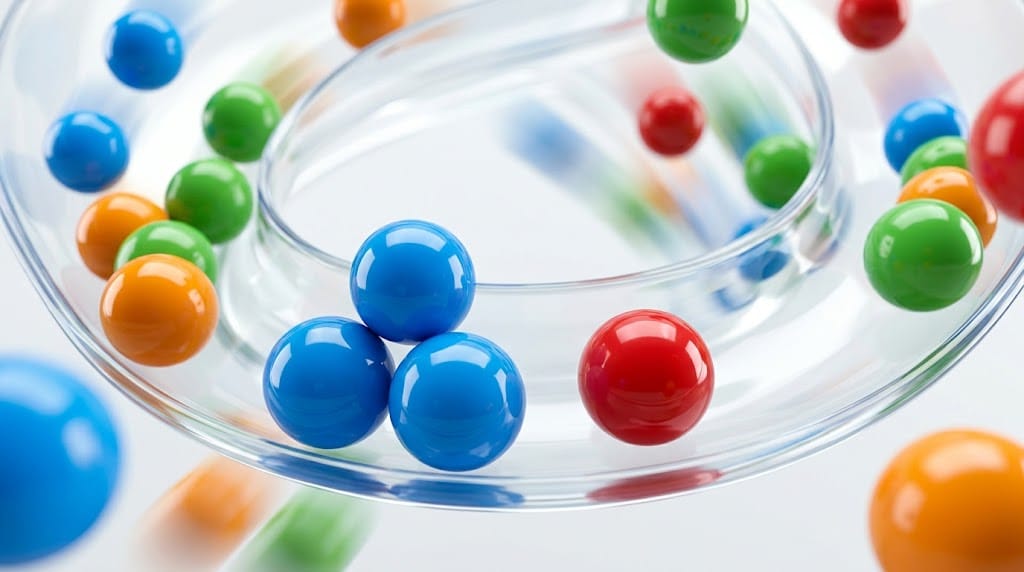
Odds are a mathematical way of expressing the likelihood of an event happening compared to it not happening. While often confused with probability, odds focus on the ratio of success to failure rather than the probability fraction, making them essential for games, betting, and risk assessment.
Key Takeaways
- Odds vs. Probability are different: Odds measure success-to-failure ratio (3:1), while probability measures likelihood as a fraction (0.75). Understanding the difference is crucial for accurate predictions.
- How to calculate odds: Divide favorable outcomes by unfavorable outcomes. For a coin flip, you have 1 favorable outcome and 1 unfavorable outcome, giving you 1:1 odds.
- Real-world applications: Odds are used in sports betting, insurance calculations, games of chance, and risk management across industries.
- Free, structured learning: Mr. D's micro course teaches these concepts with video lessons and practice problems you can complete at your own pace.
- Perfect for students: Designed for intermediate learners who want to move beyond basic math and understand probability in practical contexts.
Table of Contents
- Understanding Odds and Probability
- Key Concepts and Techniques
- Who Benefits from Learning About Odds?
- What Do Students Say?
- About the Creator
- Odds vs. Probability: A Complete Reference
- Watch Before You Enroll
- Frequently Asked Questions
- Conclusion
- Explore More on The Great Discovery
Understanding Odds and Probability
Odds and probability are related but distinct mathematical concepts that describe how likely an event is to occur. Many people use the terms interchangeably, but they measure likelihood in fundamentally different ways.
Probability expresses the chance of an event as a fraction, decimal, or percentage between 0 and 1. If there's a 75% chance of rain tomorrow, the probability is 0.75. Odds, by contrast, express the ratio of favorable outcomes to unfavorable outcomes. If it's 3:1 odds that it will rain, that means for every 3 times it rains, there's 1 time it doesn't.
Understanding the difference matters in real life. A sports bettor needs to know odds to calculate potential winnings. A student studying medicine needs to understand probability to interpret diagnostic test results. A game designer uses both concepts to balance chance and skill. This foundational knowledge opens doors to understanding risk, making predictions, and interpreting data in fields from finance to healthcare.
Learning odds isn't just about abstract math—it's about developing critical thinking skills that apply everywhere. Once you understand how to calculate odds and convert between odds and probability, you'll spot logical fallacies in news headlines, make better decisions with uncertain information, and understand how professional fields like insurance and gambling actually work.
Want to Learn Odds Step by Step?
This free micro course on The Great Discovery covers the exact concepts explained above, with video lessons and practice problems to solidify your understanding.
Key Concepts and Techniques
Mastering odds requires understanding several foundational concepts that build on each other. These concepts form the framework for calculating odds, converting between odds and probability, and applying them in real scenarios.
The Difference Between Odds and Probability
Probability answers: "What fraction of all outcomes result in success?" Odds answer: "For every success, how many failures do we expect?" If a die shows a 6 on 1 in 6 rolls, the probability is 1/6 (about 17%). The odds are 1:5 (one success for every five failures). Notice how odds tells you the ratio, while probability tells you the proportion of the total.
Calculating Odds from Outcomes
To find odds, count favorable outcomes and unfavorable outcomes, then express them as a ratio. Drawing an ace from a 52-card deck: there are 4 aces (favorable) and 48 non-aces (unfavorable), so the odds are 4:48, which simplifies to 1:12. This means for every ace you draw, you'd expect to draw 12 non-aces.
Converting Odds to Probability
If odds are expressed as A:B, the probability is A/(A+B). For 1:12 odds of drawing an ace, the probability is 1/(1+12) = 1/13, or about 7.7%. This conversion is essential because different fields prefer different formats—gamblers use odds, scientists use probabilities.
Dependent vs. Independent Events
Odds change depending on whether events affect each other. Drawing two cards without replacement (dependent): the odds of getting two aces change after the first draw because there are now fewer aces in the deck. Flipping two coins (independent): each flip has the same 1:1 odds regardless of previous flips. Recognizing which scenario you're in is crucial for accurate calculations.
Real-World Application: Betting and Risk
Sportsbooks use odds to express probability while building in their profit margin. If a team has 2:1 odds to win, the implied probability is 2/3 (67%). But the book might offer 2:1 when the actual probability is only 60%, creating an edge for the house. Understanding this gap between stated odds and true probability is how smart bettors identify value.
Who Benefits from Learning About Odds?
Odds and probability are fundamental skills for diverse audiences, from students to professionals. Anyone working with uncertainty, making predictions, or interpreting data benefits from this knowledge.
High School and College Students
Students studying mathematics, statistics, science, or business encounter odds and probability constantly. Whether you're learning about genetics, quality control in manufacturing, or poll margins in political science, understanding odds is foundational. This free micro course provides the conceptual clarity many textbooks skip, making advanced coursework much easier.
Students of Games, Sports, and Betting
If you've ever wondered how sportsbooks set their odds or why some bets are "better value" than others, you need to understand the math behind odds. Card games, board games, and competitive games all rely on probability and odds. Mr. D's course breaks down these concepts so you understand not just how to play, but how games are designed to balance chance and skill.
Young Data Enthusiasts and Future Scientists
Anyone interested in data science, medicine, psychology, or engineering will use probability constantly in their career. Building a solid foundation now—especially with the practical, step-by-step approach in this course—saves countless hours of confusion later. The course's practice problems help cement these concepts before you encounter them in professional contexts.
Parents and Educators
If you're teaching a student or helping with homework, understanding odds and probability helps you explain concepts clearly and answer questions confidently. The course provides both the knowledge you need and the teaching tools (through its explanations) to help young learners understand why these concepts matter.
What Do Students Say?
This course is new to the marketplace and hasn't collected reviews yet. Check back after launch for student feedback. In the meantime, you can preview the content and explore the practice problems included with the course.
About the Creator
Dennis DiNoia, known as Mr. D, is an experienced course creator on The Great Discovery. He has created 12 courses with a 5.0-star average rating, demonstrating his skill at breaking down complex mathematical concepts into understandable lessons.
Mr. D specializes in making math accessible to students who might otherwise find the subject intimidating. His teaching approach combines video explanations with hands-on practice problems, giving learners multiple ways to grasp each concept. With a focus on building confidence and understanding rather than just memorization, his courses have helped learners across various skill levels.
Explore all of Mr. D's courses on The Great Discovery to see what other mathematical topics he teaches.
Odds vs. Probability: A Complete Reference
Understanding when to use odds versus probability, and how they relate to each other, is essential for accurate calculations and clear communication. The table below shows the key differences and when each is most useful:
| Concept | Definition | Format | Example | When Used |
|---|---|---|---|---|
| Probability | The proportion of favorable outcomes out of all possible outcomes | Fraction (1/6), Decimal (0.167), or Percentage (16.7%) | Rolling a 6 on a die: 1/6 probability | Science, statistics, forecasting, medical diagnosis |
| Odds (in favor) | The ratio of favorable outcomes to unfavorable outcomes | Ratio (1:5) | Rolling a 6 on a die: 1:5 odds (one 6 for every five non-6s) | Gambling, sports betting, games, casual conversation |
| Odds against | The ratio of unfavorable outcomes to favorable outcomes | Ratio (5:1) | Rolling a 6 on a die: 5:1 odds against (five non-6s for every 6) | Horse racing, bookmaking, formal probability statements |
| Conversion (Odds to Probability) | If odds are A:B, probability is A/(A+B) | Decimal or percentage | 1:5 odds = 1/(1+5) = 1/6 ≈ 16.7% probability | When you need to compare odds-based and probability-based sources |
| Conversion (Probability to Odds) | If probability is P, odds are P:(1-P) | Ratio | 0.167 probability = 0.167:0.833 ≈ 1:5 odds | When a professional field uses probability but you need odds for communication |
| Implied Probability | The probability that betting odds suggest (includes the bookmaker's margin) | Percentage | 2:1 betting odds imply 67% probability, but actual probability may be 60% | Evaluating whether a bet offers value compared to actual likelihood |
This reference table shows why context matters. A weatherman who says "30% chance of rain" is using probability. A bettor who gets "3:2 odds" is looking at a format that requires conversion to compare with the weatherman's forecast. Learning both formats—and how to convert between them—is exactly what Mr. D's course covers.

Master Odds with Expert Guidance
Dennis DiNoia's course covers all of these concepts and more, with structured video lessons you can complete at your own pace. Practice problems with complete solution guides help you go from understanding to confident application.
Enroll in What Are the Odds? →
Watch Before You Enroll
Learn how to become an affiliate on The Great Discovery—the best affiliate program for course creators and marketers in 2026. Start earning commissions by sharing courses you believe in.
Ready to Go Deeper?
You've learned the fundamentals of odds and probability. This free course takes you from understanding to practical application with video lessons and guided practice problems.
Frequently Asked Questions
What is the difference between odds and probability?
Odds express a ratio of favorable to unfavorable outcomes (like 1:5). Probability expresses the likelihood as a fraction of all outcomes (like 1/6). The same event can be described both ways: 1:5 odds equals about 17% probability.
How do you calculate odds?
Count the favorable outcomes and the unfavorable outcomes, then express them as a ratio. For drawing an ace from a deck: 4 aces (favorable) to 48 non-aces (unfavorable) = 4:48 or simplified 1:12 odds.
Why do sportsbooks use odds instead of probability?
Odds make it easy to calculate payouts. If you bet $10 at 2:1 odds, you win $20. Odds also allow sportsbooks to adjust the format (decimal, fractional, or American odds) based on regional preference while including their profit margin.
Can you convert odds to probability?
Yes. If odds are A:B, the probability is A/(A+B). For 1:5 odds, probability = 1/(1+5) = 1/6 ≈ 16.7%. This conversion is essential when comparing odds-based statements to probability-based data.
How are odds used in real life?
Odds appear in betting and gambling, insurance calculations, medical risk assessments (like diagnostic test results), weather forecasting (sometimes), and game design. Any field dealing with uncertainty uses odds or probability to describe likelihood.
Is the free course really free?
Yes. "What are the odds?" is a free micro course on The Great Discovery, created by Dennis DiNoia. It includes video lessons and practice problems with complete solution guides at no cost.
Conclusion
Understanding odds and probability transforms how you interpret information and make decisions under uncertainty. These aren't abstract math concepts—they're tools used by scientists, doctors, engineers, bettors, and game designers to navigate a world of chance.
You've learned the key differences: odds express ratios of favorable to unfavorable outcomes, while probability expresses likelihood as a fraction. You've seen how to calculate them, convert between them, and apply them in real scenarios from sports betting to quality control.
The next step is structured practice. Dennis DiNoia's free micro course on The Great Discovery takes you beyond understanding these concepts to actually using them. With video explanations and practice problems, you'll move from learning to mastery at your own pace.
Ready to Start Learning?
You've mastered the fundamentals—now get hands-on practice with video lessons and guided problems.
Start Learning Odds and Probability Today →
Explore More on The Great Discovery
Expand your learning beyond odds and probability with related courses from The Great Discovery:
- Explore all courses by Dennis DiNoia (Mr. D)
- Browse more Academic Learning courses
- Discover more Teen Content courses
- Visit The Great Discovery homepage
Share Your Knowledge on The Great Discovery
Join Dennis DiNoia and hundreds of other creators sharing their expertise. Create and sell your own courses on TGD.