
Learn Relationship Mastery with Jeanell Greene on TGD
Relationship mastery is the skill of building secure, honest, and resilient connection through self-awareness, communication, emotional regulation, and repair. It helps people move from fear-based reactions to love-based responses, which matters because loneliness and relationship dissatisfaction...

Relationship mastery is the skill of building secure, honest, and resilient connection through self-awareness, communication, emotional regulation, and repair. It helps people move from fear-based reactions to love-based responses, which matters because loneliness and relationship dissatisfaction remain common.
Key Takeaways
- Relationship mastery focuses on attachment safety, communication, and repair, not just romance.
- According to Pew Research Center, 16% of U.S. adults feel lonely all or most of the time, so relationship skills affect well-being.
- According to the OECD, single people are about four times more likely than partnered people to report loneliness.
- Joint savoring can improve couple satisfaction, reduce conflict, and strengthen relationship confidence, according to Contemporary Family Therapy.
- Jeanell Greene's TGD course is aimed at all levels and fits Mental/Emotional Health and Relationship Support, making it a practical next step.
Table of Contents
- Understanding Relationship Mastery
- Key Concepts and Techniques
- Who Benefits from Learning Relationship Mastery?
- What Do Students Say?
- About the Creator
- Essential Relationship Skills Table
- Watch Before You Enroll
- Frequently Asked Questions
- Conclusion
- Explore More on TGD
Understanding Relationship Mastery
Relationship mastery is the ability to build secure, respectful, and resilient connection. It combines self-awareness, communication, and repair so people can move from fear-driven reactions to steadier love-based responses.
According to Pew Research Center, 16% of U.S. adults feel lonely or isolated all or most of the time, and adults under 50 report that feeling more often than adults 50 and older. According to the OECD, single people are about four times more likely than partnered people to report loneliness and twice as likely to be dissatisfied with their personal relationships.
That context matters because relationship strain is not just about arguments. It often reflects attachment needs, stress, and the absence of reliable connection rituals. Recent research also suggests that how people perceive their partner is a major driver of satisfaction, which makes emotional safety and mutual understanding central skills.
Want to Learn Relationship Mastery Step by Step?
This course on The Great Discovery covers these fundamentals in a structured format, so you can move from theory into practice.
Key Concepts and Techniques
Relationship mastery becomes practical when you can regulate emotion, repair quickly, and keep adding positive moments. Those habits change how conflict feels and how trust rebuilds.
Secure Attachment and Safety Signals
People relax in relationships when words and actions feel predictable. Small behaviors like keeping promises, naming needs clearly, and following through on repairs build that safety over time.
Conflict Repair
Healthy couples do not avoid conflict; they repair it well. A good repair includes pausing before escalation, reflecting what you heard, and naming one concrete next step.
Joint Savoring
According to Contemporary Family Therapy, higher joint savoring was linked to higher couple satisfaction, lower communication conflict, and greater relationship confidence. In practice, this means intentionally sharing good moments instead of letting them pass unnoticed.
Partner Perception and Curiosity
According to Frontiers in Psychology, partner-perception measures like attraction and perceived attachment uniquely predicted whether people fell into satisfied or distressed groups. That finding suggests that curiosity, appreciation, and accurate reading of your partner matter as much as effort.
Who Benefits from Learning Relationship Mastery?
This topic helps anyone who wants fewer reactive fights and more secure connection. The course description says it is for everyone of all levels and all circumstances, but the scraped data does not list a skill_level or price. Its categories place it in Mental/Emotional Health, Dating, Love, Romance, and Relationship Support.
People Who Feel Lonely or Disconnected
According to Pew Research Center, loneliness is common, especially among adults under 50. If you want a practical way to feel more connected without pretending problems do not exist, relationship mastery gives you a useful starting framework.
Singles and People Who Are Dating
According to the OECD, single people are about four times more likely than partnered people to report loneliness. If you are dating, the TGD course is a reasonable beginner-friendly starting point because it is framed for all levels and focuses on the emotional skills that make connection sustainable.
Couples in Repeating Conflict
If the same argument keeps resurfacing, the issue is often not the topic but the repair process. Joint savoring, calmer communication, and clearer requests can reduce friction and make conversations less defensive.
Coaches, Helpers, and Self-Study Readers
People who guide others often need a simple language for attachment, stress, and repair. Because the price is not shown in the scraped data, judge the course by fit and structure rather than by assumptions about cost.
What Do Students Say?
This course is new to the marketplace and hasn't collected reviews yet. Check back after launch for student feedback.
About the Creator
Jeanell Greene is the creator of Relationship Mastery: From Fear to Love. Public creator data shows 3 courses created, 5 total learners, and an average rating of 0.0.
That is a small public footprint, so the course topic and outline matter more than volume. View the creator profile here: Jeanell Greene on The Great Discovery.
Essential Relationship Skills Table
These relationship skills are the mechanics behind moving from fear to love. Learn the pattern once, and you can apply it in dating, marriage, family conversations, or self-reflection.
| Skill | What It Does | Simple Practice |
|---|---|---|
| Emotional regulation | Prevents fear-driven reactions | Pause, breathe, and name the feeling before you reply. |
| Active listening | Reduces misunderstanding | Reflect the other person's meaning before explaining your view. |
| Repair attempts | Reconnects after conflict | Use an apology, a reset phrase, or a direct request to restart. |
| Joint savoring | Builds a positive memory bank | Share one good moment and why it mattered each day. |
| Secure requests | Turns complaints into needs | Replace "you never" with "I need" and make the request concrete. |
| Partner appreciation | Reinforces safety and attraction | Name one specific behavior you value instead of general praise. |
These are the core behaviors that turn relationship insight into practice. A structured course can help you build them in sequence instead of trying to fix everything at once.
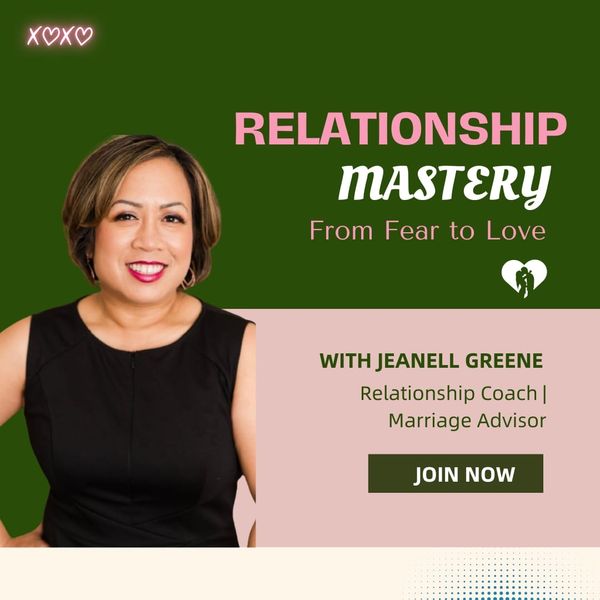
Master Relationship Mastery with Expert Guidance
Jeanell Greene's course connects these ideas into a simple path from awareness to practice. You already know the core skills from the table; this gives you a way to work through them at your own pace.
Enroll in Relationship Mastery: From Fear to Love →
Watch Before You Enroll
Watch this short video overview to understand the main ideas behind Relationship Mastery: From Fear to Love before you enroll.
This video introduces Relationship Mastery: From Fear to Love and previews this course is for everyone of all levels an all circumstances.
Frequently Asked Questions
What is relationship mastery?
Relationship mastery is the practice of building secure, respectful, and resilient connection through self-awareness, communication, and repair. It is less about never arguing and more about recovering well after stress.
Why do relationships get stuck in fear?
Fear often shows up when people do not feel safe, seen, or understood. That can create defensiveness, withdrawal, or repeated conflict, even when both people want the relationship to improve.
What is joint savoring in a relationship?
Joint savoring means intentionally noticing and sharing positive moments together. According to Contemporary Family Therapy, it is linked to higher couple satisfaction, lower communication conflict, and greater relationship confidence.
How does conflict repair help couples?
Repair restores connection after tension and keeps small issues from becoming long-term resentment. Simple repair moves, such as a calm reset or a specific apology, often work better than trying to win the argument.
Can relationship education really improve outcomes?
Yes. A 2026 study in The Family Journal reported that 3,207 participants in the ELEVATE program showed statistically significant improvement across six relational constructs, including relationship quality and communication-related knowing.
Is this TGD course suitable for beginners, and is pricing listed?
The course description says it is for everyone of all levels and all circumstances, so it appears beginner-friendly. The scraped data does not list a price, so you should treat cost as unavailable here and judge fit from the topic and structure.
Ready to Go Deeper?
You have learned the core ideas behind relationship mastery: safety, repair, savoring, and clearer perception. The course is the next step if you want a guided path from understanding to daily practice.
Start Learning Relationship Mastery on TGD →
Conclusion
Relationship mastery means learning how to regulate emotions, make clear requests, repair quickly, and create enough positive shared experience for trust to grow. That matters now because loneliness remains common, single adults report higher isolation, and newer studies show that perceived partner safety and joint savoring are tied to better relationship outcomes. If you want a structured way to practice these skills instead of piecing them together alone, Jeanell Greene's Relationship Mastery: From Fear to Love gives you a guided path from awareness to action on TGD.
Explore More on TGD
Explore more learning paths on The Great Discovery. If you want to keep building emotional resilience and relationship skills, start with the category pages below.
- Mental/Emotional Health courses
- Dating, Love, Romance courses
- Relationship Support courses
- The Great Discovery homepage
- Jeanell Greene creator page
Share Your Knowledge on The Great Discovery
Join Jeanell Greene and hundreds of other creators sharing their expertise. Create and sell your own courses on TGD.