
Ultrapreneur Journey with Nigel Clayton on TGD
Entrepreneurial success combines practical systems and personal alignment: clear vision, disciplined time use, client understanding, and consistent execution matter as much as confidence and resilience. The strongest founders build repeatable routines, adapt tools carefully, and keep daily work t...

Entrepreneurial success combines practical systems and personal alignment: clear vision, disciplined time use, client understanding, and consistent execution matter as much as confidence and resilience. The strongest founders build repeatable routines, adapt tools carefully, and keep daily work tied to long-term goals.
Key Takeaways
- Entrepreneurial success depends on both tangible systems and intangible factors such as vision, mindset, and fear management.
- According to Goldman Sachs, 76% of small businesses already use AI, but only 14% have fully embedded it in core operations.
- According to NORC at the University of Chicago, the share of U.S. adults considering starting a business fell from about 17% in 2022 to about 14% in 2025.
- Strong founders create an ideal business day, protect deep work, and build marketing around a clearly defined ideal client.
- The Ultrapreneur® Journey is best for intermediate learners who want a structured mix of business execution and personal alignment.
Table of Contents
- Understanding Entrepreneurial Success
- Key Concepts and Techniques
- Who Benefits from Learning Entrepreneurial Success?
- What Do Students Say?
- Is This Course Worth It?
- About the Creator
- Essential Entrepreneurial Concepts
- Watch Before You Enroll
- Frequently Asked Questions
- Conclusion
- Explore More on TGD
Understanding Entrepreneurial Success
Entrepreneurial success is the ability to build a business that works in the real world, not just on paper. It depends on strategy, customer understanding, time discipline, and the ability to keep moving when uncertainty rises. According to NORC at the University of Chicago, the share of U.S. adults considering starting a business fell from about 17% in 2022 to about 14% in 2025, which suggests many people are cautious about the risks and demands of ownership.
That caution is understandable because the operating environment has become more complex. According to Goldman Sachs, 76% of small businesses already use AI, but only 14% have fully embedded it in core operations. That gap shows the difference between experimenting with tools and running a business with reliable systems. Entrepreneurial success matters because it turns broad ambition into daily decisions: what to sell, who to serve, how to spend time, and which habits keep the business moving forward.
Want to Learn Entrepreneurial Success Step by Step?
This course on The Great Discovery covers these fundamentals in a structured format, with guidance on vision, time use, fear, and ideal client thinking.
The Great Discovery (TGD) is a global online course marketplace where creators publish courses and learners discover practical training across business, technology, wellness, and personal growth.
Key Concepts and Techniques
The most useful entrepreneurial frameworks connect internal clarity to external execution. When founders separate mindset from operations, they often stall; when they connect them, they make faster, cleaner decisions. The ideas below combine the course's focus with the current reality of AI-assisted small business work.
Vision and strategy alignment
Vision gives direction, while strategy turns direction into choices. The Ultrapreneur® Journey emphasizes this by asking learners to align business planning with an authentic sense of self, which helps reduce drift and decision fatigue.
A practical example is writing one sentence that explains who you serve, what problem you solve, and why your approach is different. That sentence can then guide offers, content, and partnerships.
Designing an ideal business day
An ideal business day is a repeatable schedule that protects the work that matters most. Instead of reacting to every message, founders can block time for deep work, client delivery, sales activity, and admin in a deliberate order.
This matters because time scarcity is often a systems problem, not a motivation problem. The course's focus on optimizing time fits that reality well.
Defining the ideal client
Knowing your ideal client makes marketing easier and more effective. According to the course description, understanding your ideal client is central to building marketing strategies that actually connect.
In practice, this means learning the client's language, pain points, and goals before writing copy or building an offer. Specificity usually beats broad appeal in entrepreneurial marketing.
Managing fear and decision friction
Fear slows execution when it stays vague. When founders identify the exact action they are avoiding, they can shrink the problem and move forward more quickly.
The course's emphasis on overcoming fears is useful because many business problems are partly emotional before they are operational. Naming the fear often reveals the next useful step.
Using AI without losing judgment
AI can speed up drafting, summarizing, and repetitive work, but it does not replace business judgment. According to Goldman Sachs, 76% of small businesses already use AI, which shows how quickly the tool has become normal.
The real advantage comes from embedding AI into operations instead of treating it as a novelty. The best use cases support decisions, save time, and reduce low-value work without replacing the founder's voice.
Who Benefits from Learning Entrepreneurial Success?
This topic helps founders who need both a better operating system and a steadier mindset. The course sits in Entrepreneurship and Business, Job & Career Search, TGD Success, and Professional Studies, and it is labeled intermediate. That makes it a good fit for learners who want practical business development with personal-performance support.
First-time founders
New founders benefit because they need a simple framework for prioritizing work, understanding clients, and staying emotionally steady. If you are trying to move from idea to action, The Ultrapreneur® Journey is a sensible starting point because it combines business structure with mindset work.
That mix matters when the goal is not just to start, but to start well.
Solopreneurs and service providers
Solopreneurs often lose time to switching tasks, unclear offers, and inconsistent routines. This topic helps them build a more intentional business day and focus on the work that actually creates value.
The course is especially relevant if your business depends on your attention, creativity, and client communication.
Established owners who need a reset
Experienced owners can use this topic to realign a business that has become reactive or cluttered. When systems get messy, vision usually gets blurry too.
The course may be a strong next step if you want to reconnect strategy, time use, and daily execution instead of adding more disconnected tactics.
Career switchers and side hustlers
People moving from employment into entrepreneurship need confidence, but they also need structure. This topic helps them understand what to build before they scale what they build.
If you want a practical lens on early business decisions, the course offers a guided path without requiring advanced background knowledge.
What Do Students Say?
This course is new to the marketplace and hasn't collected reviews yet. Check back after launch for student feedback.
Is This Course Worth It?
Yes, if you want a structured reset for how you run a business.
It is best for early-stage founders, solopreneurs, and experienced entrepreneurs who need clearer vision, better time use, and a stronger daily rhythm. The intermediate level and business-focused categories fit learners who want applied guidance rather than broad inspiration.
It is not for people who only want a technical playbook or a quick motivational boost without mindset work. This becomes most useful when you want business systems, client clarity, and personal alignment to work together.
Verdict: Nigel Clayton's 3-course catalog, 32 learners, and 5.0 average rating suggest a focused creator track record, and this course looks like a strong next step on TGD when you want practical entrepreneurial structure.
About the Creator
Nigel Clayton is listed as an Ultrapreneur Business Coach and Business Mentor. His profile points to practical entrepreneurial coaching rather than abstract theory.
Courses created: 3
Total learners: 32
Average rating: 5.0
If you want to explore more of his work, visit Nigel Clayton's creator page.
Essential Entrepreneurial Concepts
These building blocks translate entrepreneurial success into daily practice. Use them as a quick reference for planning, prioritizing, and improving business decisions.
| Concept | What It Means | How to Apply It |
|---|---|---|
| Vision and strategy | A clear direction that guides decisions | Write one sentence that describes who you serve and how you help them, then filter opportunities through it |
| Ideal business day | A repeatable rhythm for important work | Block time for deep work, client delivery, sales, and admin before the day begins |
| Ideal client fit | The person most likely to benefit from your offer | Describe the client's problems, goals, and language before creating marketing messages |
| Fear management | Reducing avoidance and hesitation | Turn vague worries into the next physical action and complete that action quickly |
| AI-assisted execution | Using tools to speed up routine work | Draft, summarize, and organize with AI, then review the output for accuracy and voice |
| Time leverage | Protecting hours that create the most value | Spend more energy on revenue, relationships, and learning than on low-value busywork |
The course aligns well with this framework because it emphasizes vision, time optimization, fear reduction, and ideal-client marketing. That makes the lessons useful for day-to-day business choices, not just abstract inspiration.
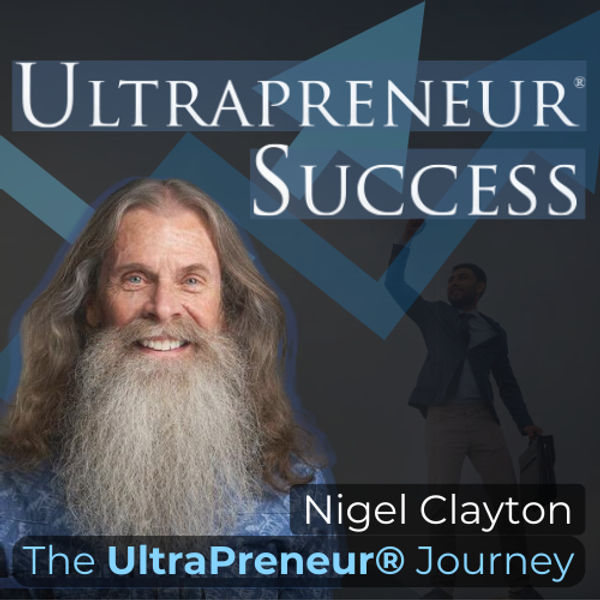
Master Entrepreneurial Success with Expert Guidance
Nigel Clayton's course reinforces the same building blocks you just reviewed: vision, time design, client clarity, and follow-through. It turns those ideas into a more guided learning path.
Watch Before You Enroll
Learn how to become an affiliate on The Great Discovery — the best affiliate program for course creators and marketers in 2026. Start earning commissions by sharing courses you believe in.
Frequently Asked Questions
What is entrepreneurial success?
Entrepreneurial success is the ability to build a business with clear direction, strong client fit, sustainable routines, and enough resilience to keep executing. According to NORC at the University of Chicago, interest in starting a business fell from about 17% in 2022 to about 14% in 2025, which shows how important confidence and planning have become.
Why do vision and mindset matter in entrepreneurship?
Vision and mindset shape how founders respond to uncertainty, which affects every operational choice. According to Goldman Sachs, 76% of small businesses use AI, but only 14% have fully embedded it in core operations, so the gap is often not access to tools but consistent leadership and adoption.
How do I create an ideal business day?
Start by protecting your highest-value work, then assign clear windows for client delivery, sales, and admin. A good ideal business day reduces context switching and makes execution more predictable.
What is an ideal client in business?
An ideal client is the person or organization most likely to benefit from your offer and respond to your message. When you know that client well, your marketing becomes more specific and your offer is easier to position.
How is AI changing small business operations?
AI is speeding up drafting, analysis, and repetitive tasks, but it only helps when embedded into everyday workflows. Goldman Sachs reported that 76% of small businesses use AI, while only 14% have fully embedded it in core operations.
Who is The Ultrapreneur® Journey best for?
It is best for intermediate learners who want business, career, and personal-growth guidance together. The course fits founders who want to connect vision, time management, and ideal-client thinking in one structured path.
Ready to Go Deeper?
You've learned the fundamentals of entrepreneurial success. This course takes you from understanding to practical application with a structured path through vision, time use, and mindset.
Start Learning Entrepreneurial Success on TGD →
Conclusion
Entrepreneurial success is not just about working harder. It is about aligning vision, time, client focus, and execution so the business becomes easier to steer. The current market makes that balance more important: NORC shows fewer adults are considering starting a business, while Goldman Sachs shows AI adoption is widespread but still uneven inside operations. If you want a guided next step, Nigel Clayton's Ultrapreneur® Journey is a strong way to turn those ideas into a practical routine. Explore the course here: The Ultrapreneur® Journey
Explore More on TGD
- Entrepreneurship and Business courses
- Job & Career Search courses
- TGD Success courses
- Professional Studies courses
Browse the The Great Discovery homepage or visit Nigel Clayton's creator page.
Share Your Knowledge on The Great Discovery
Join Nigel Clayton and hundreds of other creators sharing their expertise. Create and sell your own courses on TGD.