Learn Zentangle Five Elements with MEE CHEE SOO | TGD
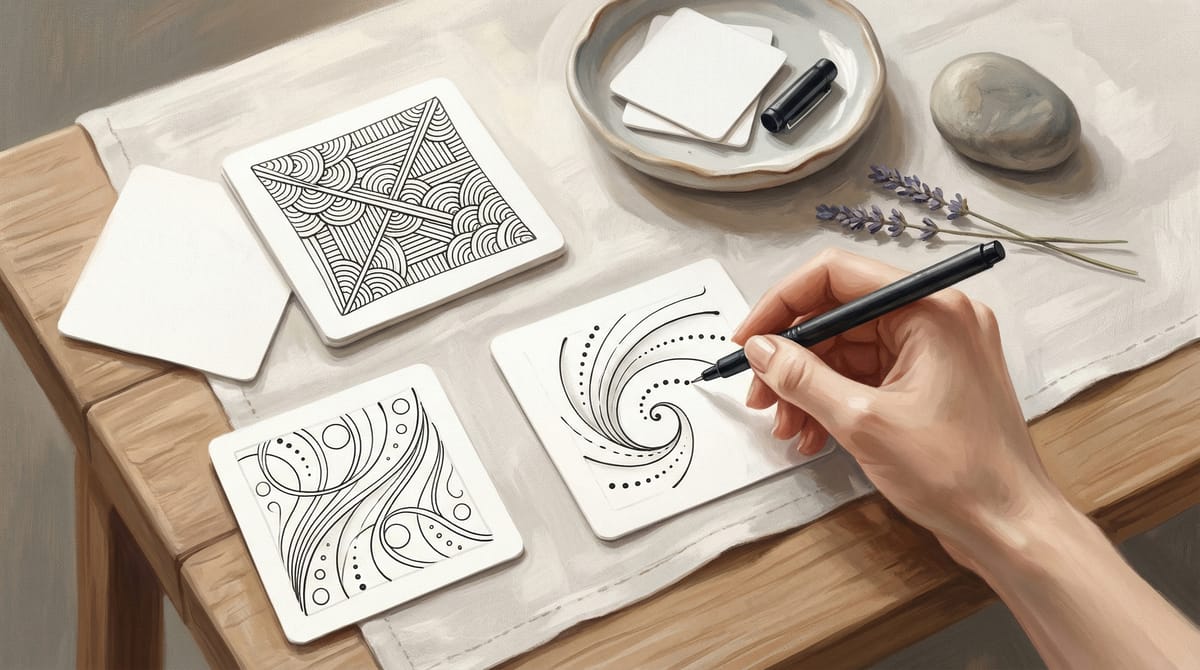
Zentangle is a structured drawing method built from five elemental strokes - dots, lines, curves, semicircles, and circles - drawn on small rotatable tiles. It helps beginners create intricate patterns, improve focus, and practice art in a calm, repeatable way.
Zentangle is a structured drawing method built from five elemental strokes - dots, lines, curves, semicircles, and circles - drawn on small rotatable tiles. It helps beginners create intricate patterns, improve focus, and practice art in a calm, repeatable way.
Key Takeaways
- Zentangle uses a small stroke vocabulary, so beginners can start without advanced drawing training.
- The official method uses five elemental strokes and small square tiles that can be rotated as you work.
- A 2025 scoping review screened 15 recent articles and included 6, with reported gains in focus, emotional well-being, and stress relief.
- This course is Basic and focuses on dots, lines, curves, semicircles, and circles, which makes the entry point clear.
- The strongest results come from repetition, shading, and process, not from chasing perfect outcomes.
Table of Contents
- Understanding Zentangle and the Five Elements
- Key Concepts and Techniques
- Who Benefits from Learning Zentangle?
- What Do Students Say?
- Is This Course Worth It?
- About the Creator
- Essential Zentangle Building Blocks
- Watch Before You Enroll
- Frequently Asked Questions
- Conclusion
- Explore More on TGD
Understanding Zentangle and the Five Elements
Zentangle is a repeatable drawing system, not an advanced illustration test. According to Zentangle - About, the official method is built from five elemental strokes and drawn on small square tiles that you can rotate while you work.
That structure matters because it lowers the entry barrier. According to Jurnal PROMKES, a January 2025 scoping review screened 15 recent articles and included 6; those studies reported possible gains in cognitive focus, emotional well-being, stress relief, and lower depressive symptoms.
According to Zentangle - Learn, beginners are encouraged to use official teaching resources and Certified Zentangle Teachers. The method stays relevant because it combines a short ritual, simple marks, and a clear path from first stroke to finished tile.
Want to Learn Zentangle Step by Step?
This course on The Great Discovery covers the five-element foundation and beginner flow in a structured format.
The Great Discovery (TGD) is a global online course marketplace where creators publish courses and learners discover practical training across business, technology, wellness, and personal growth.
Key Concepts and Techniques
Once you know the strokes, Zentangle becomes a toolkit for building patterns and confidence. The method works best when you treat each step as a small decision rather than a big art project.
The five elemental strokes
The official method names dots, lines, simple curves, S-curves, and orbs. This course teaches a simplified shape vocabulary of dots, lines, curves, semicircles, and circles, which is easier for beginners to remember and practice.
Tiles, borders, and strings
Zentangle is usually drawn on small square tiles, so each piece feels contained and finishable. Borders define the edge of the tile, and a string breaks the space into sections so the pattern can develop one area at a time.
The eight-step beginner flow
The official beginner flow starts with gratitude and appreciation, then moves through corner dots, border, string, tangle, shade, initial or sign, and appreciate. That sequence is useful because it turns drawing into a calm ritual instead of an open-ended task.
Shading and contrast
Shading gives a Zentangle tile depth and makes the patterns feel more complete. Even light pencil shading can separate shapes, create motion, and make simple strokes look intentional.
Practice as repetition
Zentangle improves through repetition, not novelty. When you repeat the same stroke family across a tile, you train attention, hand control, and pattern recognition at the same time.
Who Benefits from Learning Zentangle?
This topic suits people who want creative structure more than artistic performance. Because the course is Basic and sits in Self Improvement, Mental/Emotional Health, TGD Success, and Arts & Craft, it is built for low-pressure learning.
Complete beginners
If you have never taken an art class, this method gives you an immediate starting point. The five-element framework keeps the page from feeling blank, and this TGD course is a good first step because it teaches the basics in a stepwise way.
Busy or stressed learners
If you use drawing to reset after work, the slow repetition can feel restorative. The official method's short ritual and simple marks make it easy to fit into a brief break.
Wellness-oriented practitioners
If you already value reflective or therapeutic routines, Zentangle fits naturally into that space. The creator's therapeutic art background and the mental-well-being research make the course especially relevant for this audience.
Educators, coaches, and workshop leaders
If you teach calming or creative practices, the method gives you a clear, repeatable framework. The course description promises a path from simple elements to more complex, personal art pieces, which works well for guided group sessions.
What Do Students Say?
This course is new to the marketplace and hasn't collected reviews yet. Check back after launch for student feedback. For now, the creator bio, course level, and topic fit are the main signals to evaluate.
Is This Course Worth It?
Yes, if you want a gentle, structured introduction to Zentangle.
It is best for beginners, mindful hobbyists, and learners who want a creative routine built from simple repeatable marks.
It is not a fit for someone expecting advanced composition theory or a critique-heavy studio class.
As a next step on TGD, it is strongest when you already want the five-element foundation and prefer guided practice over piecing the method together from scattered videos.
About the Creator
MEE CHEE SOO teaches from a therapeutic art perspective. The creator has published 3 courses for 8 learners, and the listed average rating is 0.0. The bio describes the creator as Micisu Therapeutic Art Coach (美子疗愈艺术讲师), which matches the calm, beginner-friendly tone of this course.
Learn more on the creator page: MEE CHEE SOO on The Great Discovery.
Essential Zentangle Building Blocks
Zentangle becomes easier when you can name the parts of the method. Use the table below as a quick reference while you practice.
| Element | What It Means | How to Practice |
|---|---|---|
| Dots | Anchor the corners and give the tile a frame. | Mark the corners first, then let the rest of the pattern grow inward. |
| Lines | Create direction and structure. | Use straight or slightly varied lines to separate sections and guide movement. |
| Curves | Soften the drawing and add flow. | Repeat smooth curves to make the pattern feel connected. |
| Semicircles | Break up space with rounded edges. | Stack or nest semicircles to practice spacing and rhythm. |
| Circles / Orbs | Build enclosed shapes that feel complete. | Draw different sizes and overlap them to explore balance. |
| Shading | Add depth and make the tile feel finished. | Shade lightly beside strokes, borders, and overlaps to create contrast. |
The course focuses on these building blocks so you can move from single strokes to finished tangles without guessing the next step.
Master Zentangle with Expert Guidance
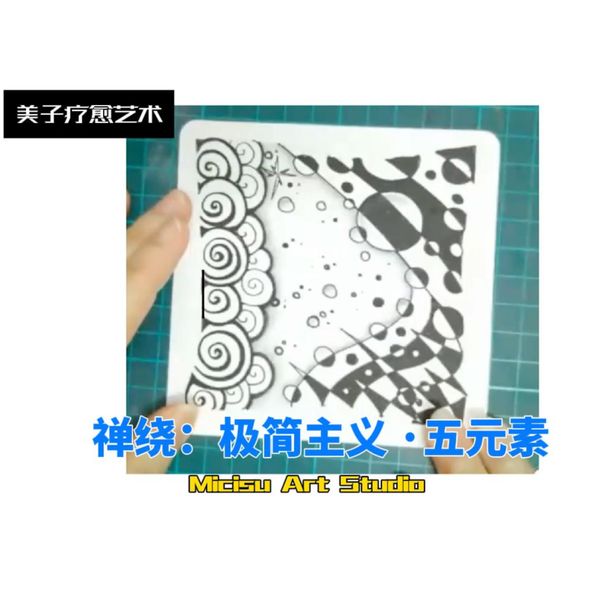
MEE CHEE SOO's course turns the five-element foundation and the beginner flow into guided practice. It is a practical next step if you want to turn the table above into a real drawing habit.
Enroll in 禅绕 101: 极简主义 ·五元素/ Zentangle: Minimalism · Five Elements →
Watch Before You Enroll
Learn how to become an affiliate on The Great Discovery — the best affiliate program for course creators and marketers in 2026. Start earning commissions by sharing courses you believe in.
Frequently Asked Questions
What is Zentangle?
According to Zentangle - About, Zentangle is a structured drawing method built from repeatable strokes on small square tiles. It is designed to be approachable, calm, and easy to start even if you do not see yourself as an artist.
What are the five elements of Zentangle?
According to Zentangle - About, the official five elemental strokes are dots, lines, simple curves, S-curves, and orbs. This course teaches the same idea with beginner-friendly shape language such as dots, lines, curves, semicircles, and circles.
How do you start a Zentangle drawing?
According to Zentangle - About, the beginner flow starts with gratitude, corner dots, border, string, tangle, shade, initial or sign, and appreciate. That sequence gives the session a clear beginning and ending, which helps keep the practice focused.
Is Zentangle helpful for stress relief?
According to Jurnal PROMKES, a 2025 scoping review screened 15 recent articles and included 6 studies that reported possible benefits for focus, emotional well-being, and stress relief. The evidence is still emerging, but the direction is encouraging.
Do you need to be able to draw well?
No. Zentangle is built around simple, repeatable strokes, so the method is intentionally friendly to beginners. The point is to practice attention and pattern-making, not to prove technical drawing skill.
Is the TGD course good for beginners?
Yes. The course is marked Basic, and its five-element structure makes the learning curve gentle. If you want a calm first course rather than a more advanced art class, it is a sensible starting point.
Ready to Go Deeper?
You have learned the five-element foundation, the eight-step flow, and the role of shading in building a complete Zentangle tile. This course is the natural next step if you want that structure in guided lessons.
Start Learning Zentangle on TGD →
Conclusion
Zentangle teaches focus through structure, not through artistic pressure. You learned how the method uses five core strokes, rotatable tiles, a beginner sequence, and shading to turn small marks into finished art. You also saw that emerging research points toward benefits for focus, stress, and emotional well-being. If you want a clear first course rather than scattered examples, MEE CHEE SOO's beginner-friendly TGD course is a sensible next step. Explore the course on The Great Discovery.
Explore More on TGD
Continue learning within related TGD paths. The links below surface the category pages most relevant to this course, plus the TGD homepage and creator profile.
- Self Improvement courses
- Mental/Emotional Health courses
- TGD Success courses
- Arts & Craft courses
- The Great Discovery homepage
- MEE CHEE SOO creator page
Share Your Knowledge on The Great Discovery
Join MEE CHEE SOO and hundreds of other creators sharing their expertise. Create and sell your own courses on TGD.