
Master Behavior Change: The Science of Breaking Habits & Building New Ones
By The Great Discovery Content Team | Updated April 2, 2026
Master Behavior Change: The Science of Breaking Habits & Building New Ones
By The Great Discovery Content Team | Updated April 2, 2026
Behavior change is a learnable skill built on five key pillars: self-control, consciousness, social support, and two additional psychological drivers that research shows activate sustainable habit transformation at the cellular level.
Key Takeaways
- The Transtheoretical Model identifies five sequential stages of behavior change—precontemplation through maintenance—with maintenance being the critical phase where most people slip back into old patterns.
- Cognitive Behavioral Therapy achieves a 42% response rate compared to just 19% in control groups, demonstrating the power of structured, theory-based behavior change.
- Self-efficacy (belief in your ability to execute new behaviors) builds fastest through micro-resolutions—small, manageable goals—rather than broad declarations.
- The Fogg Behavior Model shows that behavior change requires three elements: motivation (wanting it), ability (making it easy), and a prompt (the trigger).
- Howard Rankin's course on The Great Discovery teaches all five keys in a structured, step-by-step format designed for learners of all backgrounds.
Table of Contents
- Understanding Behavior Change
- Key Concepts and Techniques
- Who Benefits from Learning Behavior Change?
- What Do Students Say?
- About the Creator
- The Five Stages of Behavior Change
- Watch Before You Enroll
- Frequently Asked Questions
- Conclusion
- Explore More on TGD
Understanding Behavior Change
Behavior change is a predictable, step-by-step process governed by psychological science rather than willpower alone. According to ScienceDirect Neuroscience Topics, the Transtheoretical Model identifies five sequential stages: precontemplation (not yet considering change), contemplation (thinking about it), preparation (planning), action (executing), and maintenance (sustaining the new behavior). Most people focus on the action stage, but research shows that the maintenance phase is critical—this is where most people slip back into old patterns if change is not reinforced.
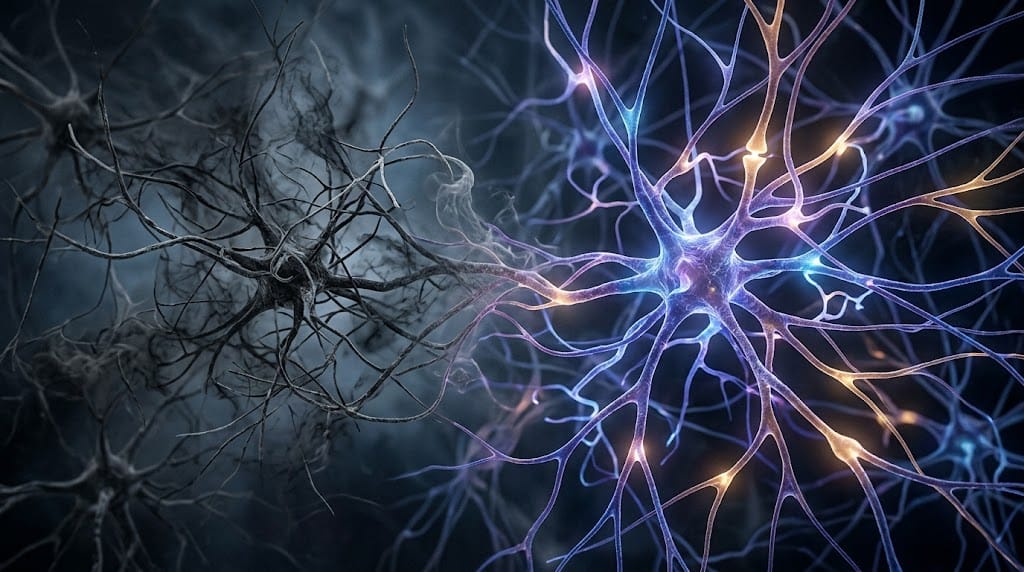
The brain doesn't operate in discrete behavior units. Instead, repeated behavior becomes subconscious over time through a process called automatization, where neural pathways strengthen and the basal ganglia take over execution from the prefrontal cortex. This means that breaking an old habit and building a new one requires more than willpower—it requires understanding how habits form at the cellular level and designing your environment and social systems to support sustained change.
What makes behavior change stick? According to Barrington Behavioral Health, self-efficacy—your belief in your ability to execute the necessary behaviors—builds fastest through micro-resolutions: small, manageable goals that create positive feedback loops. Instead of declaring "I will exercise every day," micro-resolutions succeed because they compound small wins into lasting confidence. Research cited by the American Psychological Association shows this approach creates measurable differences in long-term adherence compared to broad, sweeping declarations.
Want to Learn Behavior Change Step by Step?
This course on The Great Discovery covers all of the foundational science, the five keys to successful change, and practical strategies you can start using today.
Key Concepts and Techniques
Behavior change works best when you combine psychological frameworks with environmental design and social systems. Understanding these core concepts gives you a practical roadmap to move beyond good intentions toward lasting transformation.
The Transtheoretical Model (TTM)
The TTM is the gold standard framework for understanding behavior change progression. According to ScienceDirect, this model identifies five sequential stages, with each stage requiring different strategies. Someone in the precontemplation stage isn't ready for an action plan—they need consciousness-raising first. By contrast, someone in the action stage needs environmental design and social support. Skipping stages or using the wrong strategy for your current stage is a leading cause of behavior change failure.
The Fogg Behavior Model
Stanford Graduate School of Business research shows that behavior change depends on three driving forces: motivation (the desire to change), ability (making the new behavior simple and easy to execute), and a prompt (the trigger that reminds you to do it). Many people focus only on motivation—"I really want to change"—but Fogg's research demonstrates that even high motivation fails without ability and prompt design. If you want to start exercising, motivation is necessary, but the real lever is reducing friction (ability) and setting a specific time trigger (prompt).
Self-Control and Consciousness
Self-control isn't an unlimited resource; it depletes throughout the day. Consciousness—awareness of your current habits and their triggers—is the first step to change. By identifying the trigger (what causes the behavior?), the routine (what do you do?), and the reward (what craving does it satisfy?), you can design targeted interventions. This is why many behavior change programs emphasize tracking: consciousness precedes control.
The Role of Social Support
Isolation is one of the strongest predictors of behavior change failure. Social support—whether from a coach, peer group, family, or community—activates accountability and normalization. When others around you are attempting similar changes, your own self-efficacy rises. This is why group-based behavior change programs consistently outperform individual approaches.
The Maintenance Phase
The action phase gets the attention, but maintenance wins the prize. Research shows that most people can sustain new behaviors for 30–90 days, but slippage occurs when the novelty wears off or when a stressor disrupts the routine. Successful maintenance requires periodic renewal of consciousness, continued social support, and environmental design adjustments. This is often the "secret" factor that separates lasting change from temporary behavior shifts.
Who Benefits from Learning Behavior Change?
Behavior change skills apply across health, career, relationships, and personal growth. Whether you're breaking a habit, building resilience, or helping others transform, these principles work at scale.
People in Addiction and Recovery
If you're in recovery from substance use, food disorders, or behavioral addictions, understanding the five keys is not optional—it's foundational. The maintenance phase is especially critical in addiction recovery, where relapse prevention requires conscious design of triggers, social support systems, and identity reinforcement. Howard Rankin's course on The Great Discovery is explicitly designed for this audience, teaching how cellular-level habit systems change and how to maintain that change long-term.
Health Coaches and Wellness Professionals
If you work in fitness, nutrition, mental health, or wellness, your clients are already asking you: "Why can't I stick to my goals?" Having a structured framework—the five keys—lets you diagnose exactly where each client is stuck and apply the right intervention. According to a 2025 systematic review cited by MDPI, fewer than two-thirds of real-world behavior change programs use evidence-based techniques. This course gives you the framework that separates effective coaching from well-intentioned advice.
Managers and Organizational Leaders
Behavior change isn't just personal. If you lead a team or organization, you're constantly managing behavior change—adoption of new processes, culture shifts, performance improvements. The same five keys that unlock personal habit transformation apply to organizational systems. Understanding self-control, consciousness, and social support helps you design interventions that actually stick rather than fading after the initial training or mandate.
Students and Lifelong Learners
If you're building new study habits, learning a language, or mastering a skill, behavior change frameworks accelerate your progress. Self-efficacy through micro-resolutions means you succeed faster by setting smaller, faster-feedback goals. Understanding the maintenance phase means you don't lose momentum after the first month. This course is rated as Basic skill level, making it accessible whether you're a teenager starting your first major behavior change or an adult returning to learning after years away.
What Do Students Say?
This course is new to the marketplace and hasn't collected reviews yet. Check back after launch for student feedback. Early learners will be among the first to experience Howard Rankin's approach to teaching the five keys and cellular habit formation on The Great Discovery platform.
About the Creator
Howard Rankin is the creator behind this course on The Great Discovery. Known as "The Miracle Within You," Rankin brings a focus on the cellular and psychological systems that underpin lasting transformation. Across his courses on TGD, Rankin has engaged 11 learners seeking foundational knowledge in behavior change and personal transformation.
Rankin's teaching philosophy emphasizes the integration of neuroscience, psychology, and practical technique. Rather than offering quick-fix strategies, his approach grounds behavior change in how the brain and body actually work—the "miraculous cellular system" that makes repeated behavior eventually unconscious and automatic. This foundation-first method appeals to learners who want to understand the "why" behind behavior change, not just the "how."
To learn more about Howard Rankin and explore his other courses, visit his creator profile on The Great Discovery.
The Five Stages of Behavior Change
Understanding where you are in the change process determines which strategies will actually work for you. The Transtheoretical Model provides a map of the entire journey, with different tools and support systems suited to each stage.
| Stage | Where You Are | What Works |
|---|---|---|
| Precontemplation | Not yet considering change, or in denial about the need for it | Consciousness-raising, education, exposure to reasons for change |
| Contemplation | Thinking about change, but ambivalent about the cost and effort | |
| Exploring pros and cons, building self-efficacy, seeing examples of successful change | ||
| Preparation | Committed to change and planning specific steps | Goal-setting, micro-resolutions, designing environment, identifying social support |
| Action | Actively executing the new behavior and managing obstacles | Reward systems, prompt design, managing triggers, maintaining motivation |
| Maintenance | Sustaining the new behavior and preventing relapse into old patterns | Continued consciousness, social support reinforcement, periodic goal renewal |
According to ScienceDirect, the maintenance phase is where most people slip back into old patterns if change is not reinforced. This stage is often overlooked in behavior change programs, yet it's the difference between lasting transformation and temporary behavior shifts. Howard Rankin's course teaches all five keys across all five stages, ensuring you understand not just how to start change, but how to make it stick for life.

Master Behavior Change with Expert Guidance
Howard Rankin's course covers all of these stages and more, with structured lessons you can complete at your own pace. Move from understanding the theory to applying the five keys in your own life—whether you're breaking a habit, building resilience, or helping others transform.
Enroll in The 5 Keys to Successful Behavior Change →
Watch Before You Enroll
Watch this short video overview to understand the main ideas behind The 5 keys to Successful Behavior Change before you enroll.
This video introduces The 5 keys to Successful Behavior Change and previews how habits are developed and understand the complex and miraculous cellular system that makes repeated behavior driven subconsciously.
Frequently Asked Questions
What are the five keys to successful behavior change?
According to the course description, the five keys are self-control, consciousness, and social support, plus two additional psychological drivers that work at the cellular level. Howard Rankin teaches how these five elements interact to help you move from old patterns into new, sustainable behaviors. The course covers both the theoretical foundation and practical application of each key.
How long does it take to build a new habit?
Research varies, but most behavior change happens across multiple stages over weeks to months. The Transtheoretical Model shows that the action phase (where you're actively doing the new behavior) typically takes 30–90 days, but the maintenance phase—sustaining the behavior without relapsing—is where lasting change is proven. This is why programs that teach maintenance strategies succeed better than those that focus only on the first 30 days.
Can you change a habit if you've had it for years?
Yes. The brain's neuroplasticity means that old neural pathways can be weakened and new ones strengthened at any age. However, deeply ingrained habits require stronger environmental design and social support because the autopilot pathway is well-established. This is why understanding the cellular system (as Rankin teaches) and designing interventions based on the five keys matters more for long-standing habits than for newer ones.
What's the role of self-control in behavior change?
Self-control is one of the five keys, but it's not the whole story. Research shows that self-control is a limited resource that depletes throughout the day. Rather than relying on willpower alone, successful behavior change combines self-control with environmental design (reducing friction), prompt design (making the trigger automatic), and social support (accountability and normalization). The five-key framework teaches you how to minimize the burden on self-control alone.
Is the course suitable for beginners?
Yes. The course is rated as Basic skill level, meaning it's designed for learners with no prior background in psychology or behavior change. Howard Rankin teaches the foundational science—how habits form at the cellular level, what the five keys are, and how to apply them—in accessible, step-by-step format. Whether you're addressing addiction recovery, building fitness habits, or organizational change, the course meets you where you are.
What format is the course, and how long does it take?
The Great Discovery offers self-paced courses, meaning you complete lessons on your own schedule. The course is available through Genius Club membership, giving you access not just to this course but to hundreds of other courses on The Great Discovery platform. You can complete modules at your own pace without time pressure.
Conclusion
Behavior change is neither magic nor willpower—it's a learnable skill grounded in neuroscience, psychology, and proven frameworks. You've learned how the Transtheoretical Model maps the five stages of change, how self-efficacy builds through micro-resolutions, and how the Fogg Behavior Model shows that motivation alone isn't enough without ability and prompt design. You've seen why the maintenance phase is where most people fail, and why understanding the cellular systems behind habit formation gives you the power to actually change them.
The final step is structured learning. Howard Rankin's course on The Great Discovery takes you from understanding these principles to applying them in your own life. Whether you're breaking a habit, building resilience, or guiding others through transformation, the five keys provide a repeatable, evidence-based framework that works. Start today and experience the shift from knowing what to do to actually doing it—and more importantly, sustaining it.
Start Learning Behavior Change on TGD →
Ready to Go Deeper?
You've learned the fundamentals of behavior change and why the five keys matter. This free course on The Great Discovery takes you from understanding to practical application, with structured lessons you can complete at your own pace.
Start Learning the 5 Keys on TGD →
Explore More on The Great Discovery
- Explore Mental & Emotional Health Courses
- Explore Habit Change Courses
- Explore Addiction & Recovery Courses
- Visit Howard Rankin's Creator Profile
- Return to The Great Discovery Homepage
Share Your Knowledge on The Great Discovery
Join Howard Rankin and hundreds of other creators sharing their expertise. Create and sell your own courses on TGD.