
The PR Powerplay Workbook by Lilian Sue | TGD
Public relations is the practice of earning attention through credible stories, media relationships, and well-timed outreach. It works best when you match the right journalist, lead with a clear narrative, and treat PR as a goal-driven campaign, not random promotion.
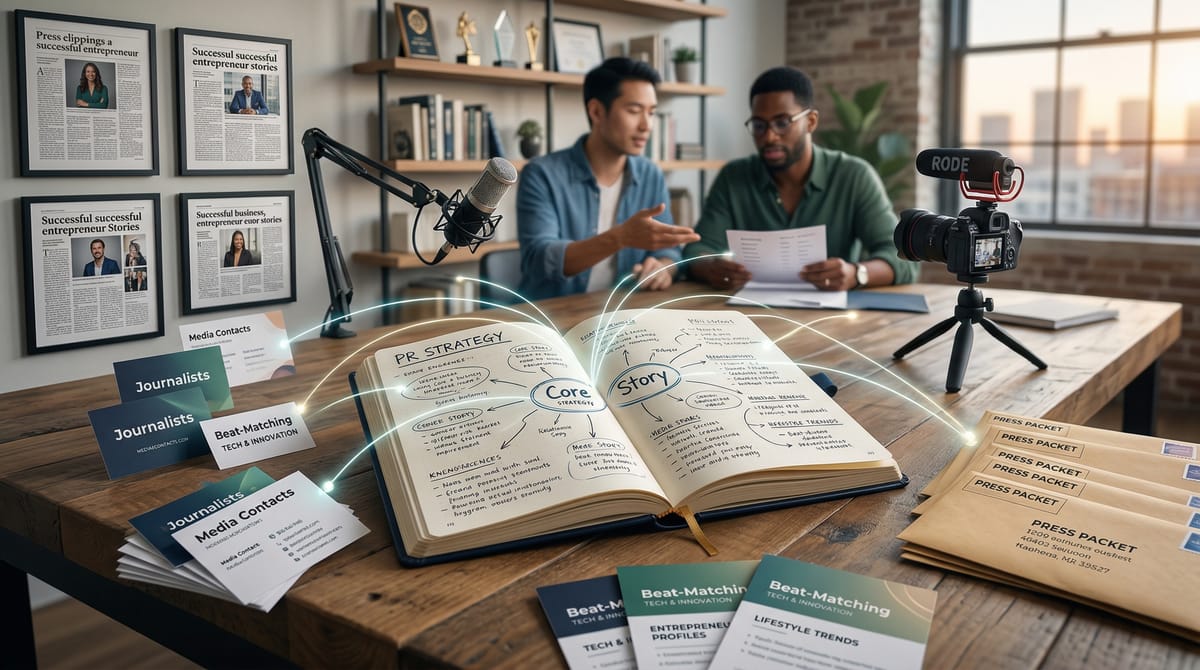
Public relations is the practice of earning attention through credible stories, media relationships, and well-timed outreach. It works best when you match the right journalist, lead with a clear narrative, and treat PR as a goal-driven campaign, not random promotion.
Key Takeaways
- PR works best when you lead with a story angle that matters to a specific audience.
- According to Cision, 86% of journalists reject pitches that miss their beat or audience.
- According to Cision, 85% of journalists prefer a simple email introduction before a pitch.
- Meltwater and We. Communications found that over 90% of PR teams use generative AI, but only 13% describe that integration as highly mature.
- The PR Powerplay Workbook is a beginner-friendly next step for entrepreneurs who want prompts, mindset support, and OKR-based campaign planning.
Table of Contents
- Understanding Public Relations
- Key Concepts and Techniques
- Who Benefits from Learning Public Relations?
- What Do Students Say?
- Is This Course Worth It?
- About the Creator
- Essential Public Relations Concepts
- Watch Before You Enroll
- Frequently Asked Questions
- Conclusion
- Explore More on TGD
Understanding Public Relations
Public relations helps people and organizations earn attention through credible stories, media relationships, and useful context. It matters because well-placed coverage can build trust faster than repeated self-promotion, especially when you want earned attention instead of paid reach.
According to Cision's 2025 State of the Media Report, 86% of journalists immediately reject pitches that do not match their beat or audience, while 85% say the best way to build a relationship is a simple email introduction before pitching. It also says 62% advise following up only once, which shows restraint matters. Relevance is the fastest filter.
According to Muck Rack, 75% of PR professionals use AI, 93% say it speeds up their work, and 78% say it improves quality. According to Meltwater and We. Communications, more than 90% of PR teams have integrated generative AI, yet only 13% describe that integration as highly mature. Modern PR is therefore a blend of human judgment, simple systems, and selective automation.
A strong PR plan starts with a clear message, then narrows to the audience, then ends with a specific ask.
Want to Learn Public Relations Step by Step?
This course on The Great Discovery turns the fundamentals of storytelling, campaign goals, and relationship-building into a simple learning path.
The Great Discovery (TGD) is a global online course marketplace where creators publish courses and learners discover practical training across business, technology, wellness, and personal growth. It is designed to help people find structured learning from independent experts.
Key Concepts and Techniques
Good PR depends on a story, a target, and a repeatable outreach system. The concepts below show how those pieces fit together in practice.
Finding the story angle
A story angle is the newsworthy hook that makes your message feel relevant now. Instead of leading with a product name or a personal bio, lead with a problem solved, a timely trend, or a useful insight.
For example, a founder can frame a pitch around a customer problem the business helps solve, while an author can frame one around a timely idea readers care about.
Matching the journalist's beat
Beat fit means sending the right story to the right journalist or outlet. According to Cision, 86% of journalists reject pitches that do not match their beat or audience, so relevance is the first filter.
If a reporter covers small business and entrepreneurship, send a story about founder lessons or business growth, not a generic brand announcement.
Building relationships before the pitch
Relationship-first pitching starts with a short introduction and a clear sense of what the journalist covers. Cision says 85% of journalists see a simple email introduction before pitching as the best relationship builder.
That approach lowers friction and makes your eventual pitch feel familiar rather than intrusive. It also helps you learn what each contact actually wants.
Turning publicity into OKRs
OKRs turn vague publicity dreams into concrete campaign goals. An objective names the outcome you want, and key results define the signs that you are making progress.
For example, an objective might be to increase awareness for a new service, while key results might include three media responses, one interview, and two published mentions.
Managing mindset and momentum
Mindset matters because PR often asks people to face rejection, uncertainty, and visibility. The workbook's prompts and resources are useful here because they help learners move through fear and keep showing up.
That matters as much as the pitch itself. A consistent outreach habit usually beats occasional bursts of inspiration.
Who Benefits from Learning Public Relations?
This topic is most useful for people who need visibility, credibility, and a clearer way to talk about their value. A beginner-friendly PR workbook works best when the reader wants practical steps more than theory.
Entrepreneurs and founders
Entrepreneurs often need traction beyond social media and email alone. PR helps them package the business as a story that journalists and audiences can quickly understand.
The PR Powerplay Workbook is a sensible starting point for this group because it is beginner-friendly and focused on campaign goals, mindset, and storytelling.
Coaches, authors, and speakers
Coaches, authors, and speakers benefit because PR translates expertise into a message people can quote and share. If your work depends on authority, media visibility can support trust more than repeated self-promotion.
The course description makes it a natural fit for people in TGD Success, Mindset, and Entrepreneurship and Business who want to turn their story into a clearer pitch.
Marketing and communications beginners
Beginners often need a structured way to understand how PR actually works. This workbook gives them a practical introduction to brainstorming campaign goals, busting myths, and using OKRs to move from idea to action.
That makes it a strong first stop for learners who want a basic, low-friction introduction before moving into more advanced media strategy.
People who freeze when they have to ask for attention
Some people know their story, but they hesitate to share it. PR mindset work matters for them because fear and anxiety often block consistent outreach more than lack of knowledge does.
The workbook's prompt-driven format can help that audience build confidence before they try larger campaigns.
What Do Students Say?
This course is new to the marketplace and hasn't collected reviews yet. Check back after launch for student feedback.
Is This Course Worth It?
Yes, if you want a beginner-friendly introduction to public relations. It is best for entrepreneurs, creators, and small-business owners who want to understand PR as a practical skill, not just a buzzword.
It is not the right fit if you want advanced media analytics, crisis communications, or a dense theory-heavy curriculum. It is also less useful for readers who already have an established PR process and want enterprise-level depth.
Because there are no reviews yet, the verdict is based on the course outline and creator context rather than learner feedback. It is a strong next step on TGD when you want structured prompts, mindset support, and an OKR-style way to turn story ideas into a campaign plan.
About the Creator
Lilian Sue is a PR Coach, Multi-Award Winning Author, Speaker. Her available creator data shows 3 courses created, 7 total learners, and an average rating of 0.0.
That profile suggests a focused creator rather than a large catalogue builder. If you want to learn from someone who teaches PR through a practical coaching lens, her course page is a direct place to start.
Visit Lilian Sue's creator page on TGD →
Essential Public Relations Concepts
These are the building blocks that make introductory PR training useful in the real world. Each one helps you move from vague publicity goals to a pitch that feels credible and well timed.
| Concept | What It Means | Why It Matters | Practical Example |
|---|---|---|---|
| Story angle | The newsworthy hook that explains why a story matters now | Journalists need a reason to care quickly | Frame a founder story around a timely problem solved |
| Beat fit | Matching a pitch to a journalist's subject area and audience | According to Cision, 86% of journalists reject mismatched pitches | Pitch a business reporter with a business angle, not generic self-promotion |
| Relationship-first outreach | Introducing yourself before asking for coverage | According to Cision, 85% of journalists prefer a simple email introduction first | Send a short intro, learn what they cover, then pitch |
| OKR planning | A goal-setting method that links an objective to measurable results | It turns publicity from an idea into a campaign | Set an objective like increasing visibility and track interview requests or mentions |
| Follow-up discipline | A respectful, limited follow-up after the first pitch | According to Cision, 62% advise following up only once | Send one polite reminder, then move on if there is no response |
| AI-assisted workflow | Using generative AI to draft, research, and personalize faster | Meltwater and Muck Rack show AI is already widespread in PR | Draft several pitch versions with AI, then edit each one for accuracy and tone |
These concepts line up with the workbook's beginner focus on storytelling, mindset, myth-busting, and campaign planning. If you understand these basics, the course becomes a practical framework rather than just an introduction.

Master Public Relations with Expert Guidance
Lilian Sue's workbook takes the concepts above and gives them a structured, beginner-friendly path. It is a practical next step if you want prompts, mindset support, and a clearer way to plan your first campaign.
Enroll in The PR Powerplay Workbook: Unlock Your PR Superpowers To Gain Global Publicity →
Watch Before You Enroll
Affiliate sharing on TGD is simple once you understand the flow. Learn how to become an affiliate on The Great Discovery — the best affiliate program for course creators and marketers in 2026. Start earning commissions by sharing courses you believe in.
Frequently Asked Questions
What is public relations?
Public relations is the practice of earning attention through credible stories, media relationships, and strategic outreach. According to Cision's 2025 State of the Media Report, 86% of journalists reject pitches that do not match their beat or audience.
Why do journalists reject pitches so quickly?
They reject them because a pitch must fit the journalist's audience, beat, and timing. Cision reports that 86% immediately reject irrelevant pitches, 85% prefer a simple email introduction before pitching, and 62% advise following up only once.
How do you write a good PR pitch?
A good pitch starts with a clear story angle, shows why the topic matters now, and matches the recipient's beat. Keep it short, specific, and easy to scan, then include context, proof, and a clear ask.
How is AI changing PR work?
AI is speeding up PR research, drafting, and personalization. According to Muck Rack, 75% of PR professionals use AI, 93% say it speeds up their work, and 78% say it improves work quality, while Meltwater and We. Communications found that over 90% of PR teams have integrated generative AI but only 13% describe that integration as highly mature.
What does OKR mean in PR?
OKR stands for objective and key results. In PR, it means naming the outcome you want and then defining measurable signs that show whether your campaign is working.
Is The PR Powerplay Workbook good for beginners?
Yes. The course is explicitly beginner-friendly and teaches how to brainstorm a campaign goal, build a stronger PR mindset, unlock the story behind your message, bust common myths, and use an OKR framework.
Ready to Go Deeper?
You have learned the core mechanics of public relations: story, fit, relationships, and goals. This course takes those ideas and turns them into a structured beginner path you can actually use.
Start Learning Public Relations on TGD →
Conclusion
Public relations works when story, timing, and relevance line up. You learned that modern PR is less about blasting announcements and more about matching the right audience, building relationships first, and setting specific campaign goals. You also saw why AI is speeding up workflows while human judgment still matters. That is what makes PR useful for founders, creators, and beginners.
If you want a structured beginner path, The PR Powerplay Workbook gives you prompts, mindset support, and an OKR-style framework to move from understanding to action. Start Learning Public Relations on TGD →
Explore More on TGD
Since there are no related courses listed for this course, these TGD category pages are the best next stops. You can also jump back to the homepage or the creator profile if you want to keep exploring.
- TGD Success courses
- Mindset courses
- Entrepreneurship and Business courses
- The Great Discovery homepage
- Lilian Sue's creator page
Share Your Knowledge on The Great Discovery
Join Lilian Sue and hundreds of other creators sharing their expertise. Create and sell your own courses on TGD.