
Scribal Champions Fiction Writing with Desiree Young | TGD
Fiction and fantasy book writing is the craft of building believable characters, clear conflict, immersive settings, and a strong narrative arc while managing reader expectations through genre tropes, point of view, and revision.
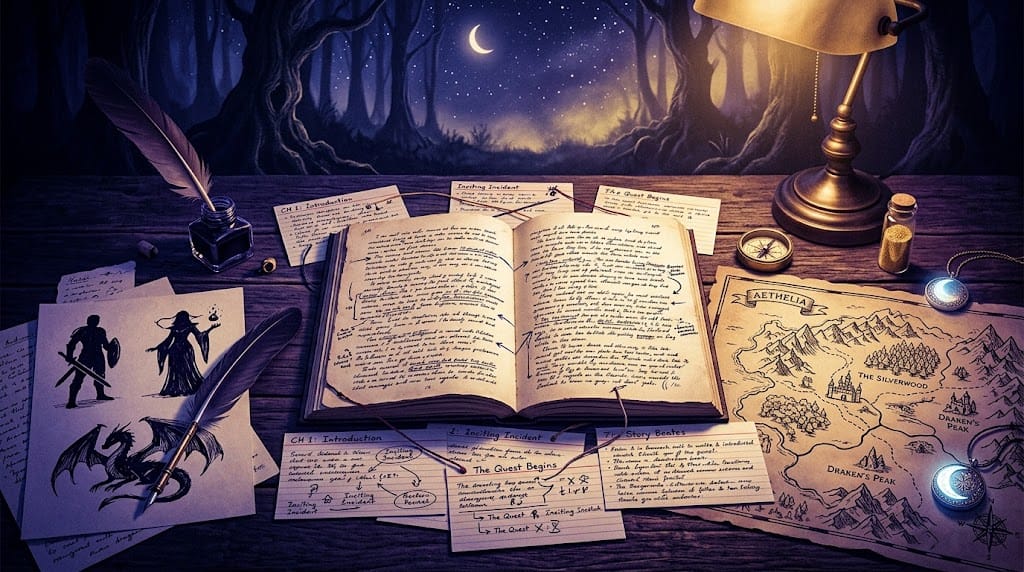
Fiction and fantasy book writing is the craft of building believable characters, clear conflict, immersive settings, and a strong narrative arc while managing reader expectations through genre tropes, point of view, and revision.
Key Takeaways
- Strong fiction usually starts with a clear goal, rising conflict, and a world that follows its own rules.
- According to NIQ, fiction drove revenue growth in 12 of 19 territories in 2025, so story-led books still matter in the market.
- According to Fable/Everand, 80% of readers tried a new genre in 2025, and fantasy ranked first for readers ages 18-34.
- Point of view, pacing, and scene-level tension decide whether a chapter feels immersive or flat.
- Scribal Champions adds workbook-guided practice and a step-by-step self-publishing roadmap for beginner writers.
Table of Contents
- Understanding Fiction and Fantasy Book Writing
- Key Concepts and Techniques
- Who Benefits from Learning Fiction and Fantasy Book Writing?
- What Do Students Say?
- Is This Course Worth It?
- About the Creator
- Essential Fiction and Fantasy Writing Concepts
- Watch Before You Enroll
- Frequently Asked Questions
- Conclusion
- Explore More on TGD
Understanding Fiction and Fantasy Book Writing
Fiction and fantasy book writing is the craft of turning imagination into a story that feels coherent, emotionally true, and worth finishing. Readers want characters with goals, conflict that escalates, and a world with rules they can understand. Without structure, even a brilliant idea reads like scattered scenes.
According to NIQ, fiction drove revenue growth in 12 of 19 territories in 2025, which shows that story-led books still matter in a crowded market. According to Fable/Everand, 80% of readers tried a new genre in 2025, and fantasy ranked first for readers ages 18-34. That means fresh voices can still win attention.
The practical lesson is simple: readers want novelty inside familiar storytelling frames. In fantasy, that means building enough world detail to feel immersive without burying the plot. In fiction generally, that means balancing character desire, conflict, point of view, and pacing so every chapter earns the next. That balance is what makes a manuscript feel memorable rather than merely imaginative.
Want to Learn Fiction and Fantasy Book Writing Step by Step?
This course on The Great Discovery covers these fundamentals in a structured format, from story planning to self-publishing basics.
The Great Discovery (TGD) is a global online course marketplace where creators publish courses and learners discover practical training across business, technology, wellness, writing, and personal growth. It is designed to help people find structured instruction from independent creators.
Key Concepts and Techniques
The best fiction and fantasy books are built from a few repeatable craft decisions. Once you understand those decisions, drafting becomes faster and revision becomes more precise.
Plot and conflict
Plot is the chain of events that forces a character to change. Conflict gives that chain pressure, whether it comes from an enemy, a deadline, a moral choice, or a broken world rule.
Genre tropes are useful when they signal the kind of payoff readers should expect, but they work best when the story still surprises the reader. A strong opening usually shows what the protagonist wants and what will go wrong if they fail.
World-building and setting
Fantasy depends on internal logic. Even a magical world needs clear limits, social consequences, and sensory details that help readers orient themselves.
According to Fable/Everand, 80% of readers tried a new genre in 2025, and fantasy ranked first for readers ages 18-34. That makes world-building a direct reader-experience issue, not just decoration.
Characters and point of view
Characters feel memorable when they want something specific and face a meaningful trade-off. Point of view controls how close the reader stands to that desire, so a tight POV can make even simple events feel urgent.
If a scene feels flat, ask whether the character has a sharper fear, a more personal stake, or a more distinctive voice. Small changes in viewpoint often create the biggest emotional payoff.
Drafting and self-editing
A rough draft is a discovery tool, not a final product. The goal is to get the whole story onto the page so you can diagnose pacing, repetition, and weak transitions later.
If you stall, shrink the task to the next scene or paragraph instead of the whole book. That is one of the fastest ways to move through writer's block and keep momentum while you revise chapter purpose, titles, covers, and back-cover copy.
Who Benefits from Learning Fiction and Fantasy Book Writing?
This topic helps beginners and working writers in different ways. Because it blends creative structure with publishing basics, it can support a first manuscript or a more deliberate revision process.
New writers
New writers benefit because fiction teaches structure without killing imagination. A Basic, General Audiences course like Scribal Champions is a natural starting point if you want help organizing plot, characters, conflict, and world-building before you draft too far.
Self-publishers
Self-publishers need more than a finished draft. They need a book that can survive editing, packaging, and market positioning, which is why the course's workbook and self-publishing roadmap are useful for this audience.
Genre readers who want to write
Readers who already love fantasy often understand the rhythm of the genre but still need a framework for turning taste into pages. According to Fable/Everand, fantasy stayed especially strong with younger readers, so a writer who learns how to deliver that experience is working with real demand.
Content creators and small-business authors
Creators who want to publish books as part of a larger brand benefit from learning how covers, subtitles, and back-cover descriptions work together. That makes the course relevant across the Writing, Publishing, and Content Creator categories, not just for hobbyists.
What Do Students Say?
This course is new to the marketplace and hasn't collected reviews yet. Check back after launch for student feedback.
For now, the syllabus is the best signal of what learners can expect: plotting, characters, POV, self-editing, and self-publishing basics.
Is This Course Worth It?
Yes, if you want a beginner-friendly path from idea to manuscript.
It is best for writers who need structure. If you are starting a fiction or fantasy project and want help with plot, audience, conflict, setting, world-building, point of view, and revision, this course fits that need well.
It is not the best fit for experienced novelists looking for deep literary analysis, advanced workshop critique, or a highly specialized genre masterclass. The public listing also has no reviews yet, so there is not much learner feedback to weigh.
As a next step on TGD, it makes sense when you want a practical starter path that connects story craft to self-publishing basics in one place.
About the Creator
Desiree Young is the creator behind Scribal Champions. The public profile is concise, so the clearest facts are the creator's bio and small course catalog.
- Courses created: 3
- Total learners: 15
- Average rating shown: 0.0
Bio: Desireé is an Activator of Scribal Champions.
Visit Desiree Young's creator page
Essential Fiction and Fantasy Writing Concepts
Fiction becomes easier to write when you can name the moving parts. Use the table below as a quick craft check while you draft or revise.
| Element | What It Does | Practical Check |
|---|---|---|
| Premise | States the core story idea in one focused line. | Can you explain why this story would interest a reader in one sentence? |
| Conflict | Creates pressure that forces characters to act. | Does each major scene make the problem harder, riskier, or more personal? |
| World-building | Gives the setting rules, texture, and limits. | Do the details affect choices instead of just decorating the page? |
| Character arc | Shows how the protagonist changes through the story. | Can you point to the belief, fear, or habit that shifts by the end? |
| Point of view | Controls distance, voice, and emotional focus. | Is the reader close enough to feel the scene's stakes? |
| Revision | Turns an early draft into a cleaner, stronger manuscript. | Have you checked pacing, repetition, chapter purpose, and line clarity? |
These same levers show up in the Scribal Champions syllabus, especially plot, conflict, setting, characters, POV, self-editing, titles, covers, and back-cover descriptions. The course is useful if you want a guided way to apply those ideas to a real manuscript.
Master Fiction and Fantasy Book Writing with Expert Guidance
Desiree Young's course covers the same fundamentals you just saw in the table, then adds workbook-guided practice and a step-by-step self-publishing roadmap.
Enroll in Scribal Champions Fiction/Fantasy Book Writing Course →
Watch Before You Enroll
This video shows how The Great Discovery's affiliate program works. Learn how to become an affiliate on The Great Discovery — the best affiliate program for course creators and marketers in 2026. Start earning commissions by sharing courses you believe in.
Frequently Asked Questions
These are the core questions readers usually ask about fiction and fantasy writing.
What makes a fiction story memorable?
A memorable story gives readers a clear desire, rising stakes, and a character whose choices reveal personality. According to NIQ, fiction drove revenue growth in 12 of 19 territories in 2025, so the market still rewards stories that feel both familiar and emotionally sharp.
How do you build world-building in fantasy?
Start with rules, limits, and consequences before adding extra lore. According to Fable/Everand, fantasy ranked especially high with younger readers in 2025, which suggests immersive settings still matter when they support the plot instead of replacing it.
What is the role of conflict in a novel?
Conflict forces movement. It can come from another character, the environment, a deadline, or a moral choice, but it should make the protagonist act and change.
How important is point of view?
Point of view controls distance and emotional access. A tight POV can make even a quiet scene feel urgent because the reader experiences events through one character's needs and fears.
How do you edit a rough draft?
First, finish the draft without trying to perfect every line. Then revise for pacing, repetition, chapter purpose, and clarity before you worry about book packaging like titles, covers, and back-cover copy.
Is the Scribal Champions course good for beginners?
Yes, it is listed as a Basic, General Audiences course and covers plot, audience, conflict, setting, world-building, characters, point of view, self-editing, and self-publishing basics. The workbook and roadmap make it a practical starting point for first-time fiction writers.
Ready to Go Deeper?
You have learned the core moves of fiction and fantasy writing. This course takes those ideas from theory into a practical workflow for drafting, revising, and preparing a book for publication.
Start Learning Fiction and Fantasy Book Writing on TGD →
Conclusion
Fiction and fantasy writing works best when imagination and structure stay in balance. You learned how conflict, world-building, point of view, character arc, and revision shape a manuscript that feels readable and memorable, and why the genre still has strong reader demand. If you want a guided next step, Scribal Champions gives beginners a structured way to move from idea to draft to book packaging on The Great Discovery. Open the course here.
Explore More on TGD
If you want to keep learning, these TGD links are useful next stops. There are no related courses listed here, so the category pages are the best browse path.
- Writing courses
- Publishing courses
- Content Creator courses
- TGD Success courses
- The Great Discovery homepage
- Desiree Young's creator page
Share Your Knowledge on The Great Discovery
Join Desiree Young and hundreds of other creators sharing their expertise. Create and sell your own courses on TGD.