
The Preeminence Playbook with Vance Morris | TGD
Premium pricing is earned through clear differentiation, memorable customer experience, and trust. Customers pay more when they can feel extra value, while ordinary brands lose buyers when service is inconsistent or generic.

Premium pricing is earned through clear differentiation, memorable customer experience, and trust. Customers pay more when they can feel extra value, while ordinary brands lose buyers when service is inconsistent or generic.
Key Takeaways
- Premium pricing works best when customers can clearly see why your offer is different from cheaper alternatives.
- According to Qualtrics XM Institute, 72% of U.S. consumers say they would pay more for a premium experience.
- According to PwC, 29% of consumers stopped buying from a brand because of poor customer experience.
- The Preeminence Playbook is a basic-level master class that covers differentiation, customer experience, customer-centric service, premium pricing, and trusted branding.
- The course fits creators and business owners in Mindset, Sales and Productivity, Entrepreneurship and Business, and TGD Success.
Table of Contents
- Understanding Premium Pricing and Customer Experience
- Key Concepts and Techniques
- Who Benefits from Learning Premium Pricing?
- What Do Students Say?
- About the Creator
- Premium Pricing Signals and Customer Outcomes
- Watch Before You Enroll
- Frequently Asked Questions
- Conclusion
- Explore More on TGD
Understanding Premium Pricing and Customer Experience
Premium pricing is not about charging arbitrarily higher fees. It is about creating a buying experience, a brand promise, and a service standard that make the higher price feel justified.
According to Qualtrics XM Institute, 72% of U.S. consumers say they would pay more for a premium experience. That statistic matters because it shows customers still reward value when they can feel it directly.
According to Deloitte Insights, 47% of consumers are now value seekers, and only about one-third of brands currently deliver more-value-for-the-price. That gap explains why commodity thinking fails: when your offer looks interchangeable, price becomes the only comparison point.
According to PwC, 29% of consumers stopped using or buying from a brand because of poor customer experience. In practice, that means the smallest friction points can erase trust, while consistent service can support higher margins and stronger loyalty.
Want to Learn Premium Pricing Step by Step?
This course on The Great Discovery covers differentiation, customer experience, and premium pricing in a structured way.
Key Concepts and Techniques
Premium pricing becomes practical when you break it into a few repeatable business moves. These concepts help you create value that customers can recognize, remember, and recommend.
Differentiation and Positioning
Differentiation means giving people a clear reason to choose you instead of the cheapest option. A strong value proposition explains what makes your business distinct and why that distinction matters.
For example, a service business can win by promising faster response times, more personal support, or a highly specialized outcome. When that promise is consistent, price becomes part of a larger value story.
Customer Experience Design
Customer experience design focuses on every step a buyer takes, from discovery to delivery to follow-up. According to KPMG, leading organizations are moving toward proactive, predictive experiences powered by agentic AI, which shows how service is becoming more anticipatory.
Even without advanced automation, you can improve the experience by removing confusion, shortening response times, and making the next step obvious. Small improvements often have more impact than flashy gestures.
Value Architecture
Value architecture is the process of making the benefits of your offer visible. Instead of describing features only, spell out the business result, the emotional relief, or the time saved.
A higher price is easier to defend when customers can connect it to measurable outcomes. That is how premium pricing shifts from guesswork to a logical exchange.
Trust and Brand Preeminence
Trust reduces the risk customers feel when they buy. A trusted brand becomes the default choice because buyers believe the experience will match the promise.
Consistency, clarity, and follow-through build that trust over time. Once people see you as the reliable option, discounting matters less than it does for commodity sellers.
Who Benefits from Learning Premium Pricing?
This topic matters most for businesses that want stronger margins without getting trapped in discount wars. It is especially useful when you sell expertise, service, or trust rather than a low-cost product.
Founders and Small-Business Owners
If you run a small business, premium pricing can protect profit when competitors copy your offer. It helps you compete on value instead of volume.
The Preeminence Playbook is a basic-level master class in Mindset, Sales and Productivity, Entrepreneurship and Business, and TGD Success. Its price is not listed in the provided course data, so it is a sensible starting point if you want a practical introduction before investing deeper.
Sales and Marketing Teams
Sales teams need language that explains why the offer costs more and why that difference matters. Marketing teams need proof points that make the experience feel tangible before the sale.
This topic gives both teams a shared framework for showing value without resorting to pressure tactics. That usually improves conversion quality, not just conversion rate.
Service and Operations Leaders
Operations teams shape the customer experience behind the scenes. When workflows are smoother and service recovery is better, customers notice the difference even if they never see the process.
According to PwC, nearly a third of consumers left a brand because of poor experience, so operational consistency is not optional. It is part of the pricing strategy.
Consultants, Coaches, and Creators
If your income depends on expertise, you need a way to explain why your guidance is worth more than a generic alternative. Premium positioning helps you sell outcomes, not hours.
This is where a course like The Preeminence Playbook can be useful, because it connects brand trust, client experience, and pricing into one simple business story.
What Do Students Say?
This course is new to the marketplace and hasn't collected reviews yet. Check back after launch for student feedback.
About the Creator
Vance Morris is listed as the creator of this course and is described as an Ex-Disney leader who shares secrets to wow customers. He has created 4 courses for 17 learners, and the current average rating is 0.0.
You can view his creator profile here: Vance Morris on The Great Discovery.
The available bio suggests a strong customer-experience background, which fits the course topic well. That kind of practical perspective is useful when you want ideas that translate into real service improvements.
Premium Pricing Signals and Customer Outcomes
Premium pricing is easiest to sustain when customers can name the value they are getting. The table below shows the signals that usually support higher prices and the customer outcomes they create.
| Signal | What It Means | Why It Matters |
|---|---|---|
| Clear differentiation | The offer solves a specific problem in a way competitors do not. | Customers compare value, not just price. |
| Premium experience | Buying feels easier, calmer, or more personal than expected. | According to Qualtrics XM Institute, people pay more when the experience feels premium. |
| Visible outcomes | Benefits are explained in terms of results, not just features. | Customers can justify the higher cost when the payoff is concrete. |
| Consistent delivery | The brand does what it promised every time. | Consistency builds trust and reduces purchase risk. |
| Proactive service | Problems are solved before customers have to ask. | According to KPMG, leading brands are moving toward predictive service models. |
| Low churn pressure | Customers stay because the experience feels worth repeating. | According to PwC, poor experience drives people away fast. |
These signals show why premium pricing is a systems problem, not a slogan. The course turns those signals into a practical framework for differentiation, customer care, and trusted branding.
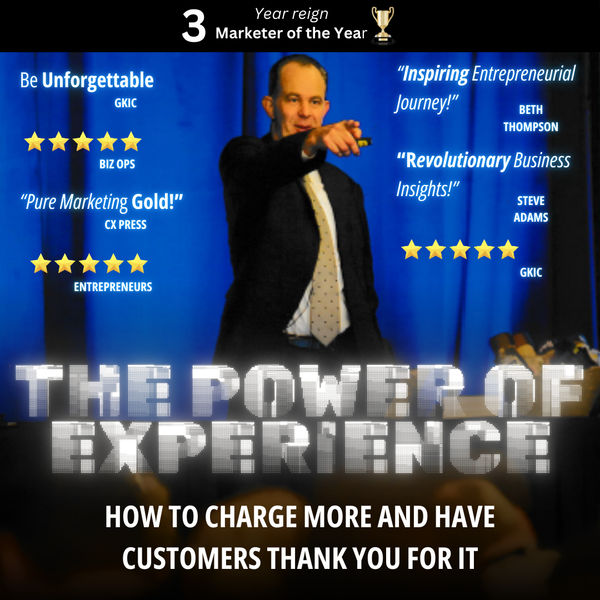
Master Premium Pricing with Expert Guidance
Vance Morris brings a customer-experience perspective to the exact ideas you just saw in the table. His course covers differentiation, trust, and service design in a structured way you can apply at your own pace.
Enroll in The Preeminence Playbook: How to Charge More and Have Customers Thank You for It →
Watch Before You Enroll
Watch this short video overview to understand the main ideas behind The Preeminence Playbook: How to Charge More and Have Customers Thank You for It before you enroll.
This video introduces The Preeminence Playbook: How to Charge More and Have Customers Thank You for It and previews at the end of this Master Class, learners will be able to: Identify and Differentiate Their Business: Clearly distinguish their business from competitors by defining a unique value proposition that elevates their brand above the commodity trap.
Frequently Asked Questions
What is premium pricing?
Premium pricing is charging more because customers perceive extra value. That value can come from service, trust, convenience, specialization, or a better overall experience.
Why do customers pay more for a better experience?
According to Qualtrics XM Institute, 72% of U.S. consumers say they would pay more for a premium experience. People often accept a higher price when the buying process feels easier and the outcome feels safer.
How do you avoid the commodity trap?
You avoid the commodity trap by defining a clear difference and making it visible. According to Deloitte Insights, 47% of consumers are value seekers, so vague claims are not enough; the value must be obvious.
What role does customer experience play in retention?
Customer experience strongly affects retention because poor service drives people away. According to PwC, 29% of consumers stopped using or buying from a brand because of poor experience.
Can proactive service support premium pricing?
Yes. Proactive service reduces friction and makes the brand feel more attentive, which supports trust and repeat purchase behavior. KPMG reports that leading organizations are moving toward predictive experiences powered by agentic AI.
Is The Preeminence Playbook beginner-friendly, and what does it cost?
Yes. The course is described as a basic-level master class. The provided course data does not list a price, so you should treat cost as unavailable unless it is shown on the course page.
Ready to Go Deeper?
You have learned how premium pricing depends on differentiation, trust, and a better customer experience. This course is the next step if you want a structured way to turn those ideas into action.
Start Learning Premium Pricing on TGD →
Conclusion
Premium pricing is not a mystery. It is the outcome of clear differentiation, a customer experience people notice, and a brand promise they trust enough to pay for. The research is blunt: 72% of U.S. consumers say they will pay more for a premium experience, but 29% have already abandoned brands because of poor service, so the gap between value and churn is real. If you want a practical next step, The Preeminence Playbook turns those ideas into a simple business system you can use right away. Explore the course on The Great Discovery.
Explore More on TGD
Keep building the same business skills with these related TGD paths. If you are still exploring, the category pages below are a good way to compare adjacent topics.
- Browse Mindset courses
- Browse Sales and Productivity courses
- Browse Entrepreneurship and Business courses
- Browse TGD Success courses
- Vance Morris creator page
- The Great Discovery homepage
Share Your Knowledge on The Great Discovery
Join Vance Morris and hundreds of other creators sharing their expertise. Create and sell your own courses on TGD.