Unlock Personal Productivity Power with Remi Dairo | TGD
Personal productivity is the practice of managing time, attention, energy, and tools so important work gets done without constant busyness. It matters because better systems reduce overload, sharpen priorities, and turn effort into results that feel sustainable.
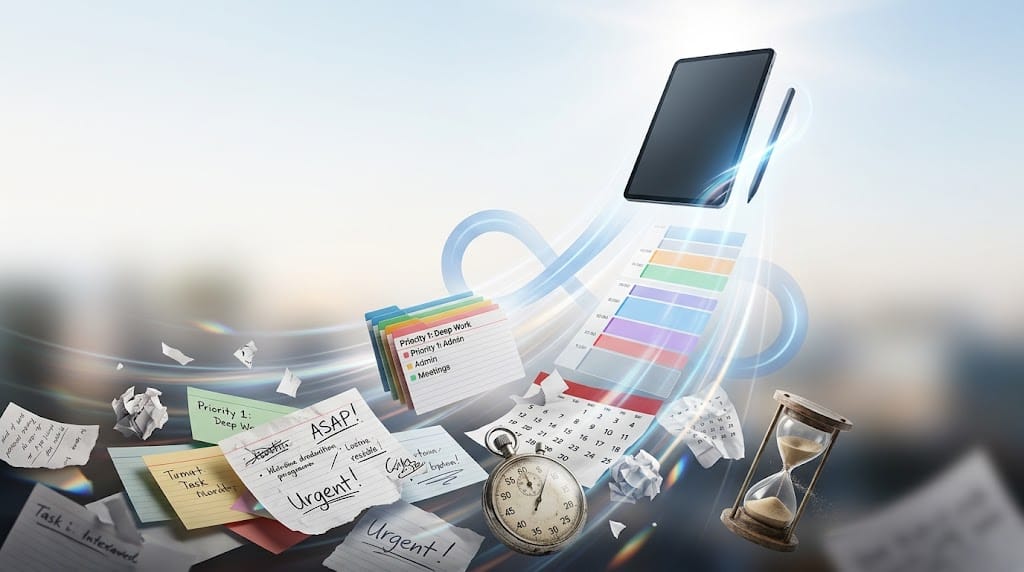
Personal productivity is the practice of managing time, attention, energy, and tools so important work gets done without constant busyness. It matters because better systems reduce overload, sharpen priorities, and turn effort into results that feel sustainable.
Key Takeaways
- Personal productivity is a system, not a personality trait, and it starts with choosing what deserves your attention.
- Time audits and prioritization show where effort leaks happen, especially when busywork crowds out high-value tasks.
- Routines reduce decision fatigue, while the right tools make repeatable work easier to sustain.
- According to OpenAI's 2025 enterprise report, 75% of surveyed workers report better speed or quality from AI, and users save 40-60 minutes per active day on average.
- Remi Dairo's basic-level course adds structure with a PPP assessment, seven lesson themes, and a practical focus for career and entrepreneur learners.
Table of Contents
- Understanding Personal Productivity
- Key Concepts and Techniques
- Who Benefits from Learning Personal Productivity?
- What Do Students Say?
- Is This Course Worth It?
- About the Creator
- Personal Productivity Deep Dive
- Watch Before You Enroll
- Frequently Asked Questions
- Conclusion
- Explore More on TGD
Understanding Personal Productivity
Personal productivity is not about squeezing more into the day. It is the skill of directing time and attention toward the work that matters most, so output improves without constant stress. According to Remi Dairo's official site, the core reminder is that activity does not equal productivity, which is why a full calendar can still produce weak results.
That matters because people often confuse motion with progress, especially when work is busy and the next task always looks urgent. Productivity becomes useful when it helps you choose, not just react.
According to OpenAI's 2025 enterprise report, 75% of surveyed workers report better speed or quality from AI, and ChatGPT Enterprise users save 40-60 minutes per active day on average. Those gains make prioritization, routine design, and tool choice even more important, because the real bottleneck shifts from raw speed to judgment.
Personal productivity therefore matters in both professional and personal life. When you manage attention well, you protect energy, reduce friction, and create more room for meaningful work and a calmer pace.
Want to Learn Personal Productivity Step by Step?
This course on The Great Discovery covers these fundamentals in a structured format, starting with a quick PPP assessment and seven lesson themes that help you see where your productivity really comes from.
The Great Discovery (TGD) is a global online course marketplace where creators publish courses and learners discover practical training across business, technology, wellness, and personal growth. It gives people one place to find focused learning without hunting through scattered sources.
Key Concepts and Techniques
The core productivity techniques are simple, but they work better as a system. You need a way to see where time goes, decide what matters, protect energy, and keep repeatable habits in place. According to OpenAI's 2025 enterprise report, 75% of surveyed workers report better speed or quality from AI, and users save 40-60 minutes per active day on average, which makes a smart tool stack more valuable, not less.
Time Audits and Attention Budgets
A time audit shows where the day really goes, including meetings, interruptions, and context switching. Once you see the pattern, you can spend attention like a scarce resource instead of letting it disappear by default.
Prioritization That Respects Impact
Prioritization is the discipline of choosing the few tasks that move outcomes forward. It keeps urgent but low-value work from crowding out the activities that actually change results.
Mind-SET, Imagine-Nation, and Love
Mind-SET is the part of productivity that decides what you believe is possible, while Imagine-Nation turns goals into a picture you can act on. The course also uses Love as a reminder that sustainable productivity should protect people, not just output.
Routine and the Modern Toolbox
Routines reduce decision fatigue because they turn good behavior into a default. The modern toolbox then supports that routine with calendars, note systems, and AI helpers that speed up repetitive work.
Who Benefits from Learning Personal Productivity?
This topic helps people who are busy, overloaded, or trying to build a better work rhythm. The course is basic-level, so it works best as an entry point rather than an advanced system audit. Its categories, TGD Success, Self Improvement, Entrepreneurship and Business, and Sales and Productivity, show that it is meant to be practical, not abstract.
Busy Professionals
If your day is swallowed by meetings, messages, and quick replies, this topic helps you recover intent. The course is a sensible starting point because it converts productivity into a simple sequence instead of a vague motivational idea.
Entrepreneurs and Solo Operators
Solo founders and side-hustlers need more than hustle; they need order. With many roles competing for attention, basic prioritization and routine design are often the fastest way to stop feeling scattered.
Students and Career Changers
Students and career changers benefit from habits that reduce procrastination and make progress visible. The course's PPP assessment and the Career or Entrepreneur pack help learners start from the right point instead of guessing.
People Recovering from Overload
If you feel productive only when exhausted, the message from Dairo's site lands clearly: activity does not equal productivity. This is often the moment when a guided course helps people reset pace, rebuild confidence, and choose fewer but better actions.
What Do Students Say?
This course is new to the marketplace and hasn't collected reviews yet. Check back after launch for student feedback.
Is This Course Worth It?
Yes, if you want a practical reset around productivity.
Best for beginners, early improvers, and anyone who wants a clean framework for time, priorities, mindset, routine, and tools. The basic level and the PPP assessment make it easy to start without needing a lot of background.
Not for people looking for advanced productivity analytics, deep operations systems, or a heavily technical method. It is also less useful if you already have a mature workflow and only need a niche tweak.
The course is a strong next step on TGD when you want structured guidance, a humane productivity message, and a course that matches the reality of busy working lives.
About the Creator
Aderemi Dairo keeps a small, focused catalog on TGD. He has created 3 courses for 25 total learners, and the public average rating currently shows 0.0. His official site centers the idea that activity does not equal productivity and highlights stress management, burnout prevention, and work-life integration.
Personal Productivity Deep Dive
Personal productivity becomes easier to manage when you can break it into repeatable parts. The table below turns the topic into a quick reference you can use before or after the course.
| Practice | What It Does | Why It Matters |
|---|---|---|
| Time audit | Maps where time actually goes | Reveals leaks from meetings, interruptions, and context switching |
| Priority filter | Ranks tasks by impact and urgency | Keeps low-value busyness from crowding out important work |
| Daily planning | Chooses the next few actions before the day starts | Reduces decision fatigue and drift |
| Routine design | Turns useful actions into repeatable habits | Makes progress more consistent with less effort |
| Tool stack | Uses calendar, notes, automation, and AI together | Saves time on routine work and frees attention for judgment |
| Energy check | Aligns work with focus, rest, and values | Helps productivity stay sustainable instead of brittle |
The course's seven lessons map naturally to these practices, so a learner gets a framework rather than scattered tips. That makes it easier to turn ideas into a real weekly system.

Master Personal Productivity with Expert Guidance
Remi Dairo's course covers these concepts and more, with structured lessons that connect mindset, routine, and tools to everyday results.
Enroll in How To Unlock Your Personal Productivity Power - by Remi Dairo ->
Watch Before You Enroll
This video shows how affiliate sharing works on TGD.
Learn how to become an affiliate on The Great Discovery - the best affiliate program for course creators and marketers in 2026. Start earning commissions by sharing courses you believe in.
Frequently Asked Questions
Here are the questions people usually ask when they want practical productivity answers.
What is personal productivity?
Personal productivity is the ability to choose what gets your attention and protect that choice long enough to finish the work. It is less about busyness and more about consistent results.
How is productivity different from time management?
Time management is about organizing the clock, while productivity is about using that time well. You can manage a calendar perfectly and still produce poor results if priorities are wrong.
Why does being busy not mean being productive?
Busy schedules can hide low-value activity. Remi Dairo's message that activity does not equal productivity matches a basic productivity principle: output matters more than motion.
How do routines improve productivity?
Routines reduce decision fatigue and make useful actions more automatic. They also help people stay steady when the day becomes reactive.
What tools help with personal productivity?
Calendars, task lists, note systems, and AI assistants can all help when the workflow is clear. According to OpenAI's 2025 enterprise report, 75% of surveyed workers report better speed or quality from AI, and users save 40-60 minutes per active day on average.
Who is the TGD course best for?
It is best for beginners and early improvers who want a structured introduction to productivity. The course is basic-level and fits learners who want a practical framework instead of theory alone.
Ready to Go Deeper?
You have now seen how personal productivity depends on focus, prioritization, routine, and the right tools. This course takes those ideas from theory into a simple learning path you can apply right away.
Start Learning Personal Productivity on TGD ->
Conclusion
Personal productivity is a system for directing energy, not a badge for staying busy. Once you understand time audits, prioritization, mindset, routines, and modern tools, the path from effort to results becomes much clearer. That is why this topic matters in both work and life: it helps you spend less time reacting and more time doing what moves things forward. If you want a structured next step, Remi Dairo's course walks through the seven productivity powers in order and begins with the PPP assessment. How To Unlock Your Personal Productivity Power on TGD
Explore More on TGD
Keep learning inside TGD's business and self-improvement categories. No related courses were provided, so these category links are the closest next steps.
- TGD Success courses
- Self Improvement courses
- Entrepreneurship and Business courses
- Sales and Productivity courses
- The Great Discovery home
- Aderemi Dairo creator page
Share Your Knowledge on The Great Discovery
Join Aderemi Dairo and hundreds of other creators sharing their expertise. Create and sell your own courses on TGD.