Unshrink Your Brain with Louise Deland on TGD
Brain health is influenced by blood sugar swings, hidden sugars, and ultra-processed foods, which can affect energy, mood, and long-term cognition. Choosing nutrient-dense meals, reducing added sugar, and tracking cravings can support steadier mental performance.
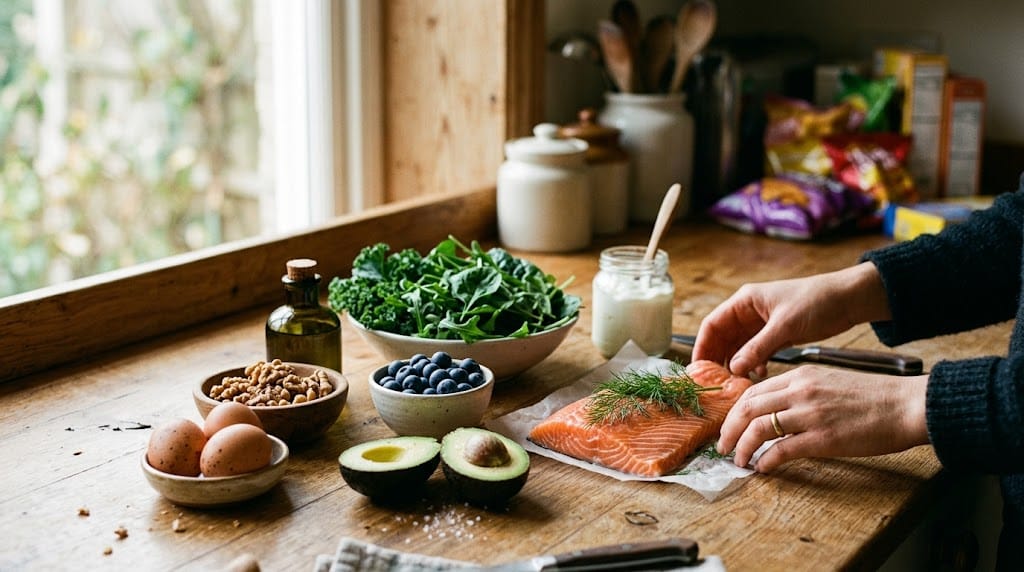
Brain health is influenced by blood sugar swings, hidden sugars, and ultra-processed foods, which can affect energy, mood, and long-term cognition. Choosing nutrient-dense meals, reducing added sugar, and tracking cravings can support steadier mental performance.
Key Takeaways
- Hidden sugars are often found in sauces, drinks, cereals, and packaged snacks, so label reading matters as much as avoiding dessert.
- According to NIH, the MIND diet was associated with a lower risk of cognitive decline or impairment in 2024.
- A 2025 Framingham Heart Study analysis linked each additional daily serving of ultra-processed food with a 13% higher Alzheimer's risk among younger participants.
- Unshrink Your Brain focuses on practical habits such as meal planning, craving tracking, journaling, and nutrient-rich food swaps.
- Because the course is basic and grounded in mental/emotional health plus health and fitness, it works well as a beginner-friendly entry point.
Table of Contents
- Understanding Brain Health and Sugar
- Key Concepts and Techniques
- Who Benefits from Learning Brain Health Basics?
- What Do Students Say?
- Is This Course Worth It?
- About the Creator
- Essential Brain Health Habits
- Watch Before You Enroll
- Frequently Asked Questions
- Conclusion
- Explore More on TGD
Understanding Brain Health and Sugar
Brain health is shaped by what you eat, how often you swing in and out of sugar spikes, and how consistently you build meals that stabilize energy. According to the CDC, cognitive decline is often the first sign of dementia or Alzheimer's disease, which is why subjective memory changes matter before symptoms become severe. The Alzheimer's Association reported in 2025 that 7.2 million Americans age 65 and older are living with Alzheimer's dementia, with annual care costs projected at $384 billion. NIH reported in 2024 that the MIND diet, which blends Mediterranean and DASH patterns, was associated with a lower risk of cognitive decline or impairment. A 2025 Framingham Heart Study analysis also found that each additional daily serving of ultra-processed food was associated with a 13% higher Alzheimer's risk among participants younger than 68 at baseline. That research makes a simple point: hidden sugars, ultra-processed foods, and disorganized meal patterns can affect mood today and cognition over time.
Want to Learn Brain Health Step by Step?
This course on The Great Discovery turns those basics into a structured path you can follow without sorting the research on your own.
The Great Discovery (TGD) is a global online course marketplace where creators publish courses and learners discover practical training across business, technology, wellness, and personal growth. It gives readers a way to move from understanding a topic to applying it in a course format.
Key Concepts and Techniques
The topic becomes useful when you break it into a few repeatable habits that affect meals, cravings, and attention to food choices. The guide behind this course highlights hidden sugars, emotional eating, meal planning, craving tracking, journaling, and nutrient-rich swaps. Those same ideas line up with the broader research on blood sugar stability, ultra-processed foods, and brain-friendly eating patterns.
Hidden Sugars
Hidden sugars appear in foods that do not taste sweet, including sauces, dressings, yogurt, bread, and drinks. The practical skill is learning to scan ingredient lists and serving sizes so you can spot sugar before it becomes a daily habit.
Emotional Eating
Emotional eating happens when stress, boredom, or comfort-seeking drives food choices more than hunger does. The fix is not perfection; it is building a pause between the feeling and the snack so you can notice the trigger and choose deliberately.
Meal Structure
Meal structure matters because predictable meals reduce decision fatigue and make healthy choices easier to repeat. A simple breakfast, lunch, and snack pattern can keep energy steadier than a day of random grazing.
Craving Tracking
Craving tracking helps you see patterns that are otherwise invisible. If cravings keep appearing at the same time of day, after the same stressor, or around the same food, you can adjust the pattern instead of blaming willpower.
Nutrient-Rich Swaps
Nutrient-rich swaps replace one low-value choice with a better one that still feels realistic. For example, adding berries, beans, nuts, or leafy greens can improve the overall quality of the plate without forcing a dramatic diet overhaul.
Who Benefits from Learning Brain Health Basics?
This topic helps anyone who wants a practical, beginner-friendly way to connect food habits with energy, mood, and long-term brain support. Because the course is basic and sits in the Food & Cooking, Mental/Emotional Health, and Health and Fitness categories, it is built for readers who want simple guidance rather than technical nutrition theory.
People Noticing Energy or Mood Swings
If your energy crashes after meals or your mood feels tied to what you eat, this material can help you identify food patterns that are contributing to the problem. Unshrink Your Brain is a reasonable starting point on TGD if you want a structured reset instead of scattered tips.
Adults Worried About Memory and Cognition
Readers who are paying attention to memory changes, brain fog, or family history often want a practical place to start. The CDC notes that cognitive decline can be an early sign of dementia, so this topic matters before symptoms become severe.
Beginners Who Want a Simple Framework
If you want something approachable, this course matches that need because it is labeled basic and does not assume advanced nutrition knowledge. That makes it useful for first-time learners who want to build confidence with hidden-sugar awareness, meal planning, and cravings.
Caregivers, Coaches, and Wellness-Minded Readers
People supporting others often need language that turns brain-health research into everyday action. The course can serve as a starter guide for conversations about food, mood, and habit change without forcing a clinical or academic tone.
What Do Students Say?
This course is new to the marketplace and hasn't collected reviews yet. Check back after launch for student feedback.
Is This Course Worth It?
Yes, if you want a basic, practical introduction to sugar awareness and brain-supportive eating habits. It is best for readers who want clear next steps around cravings, meal structure, and food choices without a heavy technical lift.
It is not the right fit for someone looking for advanced clinical nutrition, deep neuroscience, or a treatment-focused program. The course is positioned as basic, so it should be treated as a starter framework rather than an exhaustive manual.
As a next step on TGD, it is strongest for someone who wants to turn research into routine and prefers a guided habit-building path from an author, coach, and speaker. That combination makes it a sensible follow-on after the educational sections above.
About the Creator
LOUISE DELAND is listed as an author, coach & speaker. The current catalog data shows a small but focused creator profile.
- Courses created: 3
- Total learners: 12
- Average rating: 0.0
Learn more on the creator page: LOUISE DELAND on The Great Discovery
Essential Brain Health Habits
Brain-supportive eating is easier to understand when you compare the habit, the risk it addresses, and the practical response. This table turns the research into a quick reference you can use before you choose a meal, a snack, or a daily routine.
| Habit or Pattern | What It Means | Practical Response |
|---|---|---|
| Hidden sugars | Sugars in sauces, drinks, cereals, and snacks can add up quickly. | Compare labels and serving sizes before you buy. |
| Ultra-processed foods | Packaged foods often crowd out more nutrient-dense options. | Swap one packaged item for fruit, yogurt, nuts, or leftovers. |
| MIND-style meals | A diet pattern that blends Mediterranean and DASH habits. | Build plates around greens, beans, berries, fish, and whole grains. |
| Emotional eating | Eating driven by stress, boredom, or comfort rather than hunger. | Pause, journal the trigger, and then choose a planned meal or snack. |
| Meal planning | Repeatable meals lower decision fatigue and improve consistency. | Pick two breakfasts and two lunches you can repeat weekly. |
| Craving tracking | Noticing when and why cravings happen reveals patterns. | Log time, mood, and context for one week. |
The course uses these ideas as a practical roadmap, so readers can move from knowing what matters to actually changing daily habits. That is what makes the topic useful beyond theory.
Master Brain Health with Expert Guidance
LOUISE DELAND's course covers sugar awareness, craving tracking, journaling, and nutrient-rich swaps in a format that is easy to follow for beginners.
Enroll in Unshrink Your Brain →
Watch Before You Enroll
This video explains how the affiliate system works before you decide to enroll or share courses later. It is useful if you want to understand the platform's sharing model first.
Learn how to become an affiliate on The Great Discovery — the best affiliate program for course creators and marketers in 2026. Start earning commissions by sharing courses you believe in.
Frequently Asked Questions
What are hidden sugars?
Hidden sugars are sugars added to foods that do not always taste sweet, such as sauces, breads, drinks, and packaged snacks. They matter because they can increase total sugar intake without being obvious at the table or on the label.
How do ultra-processed foods affect brain health?
Ultra-processed foods are often low in fiber and high in refined ingredients, which can crowd out more nutrient-dense meals. According to the 2025 Framingham Heart Study analysis, each extra daily serving was associated with a 13% higher Alzheimer's risk among participants younger than 68 at baseline.
What is the MIND diet?
The MIND diet combines elements of the Mediterranean and DASH diets. NIH reported in 2024 that it was associated with a lower risk of cognitive decline or impairment, which is why it often appears in brain-health discussions.
Can emotional eating affect cravings and energy?
Yes. When stress or boredom drives eating, people often choose quick comfort foods and then feel more tired or less satisfied afterward. Tracking the trigger helps separate true hunger from habit.
Is Unshrink Your Brain good for beginners?
Yes. The course is labeled Basic and is a good match for readers who want an approachable introduction to sugar awareness, meal planning, craving tracking, and journaling.
How can journaling help with food habits?
Journaling makes patterns visible, such as the time of day cravings happen, the emotions that precede them, and the foods that feel hard to stop eating. That turns vague frustration into something you can actually adjust.
Ready to Go Deeper?
You've learned the fundamentals of brain-supportive eating and how food choices can shape energy, mood, and long-term cognition. This course takes you from understanding to practical application.
Start Learning Brain Health on TGD →
Conclusion
You learned that brain health is not just about age or genetics. It is also shaped by hidden sugars, ultra-processed foods, craving patterns, and the way you structure daily meals. Simple habits like label reading, journaling, and nutrient-rich swaps can support steadier energy and better long-term choices. If you want a beginner-friendly way to keep going, Unshrink Your Brain on The Great Discovery offers a structured next step.
Explore More on TGD
Keep learning with related TGD paths and creator resources. Since there are no related courses in the current data, these links point you to the most relevant category and platform pages.
- Food & Cooking courses on TGD
- Mental/Emotional Health courses on TGD
- Health and Fitness courses on TGD
- TGD Success courses on TGD
- The Great Discovery homepage
- LOUISE DELAND creator page
Share Your Knowledge on The Great Discovery
Join LOUISE DELAND and hundreds of other creators sharing their expertise. Create and sell your own courses on TGD.