
Writing for Social Media with Maggie van Galen | TGD
Writing for social media is the practice of turning ideas into short, platform-specific copy that earns attention, explains value fast, and prompts action. Good social writing matches the platform, uses strong hooks, and sounds human instead of promotional.

Writing for social media is the practice of turning ideas into short, platform-specific copy that earns attention, explains value fast, and prompts action. Good social writing matches the platform, uses strong hooks, and sounds human instead of promotional.
Key Takeaways
- Social media writing matters because discovery happens there: DataReportal reports 5.66 billion social media user identities worldwide at the start of October 2025.
- Strong hooks should promise real value quickly; Buffer says the best hooks fit the format, platform, human psychology, and algorithm behavior.
- Timeliness is part of the craft: Sprout Social found 73% of consumers will switch to a competitor if a brand does not respond on social media.
- The course focuses on storytelling, practical tips, and writing exercises, which makes it useful for beginners who need structure.
- If your posts feel generic, this topic helps you write with more clarity, personality, and purpose.
Table of Contents
- Understanding Writing for Social Media
- Key Concepts and Techniques
- Who Benefits from Learning Writing for Social Media?
- What Do Students Say?
- Is This Course Worth It?
- About the Creator
- Essential Social Media Writing Techniques
- Watch Before You Enroll
- Frequently Asked Questions
- Conclusion
- Explore More on TGD
Understanding Writing for Social Media
Writing for social media is the craft of turning ideas into short, platform-specific messages people notice, trust, and act on. It matters because social is no longer just a broadcast channel. According to DataReportal, there were 5.66 billion social media user identities worldwide at the start of October 2025, and Sprout Social says TikTok, Instagram, and YouTube collectively account for over 60% of product discovery.
That scale changes the writing job. Sprout Social's 2025 Index found social media is the #1 source for trends and cultural moments, while 93% of consumers say it is important for brands to keep up with online culture. The same research says 27% think jumping on viral trends only works within 24-48 hours, so timing is part of the message, not an afterthought.
Strong social writing also has to earn a response. According to Sprout Social's 2026 statistics, 73% of consumers will switch to a competitor if a brand does not respond on social media. Buffer adds that good hooks should fit the format, platform, human psychology, and algorithm behavior while still promising real value instead of clickbait.
Want to Learn Writing for Social Media Step by Step?
This course on The Great Discovery covers these fundamentals in a structured format, with tips, storytelling, and practice exercises.
The Great Discovery (TGD) is a global online course marketplace where creators publish courses and learners discover practical training across business, technology, wellness, and personal growth.
Key Concepts and Techniques
Good social writing breaks a message into a hook, a payoff, and a next step. That structure helps a post survive the first second of attention and still feel useful after the scroll. The concepts below are the ones beginners should practice first.
Hook Before Detail
The first line has to earn the next line. A strong hook creates curiosity, names a problem, or promises a useful result in plain language.
For example, a hook that says 'Three mistakes are hurting your captions' is more effective than a vague opener about growing online. Buffer's guidance is useful here because it treats the hook as a promise of value, not a trick.
Match the Platform
One idea usually needs different packaging on different platforms. A caption that works on Instagram may need a shorter, sharper form on X or a more visual frame on TikTok.
That matters because Sprout Social says TikTok, Instagram, and YouTube now drive much of product discovery. If the platform changes how people find content, it also changes how your writing should be shaped.
Tell a Micro-Story
Social posts feel more memorable when they show movement: problem, insight, result. The story does not need to be long; it needs enough structure for the reader to follow quickly.
Maggie van Galen's workshop leans into storytelling, which is practical because stories give a brand voice shape without making every post sound like an ad.
Write for Conversation
Social writing works best when it invites a reply, save, share, or click. That can be a direct question, a useful list, or a specific call to action.
This matters more than ever because online response is now part of brand trust. Sprout Social's research shows consumers notice when brands do not engage, so the words should make interaction easy.
Who Benefits from Learning Writing for Social Media?
This topic helps anyone who needs to turn ideas into short, credible, platform-ready messages. Because the course is labeled Basic and sits in Writing, Social Media Marketing, Entrepreneurship and Business, and TGD Success, it is aimed at practical learners who want a starting point, not a theory seminar.
Small Business Owners
If you run a business, social writing is often your front door. Clear copy helps people understand what you do before they ever visit your website.
This course is a sensible starting point if you need help turning brand story into everyday posts without sounding stiff or overly promotional.
New Social Media Managers
If you are responsible for posting but still guessing at the wording, you need a repeatable system. Strong writing gives you a way to make each post useful, timely, and on-brand.
The workshop's tips and writing exercises are a good fit for beginners who want a simple structure they can practice immediately.
Creators and Writers
If you already write long-form content, social media teaches compression. You learn how to keep the core idea while stripping away anything that does not earn attention.
That skill matters because discovery now happens in fast-moving feeds, not only in search results or long articles.
Entrepreneurs Building a Personal Brand
If your audience follows you for expertise, social writing shapes how trustworthy and memorable you feel. Small changes in tone, clarity, and pacing can make a big difference.
The course is worth a look if you want a guided, storytelling-first way to practice that voice instead of improvising every post.
What Do Students Say?
This course is new to the marketplace and hasn't collected reviews yet. Check back after launch for student feedback.
Is This Course Worth It?
Yes, if you want a beginner-friendly way to turn social writing from guesswork into a repeatable habit.
It is best for people who need practical prompts, storytelling help, and a clearer sense of how to write posts that feel human. That includes small business owners, new marketers, and solo creators who want a usable foundation.
It is not for someone looking for advanced analytics training, deep paid-media strategy, or a heavy agency-style workflow. The promise here is simpler: better writing habits, stronger hooks, and more confidence in everyday posts.
As a next step on TGD, it makes sense when you want structure, practice, and a basic-level path into social copy that can be applied right away.
About the Creator
Maggie van Galen describes herself as an Author & Wordsmith. She has created 4 courses and reached 6 total learners, with an average rating of 0.0. That is a small public footprint, so the clearest signal is the course focus itself: writing, storytelling, and practice.
View the creator profile here: Maggie van Galen on The Great Discovery.
Essential Social Media Writing Techniques
These techniques are the core building blocks behind strong social posts. Learn them once, and you can reuse them across captions, scripts, threads, and short-form posts.
| Technique | What It Does | Why It Matters |
|---|---|---|
| Hook-led opening | Grabs attention in the first line. | Helps the post survive the first scroll and set up real value fast. |
| Micro-story arc | Shows problem, insight, and result in a compact form. | Makes the message feel human and easier to remember. |
| Platform rewrite | Adapts one idea for Instagram, TikTok, YouTube, or X. | Matches format to audience behavior and discovery patterns. |
| Response prompt | Invites comments, saves, shares, or clicks. | Turns passive reading into interaction and helps build reach. |
| Practice sprint | Uses timed writing reps to build speed and voice. | Improves consistency and reduces overthinking. |
| Trend filter | Tests whether a trend is relevant before posting. | Prevents awkward trend-chasing and keeps content aligned with brand voice. |
These techniques line up with the course description's emphasis on tips, tricks, and practice exercises. If you understand the table above, the course helps you turn the ideas into habit.
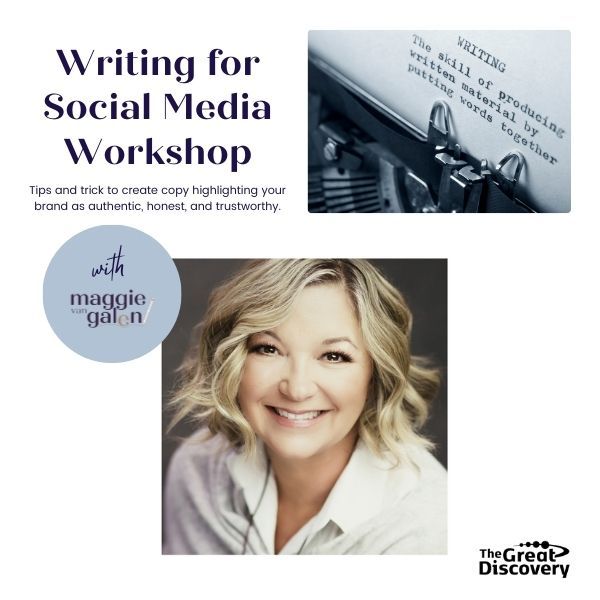
Master Writing for Social Media with Expert Guidance
Maggie van Galen's workshop turns hooks, micro-stories, and practice sprints into reusable writing habits. If you want to move from understanding the table above to writing better posts, this is a structured next step.
Enroll in Writing for Social Media →
Watch Before You Enroll
Learn how to become an affiliate on The Great Discovery — the best affiliate program for course creators and marketers in 2026. Start earning commissions by sharing courses you believe in.
Frequently Asked Questions
What is writing for social media?
Writing for social media is the practice of crafting short, platform-specific copy that earns attention and invites action. It is different from long-form writing because the message has to work in a crowded feed within seconds.
Why do social media hooks matter?
Hooks matter because they decide whether people keep reading. Buffer's hook guidance emphasizes that a good opener should promise real value and fit the platform, not just generate clicks.
How do I make social copy sound human?
Use specific language, short sentences, and a clear point of view. The best posts sound like a person explaining something useful, not a company pushing a slogan.
How fast do brands need to respond on social media?
Speed matters more than many teams think. According to Sprout Social's 2026 statistics, 73% of consumers will switch to a competitor if a brand does not respond on social media.
What is the best way to practice social writing?
Use short timed exercises and rewrite the same idea in multiple formats. That is how you build speed, clarity, and platform awareness without getting stuck on one perfect version.
Is the TGD course good for beginners?
Yes. The course is Basic level and focuses on tips, storytelling, and writing exercises, which makes it a practical starting point for beginners who want structure.
Ready to Go Deeper?
You have learned the fundamentals of writing for social media. This course takes you from understanding the craft to practicing it with structure and confidence.
Start Learning Writing for Social Media on TGD →
Conclusion
Writing for social media is really about clarity, timing, and voice. You learned why social copy matters, how hooks and micro-stories work, and why response speed and platform fit shape what people notice. The practical takeaway is that strong posts are not louder; they are clearer, more specific, and easier to act on. If you want a structured way to practice those skills, Maggie van Galen's Writing for Social Media workshop on The Great Discovery is a logical next step.
Explore More on TGD
Keep learning with related pages on The Great Discovery, the creator profile, and the main course catalog.
- Writing courses on TGD
- Social Media Marketing courses on TGD
- Entrepreneurship and Business courses on TGD
- TGD Success courses on TGD
- Maggie van Galen creator page
- The Great Discovery homepage
Share Your Knowledge on The Great Discovery
Join Maggie van Galen and hundreds of other creators sharing their expertise. Create and sell your own courses on TGD.