
Cut Back on Sugar with Terry Thompson | TGD
Cutting back on sugar means reducing added sugars from drinks, desserts, sweet snacks, and packaged foods while keeping meals satisfying. The fastest wins are reading the Added Sugars line, swapping sugary drinks first, and choosing foods with lower Daily Value.
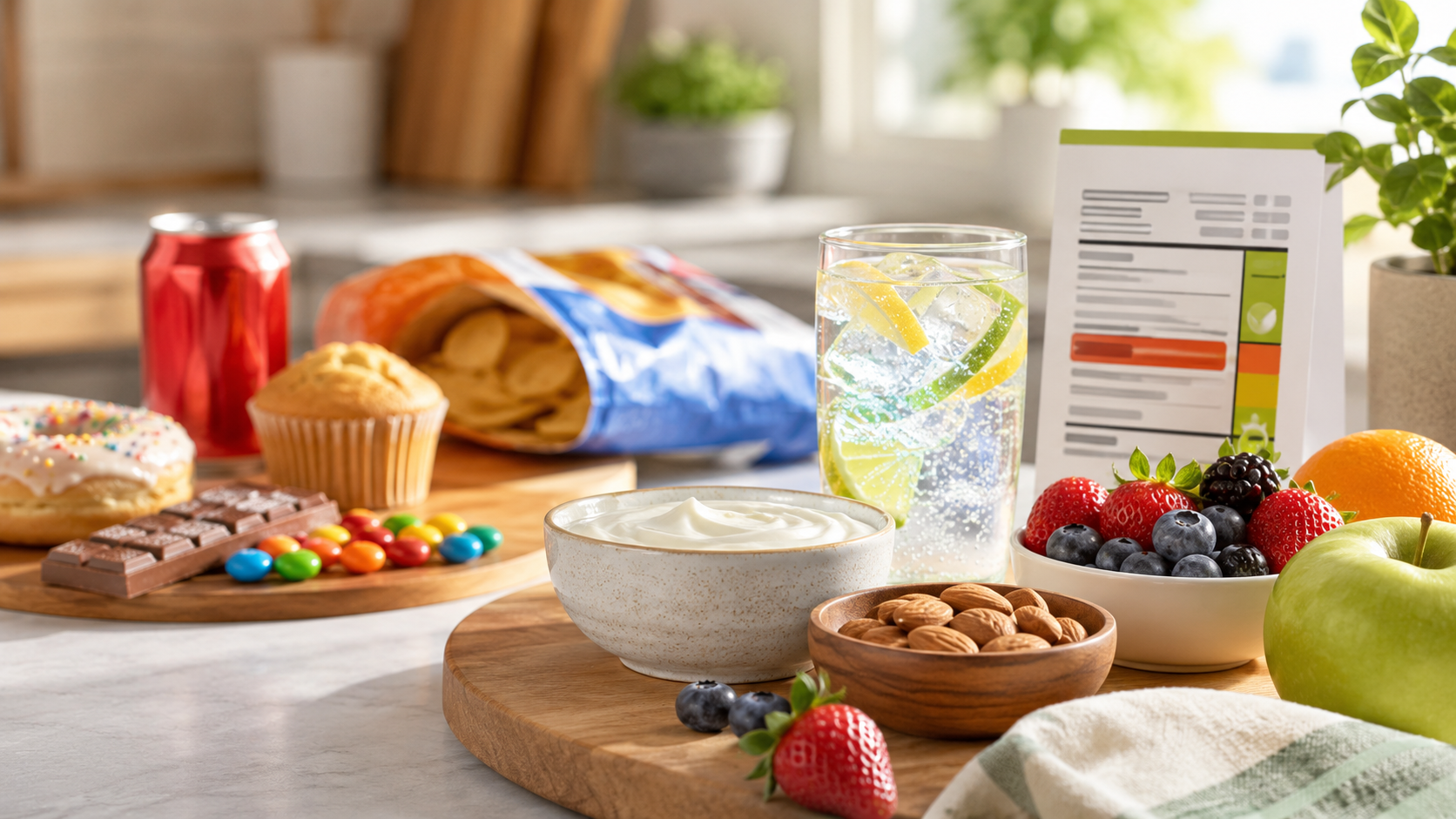
Cutting back on sugar means reducing added sugars from drinks, desserts, sweet snacks, and packaged foods while keeping meals satisfying. The fastest wins are reading the Added Sugars line, swapping sugary drinks first, and choosing foods with lower Daily Value.
Key Takeaways
- According to CDC, the biggest sources of added sugar in the U.S. diet are sugar-sweetened beverages, desserts, and sweet snacks.
- According to FDA, 5% Daily Value or less is low in added sugars, while 20% or more is high.
- CDC data show adults aged 20 and older averaged 17 teaspoons of added sugars per day in 2017-2018, with men at 19 teaspoons and women at 15.
- This course focuses on simple swaps and smart habits, which makes lower-sugar changes easier to sustain.
- If you want a short, practical starting point, the handout format keeps the next steps clear and actionable.
Table of Contents
- Understanding Cutting Back on Sugar
- Key Concepts and Techniques
- Who Benefits from Learning Cutting Back on Sugar?
- What Do Students Say?
- Is This Course Worth It?
- About the Creator
- Common Sugar Sources and Smarter Swaps
- Watch Before You Enroll
- Frequently Asked Questions
- Conclusion
- Explore More on TGD
Understanding Cutting Back on Sugar
Cutting back on sugar is mostly about reducing added sugars, not eliminating every sweet food. According to CDC, the biggest sources in the U.S. are sugar-sweetened beverages, desserts, and sweet snacks, which makes the issue a daily pattern rather than an occasional dessert. CDC data also show adults aged 20 and older averaged 17 teaspoons of added sugars per day in 2017-2018, with men averaging 19 teaspoons and women 15.
That matters because added sugar delivers calories quickly without much fullness, so intake can climb before you notice it. According to FDA, the Daily Value for added sugars is 50 grams per day on a 2,000-calorie diet, and labels with 5% Daily Value or less are low while 20% or more is high. The American Heart Association recommends even lower daily limits of about 6 teaspoons for most women and 9 for most men, so sugary drinks and packaged foods are the fastest places to start.
Want to Learn Cutting Back on Sugar Step by Step?
This course on The Great Discovery covers these fundamentals in a more structured format.
The Great Discovery (TGD) is a global online course marketplace where creators publish courses and learners discover practical training across business, technology, wellness, and personal growth.
Key Concepts and Techniques
The easiest way to lower added sugar is to target the highest-impact sources first. That usually means beverages, breakfast foods, and packaged snacks, because those items can raise intake quickly without much satiety.
Added Sugar vs. Natural Sugar
Added sugars are the ones mixed in during processing or preparation, including sugars from syrups, honey, and concentrated juices, according to FDA. Natural sugars in fruit, milk, and vegetables come packaged with water, fiber, and other nutrients, so they behave differently in the body.
Use the Nutrition Facts Label
The Added Sugars line is the clearest shortcut on the label. FDA says 5% Daily Value or less is low and 20% or more is high, which helps you compare products quickly instead of guessing.
Swap Sugary Drinks First
Drinks are often the easiest win because they add sugar without making you feel full. A regular 12-ounce soda contains about 10 teaspoons of sugar, according to the American Heart Association, so replacing even one daily soda can make a visible difference.
Choose Simple, Satisfying Swaps
Lower-sugar eating works best when the replacement still feels enjoyable. Think sparkling water with citrus, plain yogurt with fruit, or unsweetened tea instead of a sweetened beverage.
Build Repeatable Habits
Small habits are easier to keep than ambitious restriction rules. Terry Thompson’s course is built around easy swaps and smart habits, which makes it useful for readers who want a practical reset rather than a deep theory lesson.
Who Benefits from Learning Cutting Back on Sugar?
This topic helps anyone who wants fewer sugar crashes, clearer label choices, and a simpler way to eat with more intention. It is especially useful when the goal is not perfection, but a steady reduction in the biggest sources of added sugar.
People Who Rely on Sugary Drinks
If soda, sweet tea, or flavored coffee is part of your routine, this topic offers immediate leverage. Those drinks are one of the main added-sugar sources identified by CDC, so a beverage swap can change the whole day’s intake.
Families Rethinking Snacks and Desserts
Parents and caregivers often need practical swaps that still feel satisfying. The course description focuses on easy swaps and smart habits, which makes it a natural starting point for households that want better defaults without turning every meal into a project.
People Tracking Blood Sugar or Food Labels
Readers interested in diabetes awareness or label literacy benefit from learning how the FDA’s Added Sugars line works. The Great Discovery listing places the course in Health and Fitness, Nutrition, and Diabetes, which matches the practical angle of reducing everyday intake.
Busy Learners Who Want a Clear Starting Point
If you want a short, structured handout instead of a long nutrition program, Terry Thompson’s course fits that need well. It is a reasonable first step for someone who wants direction, not more confusion.
What Do Students Say?
This course is new to the marketplace and hasn't collected reviews yet. Check back after launch for student feedback.
Is This Course Worth It?
Yes, if you want a concise, practical introduction to lowering sugar without getting lost in theory.
It is best for readers who want simple swaps, clearer label reading, and habits they can use right away. It fits people who respond well to a short handout and a straightforward plan.
It is not for readers looking for individualized medical nutrition guidance or a deep clinical program. If you want a first action step after learning the basics, this is a strong next move on TGD.
About the Creator
Terry Thompson created this course. Public creator data is sparse right now, so the course itself is the clearest signal: a short, practical handout centered on easy swaps and smarter habits.
Courses created: not listed. Total learners: not listed. Average rating: not listed. View Terry Thompson on TGD
Common Sugar Sources and Smarter Swaps
| Source | Why It Adds Up | Smarter Swap |
|---|---|---|
| Soda and sweetened tea | Liquid sugar is easy to drink quickly and does not fill you up. | Try sparkling water, unsweetened tea, or water with citrus. |
| Desserts | Portions can be larger than expected, especially after dinner. | Choose a smaller serving or pair fruit with plain yogurt. |
| Sweet snacks | They are easy to eat mindlessly between meals. | Use snacks with fiber or protein, such as nuts or cheese. |
| Flavored yogurt and cereal | Breakfast items can hide added sugar before the day begins. | Pick plain versions and add fruit, cinnamon, or nuts. |
| Coffee drinks | Syrups and toppings can turn a drink into a sugar source. | Ask for fewer pumps, skip extras, or use milk and spice. |
| Sauces and condiments | Small servings can add up if used multiple times a day. | Check labels and choose lower-sugar versions when possible. |
This table shows why simple swaps work so well. Once you spot the biggest sources, lower-sugar habits become much easier to keep.

Master Cutting Back on Sugar with Expert Guidance
Terry Thompson's course covers these core ideas in a compact format, with easy swaps that are simple to apply in daily life. If you want a structured way to reduce sugar without overcomplicating meals, this is a logical next step.
Enroll in 10 Simple Ways to Cut Back on Sugar →
Watch Before You Enroll
Watch this short video overview to understand the main ideas behind 10 Simple Ways to Cut Back on Sugar before you enroll.
This video introduces 10 Simple Ways to Cut Back on Sugar and previews this 5-page handout will walk you through easy swaps and smart habits that can help you replace empty sugar calories with nutritious, satisfying alternatives.
Frequently Asked Questions
What are added sugars?
Added sugars are sugars and syrups added during processing or preparation, plus sugars from honey and concentrated fruit or vegetable juices, according to FDA. They are different from the natural sugars found in milk, fruit, and vegetables.
Which foods are the biggest sources of added sugar?
According to CDC, the main sources are sugar-sweetened beverages, desserts, and sweet snacks. Those items matter because they are easy to consume often and can raise intake quickly.
How much added sugar should adults aim for?
FDA uses 50 grams per day as the Daily Value on a 2,000-calorie diet. The American Heart Association recommends lower daily limits of about 6 teaspoons for most women and 9 for most men.
How do I read the Added Sugars line on a label?
FDA says 5% Daily Value or less is low, while 20% Daily Value or more is high. That makes the label useful for comparing products in seconds.
What is the easiest first step to cut back on sugar?
Start with sugary drinks, because they are one of the biggest sources and are easy to replace. A regular 12-ounce soda contains about 10 teaspoons of sugar, according to the American Heart Association.
What does the TGD course cover?
The course focuses on easy swaps and smart habits for reducing sugar in everyday life. It is a practical starting point for readers who want a clear plan rather than a dense nutrition lecture.
Ready to Go Deeper?
You have learned the key differences between added and natural sugars, how to read labels, and where the biggest daily sources come from. This course turns those basics into a simple plan you can actually use.
Start Learning Cutting Back on Sugar on TGD →
Conclusion
Cutting back on sugar starts with a few high-impact habits: understand added sugars, look for the Added Sugars line on labels, and target sugary drinks first. According to CDC, the biggest sources are beverages, desserts, and sweet snacks, so small changes in those areas can matter quickly. If you want a short, structured next step, Terry Thompson’s course on The Great Discovery expands these ideas into easy swaps and smart habits.
Explore 10 Simple Ways to Cut Back on Sugar on TGD
Explore More on TGD
Explore related categories and creator resources on The Great Discovery.
Visit The Great Discovery homepage | Visit Terry Thompson's creator page
Share Your Knowledge on The Great Discovery
Join Terry Thompson and hundreds of other creators sharing their expertise. Create and sell your own courses on TGD.