
Hiring Your Chiropractic Team with Paul Baker | TGD
Hiring a chiropractic team means defining roles, attracting the right people, onboarding them well, and using retention data so the practice can grow without losing control of patient care or staff consistency.

Hiring a chiropractic team means defining roles, attracting the right people, onboarding them well, and using retention data so the practice can grow without losing control of patient care or staff consistency.
Key Takeaways
- According to the U.S. Bureau of Labor Statistics, chiropractors are projected to grow 10% from 2024 to 2034, with about 2,800 openings per year on average.
- According to ChiroTouch, the biggest growth pressure points in 2026 are documentation, operational efficiency, capacity utilization, and patient retention.
- According to ChiroHealthUSA and ChiroSpring, dashboards, automation, reminders, intake forms, and scheduling tools help reduce no-shows and reveal workload problems early.
- According to Chiro Jobs, suburban and fast-growing secondary cities are hiring hot spots, while part-time and locum roles are expanding.
- Paul Baker's TGD course pairs a hiring guide with a CHIRO ROADMAP walkthrough, which makes it useful for owners who want a practical scaling framework.
Table of Contents
- Understanding Chiropractic Hiring and Scaling
- Key Concepts and Techniques
- Who Benefits from Learning Chiropractic Hiring?
- What Do Students Say?
- Is This Course Worth It?
- About the Creator
- Chiropractic Hiring and Scaling Essentials
- Watch Before You Enroll
- Frequently Asked Questions
- Conclusion
- Explore More on TGD
Understanding Chiropractic Hiring and Scaling
Hiring and scaling a chiropractic practice means building capacity, not just adding people. The goal is to match staffing, scheduling, and patient flow to real demand so the clinic can grow without chaos. According to the U.S. Bureau of Labor Statistics, employment of chiropractors is projected to grow 10% from 2024 to 2034, with about 2,800 openings per year on average and a median annual wage of $79,000 in May 2024.
That growth does not remove operational pressure. According to ChiroTouch, the biggest shifts shaping chiropractic growth in 2026 are documentation, operational efficiency, capacity utilization, and patient retention. According to ChiroHealthUSA, patient price sensitivity reached an all-time high in 2025, and clinics increasingly used dashboards, automation, and digital intake tools to track retention, no-shows, fee performance, and revenue consistency. In practice, that means hiring decisions must support systems, not overwhelm them. A practice that hires well can handle more patients, protect the team, and create a steadier patient experience.
Want to Learn Chiropractic Hiring and Scaling Step by Step?
This course on The Great Discovery turns these fundamentals into a structured path for chiropractic owners who want to hire with more clarity.
The Great Discovery (TGD) is a global online course marketplace where creators publish courses and learners discover practical training across business, technology, wellness, and personal growth. It helps people find structured learning paths from independent experts.
Key Concepts and Techniques
The main skill is not hiring faster; it is designing a system that turns staffing into capacity. These concepts help clinic owners decide who to hire, how to onboard them, and what to measure once the team is in place.
Role design and capacity planning
Start by mapping patient flow from first contact to follow-up. A growing clinic needs to know which jobs are clinical, which are administrative, and which tasks can be systemized or shared.
Without role clarity, the office turns into a bottleneck machine. Capacity planning helps a practice decide whether the next hire should improve front-desk speed, clinical support, billing accuracy, or patient retention.
Structured hiring scorecards
A scorecard gives every candidate the same evaluation criteria. Communication, reliability, learning speed, and culture fit matter more when the office needs someone who can work well in a patient-facing environment.
Structured interviews reduce gut-feel hiring. They also make it easier to compare candidates when the clinic is growing quickly and the owner is tempted to hire the first decent resume.
Onboarding and retention systems
Onboarding should include shadowing, SOPs, expectations, and check-ins. A new hire becomes productive faster when the clinic teaches the workflow instead of assuming the person will figure it out alone.
Retention starts in the first weeks, not after a resignation letter. Clear training and regular feedback reduce frustration, and they make the team feel like the practice has a real operating system.
Dashboards and automation
Track no-shows, retention, fee performance, and staff workload. According to ChiroHealthUSA, clinics in 2025 increasingly used dashboards for exactly those signals, because price sensitivity and revenue consistency became harder to ignore.
Automation helps the team spend less time on repetitive work. According to ChiroSpring, reminders, intake forms, online booking, billing integration, and color-coded scheduling all simplify practice management and make staffing more efficient.
Flexible staffing models
Hiring does not always mean full-time headcount. According to Chiro Jobs, suburban and fast-growing secondary cities are becoming hiring hot spots, and part-time or locum roles are expanding.
That flexibility matters when a clinic is scaling unevenly. Temporary coverage can protect service quality while the practice figures out whether demand is stable enough to justify a permanent hire.
Who Benefits from Learning Chiropractic Hiring?
This topic matters most for people who feel the gap between patient demand and team capacity. The course sits at the intersection of Health and Fitness, Medical, TGD Success, and Vocational & Tech, so it fits both clinical service and business operations.
Chiropractic practice owners
Owners need to translate growth into staffing decisions. If the practice is busy but the office feels fragile, hiring strategy becomes a business survival skill rather than a nice-to-have.
This TGD course is a strong starting point for owners who want an intermediate-level roadmap that connects hiring to scaling, especially if they want a practical guide instead of abstract management advice.
Office managers and practice administrators
Office managers keep the scheduling, onboarding, and daily workflow from falling apart. They are often the people who feel the real cost of bad hiring first, because they live inside the interruptions.
For this segment, the course can be a useful operating manual. The hiring guide and CHIRO ROADMAP walkthrough help turn growth goals into repeatable office processes.
New or aspiring chiropractors
Early-career chiropractors benefit from understanding team design before they inherit it. Hiring decisions made too late often create the kind of friction that makes ownership more stressful than it needs to be.
Even if they are not ready to scale now, learning the basics of retention, role clarity, and workflow design builds better leadership instincts for the future.
Multi-location and growth-minded clinics
Multi-location practices need consistency, not improvisation. A process that works in one office should be teachable, measurable, and stable enough to copy into the next one.
For this group, the value is less about theory and more about repeatability. Hiring systems, dashboards, and onboarding standards are what make expansion sustainable.
What Do Students Say?
This course is new to the marketplace and hasn't collected reviews yet. Check back after launch for student feedback. For now, the best signal is the creator's focus on chiropractic business growth and the course's practical hiring-and-scaling angle.
Is This Course Worth It?
Yes, if you want a practical roadmap for building a chiropractic team and scaling an office. It is best for practice owners, office managers, or growth-minded chiropractors who already understand the basics and need a more organized system for staffing and operations.
It is not the right fit for someone looking for a beginner introduction to chiropractic care or a purely clinical training course. The material assumes the reader cares about hiring, retention, and office systems rather than general wellness education.
The strongest next step is a clinic that feels demand pressure but has not fully systemized its people operations. The creator context is sparse, but the course description points to a focused, action-oriented guide rather than broad theory, which makes it a sensible TGD option when execution matters more than inspiration.
About the Creator
Paul Baker is a chiropractic business-focused creator with a narrow but clear subject focus. The available marketplace data shows 2 courses created, 0 total learners, and an average rating of 0.0.
His bio says, 'Helping Chiropractors Crush It In Their Business!'
View Paul Baker's creator page on TGD
Chiropractic Hiring and Scaling Essentials
These are the core building blocks behind a clinic that can grow without becoming disorganized. The table below is a quick reference for the practical pieces that matter most when a chiropractic practice wants to scale.
| Concept | What It Means | Why It Matters |
|---|---|---|
| Role clarity | Separate front desk, clinical support, billing, and patient communication responsibilities. | It reduces confusion and keeps the office moving when volume rises. |
| Structured hiring | Use consistent interview questions and scorecards for every candidate. | It helps compare candidates fairly and lowers the chance of impulse hiring. |
| Onboarding checklist | Combine shadowing, SOPs, and milestone check-ins for the first weeks. | It shortens ramp-up time and makes new hires useful faster. |
| Retention dashboard | Track no-shows, retention, fee performance, and revenue consistency. | It shows whether staffing changes are actually improving the practice. |
| Automation stack | Use reminders, online booking, intake forms, SOAP notes, and billing integration. | It cuts admin load and frees staff to focus on patient experience. |
| Flexible staffing | Use part-time or locum coverage when demand changes quickly. | It lets a clinic add capacity without locking in the wrong full-time hire. |
These ideas are exactly what a hiring-and-growth course should teach. The more clearly a clinic can define roles, onboard people, and measure results, the easier it becomes to scale without letting admin work swallow clinical time.
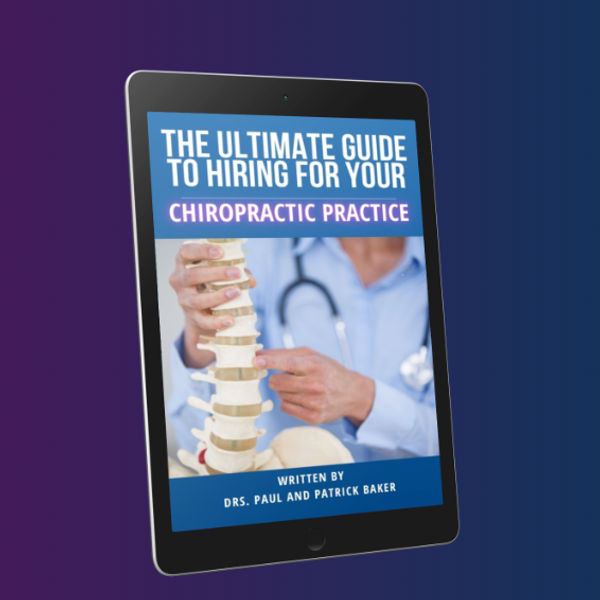
Master Hiring and Scaling with Expert Guidance
Paul Baker's course connects the hiring process to the CHIRO ROADMAP, so you can turn staffing decisions into a repeatable growth system. The table above shows the exact areas where better structure pays off.
Enroll in Hiring Your Chiropractic Team, Growing, and Scaling Your Practice →
Watch Before You Enroll
Learn how to become an affiliate on The Great Discovery — the best affiliate program for course creators and marketers in 2026. Start earning commissions by sharing courses you believe in.
Frequently Asked Questions
These are the most common questions readers ask before deciding whether to build a chiropractic hiring system. The answers below focus on the topic itself, with one question about the TGD course so readers can judge fit.
Why is hiring hard for chiropractic clinics right now?
Hiring is harder because demand and labor dynamics are both moving. According to the U.S. Bureau of Labor Statistics, chiropractors are projected to grow 10% from 2024 to 2034, so competition for capable staff stays active while clinics are also juggling more operational complexity.
What roles should a growing chiropractic practice prioritize?
Most clinics need clear ownership for front desk, patient flow, clinical support, and billing. If those jobs blur together, scheduling errors and bottlenecks show up fast, especially when patient volume rises.
How do dashboards help a chiropractic office?
Dashboards show whether staffing decisions are helping or hurting. According to ChiroHealthUSA, clinics in 2025 increasingly tracked retention, no-shows, fee performance, and revenue consistency to manage growth.
How can automation reduce no-shows and staff overload?
Automation handles repetitive work like reminders, intake forms, online booking, and SOAP note support. According to ChiroSpring and ChiroHealthUSA, those tools lower friction and free staff to focus on patients.
What is the biggest hiring mistake clinics make?
The biggest mistake is hiring for urgency instead of role fit. Without a scorecard, onboarding plan, and follow-up, a new hire can add noise instead of capacity.
Is this TGD course a good fit for intermediate learners?
Yes. The course is labeled Intermediate, and its hiring guide plus CHIRO ROADMAP walkthrough fit owners or operators who already know the basics and want a practical scaling system.
Ready to Go Deeper?
You now know the fundamentals of chiropractic hiring and scaling: define roles, hire with structure, onboard with care, and measure the results. This course is the natural next step if you want that framework turned into practical execution.
Start Learning Chiropractic Hiring on TGD →
Conclusion
You now have the core model for hiring and scaling a chiropractic practice: define roles, hire with a consistent process, onboard with structure, and watch retention and workload data closely. The big lesson is that growth is an operations problem as much as a clinical one, and the clinics that scale best treat staffing as a system.
If you want a guided next step, Hiring Your Chiropractic Team, Growing, and Scaling Your Practice on TGD turns that framework into a practical roadmap for practice owners who want to move from guesswork to repeatable execution.
Explore More on TGD
These TGD links are the best next places to keep learning. Because related course data is empty, the category pages below are the most relevant internal paths for readers who want to keep exploring the same business and healthcare themes.
Share Your Knowledge on The Great Discovery
Join Paul Baker and hundreds of other creators sharing their expertise. Create and sell your own courses on TGD.