Learn Convergence with David Brown on TGD
Convergence is the process of distinct systems, ideas, or inner perspectives coming together into a more coherent whole. It matters because the best innovations and decisions often emerge when separate parts are combined, aligned, and used in concert rather than in isolation.

Convergence is the process of distinct systems, ideas, or inner perspectives coming together into a more coherent whole. It matters because the best innovations and decisions often emerge when separate parts are combined, aligned, and used in concert rather than in isolation.
Key Takeaways
- Convergence is not just addition; it changes what a system can do when separate parts begin working as one.
- According to the World Economic Forum, 2,000 senior executives across 18 countries and 10 industries mapped 23 high-potential technology pairings across eight domains.
- According to the OECD, convergence now spans synthetic biology, neurotechnology, quantum technologies, and earth observation from space.
- David Brown's course applies convergence to inner life by treating emotion, instinct, intellect, action, and spirit as distinct voices that can agree.
- The course adds worksheets, journaling, and guided convergent conversations so the idea becomes a usable practice instead of an abstract concept.
Table of Contents
- Understanding Convergence
- Key Concepts and Techniques
- Who Benefits from Learning Convergence?
- What Do Students Say?
- Is This Course Worth It?
- About the Creator
- Essential Convergence Patterns
- Watch Before You Enroll
- Frequently Asked Questions
- Conclusion
- Explore More on TGD
Understanding Convergence
Convergence is the movement from separate parts toward a shared system, shared function, or shared direction. In technology, it shows up when AI, robotics, and spatial intelligence work together rather than as isolated tools. In human decision-making, it shows up when emotion, instinct, intellect, action, and values stop competing and start pointing the same way.
According to the World Economic Forum's 2025 Technology Convergence Report, 2,000 senior executives across 18 countries and 10 industries mapped 23 high-potential technology pairings across eight domains. That matters because innovation is increasingly happening at intersections, not inside single disciplines. Leaders are scanning for combinations that change the whole system, not just isolated feature upgrades.
According to the OECD Science, Technology and Innovation Outlook 2025, convergence is already producing brain-computer interfaces, quantum-enhanced biosensors, and space-based biomanufacturing devices. Deloitte's Tech Trends 2025 adds that intentional intersections such as blockchain plus generative AI create new detection and governance challenges. The practical lesson is simple: convergence is where new capability, new risk, and new opportunity appear together.
Want to Learn Convergence Step by Step?
This course on The Great Discovery turns that idea into a guided practice for recognizing competing inner signals and moving toward a clearer decision.
The Great Discovery (TGD) is a global online course marketplace where creators publish courses and learners discover practical training across business, technology, wellness, and personal growth.
Key Concepts and Techniques
Convergence becomes useful when you can name the pattern, the payoff, and the risk. The World Economic Forum's 23 pairings across eight domains are a useful reminder that the biggest opportunities often live in the overlap.
Combination
Combination is the first step in the World Economic Forum's 3C framework. Distinct parts are brought together in one workflow or one conversation, but they still keep their own identity. A practical tip is to map what each part does before you merge them, so you do not lose the strengths that made them useful in the first place.
Convergence
Convergence is the point where the combined parts start changing the structure of the whole. In practice, that means the merge is no longer cosmetic; it changes value chains, feedback loops, or how people make decisions. A good test is simple: if the whole system behaves differently, you are seeing convergence rather than just integration.
Compounding
Compounding is the stage where the converged system starts creating additional value over time. The World Economic Forum describes this as the network effect and ecosystem transformation that follow successful convergence. In daily life, small improvements in clarity can compound into better choices, fewer delays, and more confidence.
Convergent Conversations
This course turns convergence inward by treating emotion, instinct, intellect, action, and spirit as distinct voices. The goal is not to silence any voice, but to hear what each one is protecting or trying to achieve. A practical first step is to let each voice speak in one sentence before you decide what they are jointly asking for.
Who Benefits from Learning Convergence?
Convergence matters most for people who keep running into overlap, conflict, or cross-domain choices. The WEF's mapping of 23 pairings across eight domains is a signal that intersections are now a practical skill, not just a buzzword. The same logic applies when your own priorities are pulling in different directions.
Innovation teams and product strategists
If you work where fields overlap, convergence helps you notice where a new offering may emerge before competitors see it. The World Economic Forum's 23 pairings across eight domains show why the opportunity is often in the overlap rather than inside one specialty. This is useful for product planning, research, and strategy work.
People making major personal decisions
If you are deciding between competing paths, the course is a sensible starting point because it teaches inner balance and practical reflection. David Brown's Personal Empowerment Leader positioning fits that use case well. The course gives structure to something many people already feel but have never organized.
Coaches, facilitators, and mentors
If you guide other people, convergence gives you a language for helping clients move from internal conflict to clearer action. The worksheets and guided conversations make it easier to turn a conversation into a next step. That makes the method practical in coaching, group facilitation, and mentoring.
Readers drawn to Self Improvement and spiritual growth
If you already browse Self Improvement, TGD Success, Manifestation, or Spiritual Growth content, this course fits that lane while staying concrete. Because there are no reviews yet, fit matters more than social proof. That makes it a good match for readers who want a method for integration instead of another motivational message.
What Do Students Say?
This course is new to the marketplace and hasn't collected reviews yet. Check back after launch for student feedback.
Is This Course Worth It?
Yes, if you want a practical way to turn inner disagreement into clearer action.
It is best for readers who like self-reflection, manifestation language, and practical journaling. The course's emphasis on inner voices and convergent conversations makes it a strong fit if you want a repeatable method, not just inspiration.
It is not a great match if you want a technical research course or a deeply clinical model of decision-making. Readers who want hard metrics, engineering frameworks, or step-by-step industry training should look elsewhere.
As a next step on TGD, it is strongest when you already accept the basic idea of convergence and want a guided way to practice it in real life. The worksheets and reflection tools give the concept a daily rhythm.
About the Creator
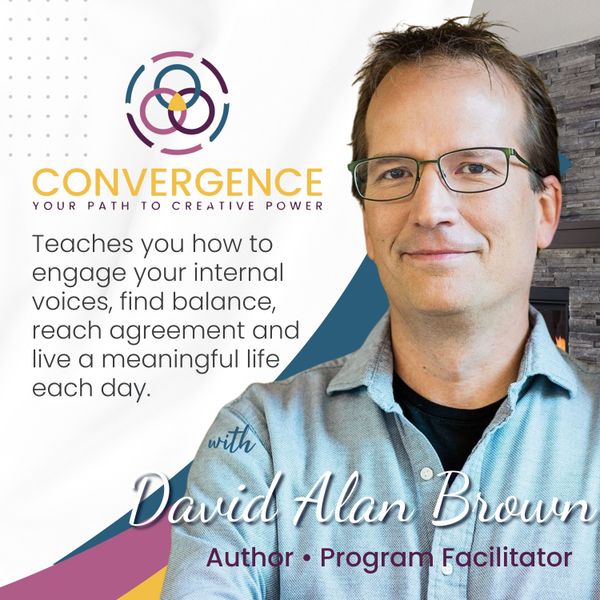
David Brown is the creator behind Convergence and is listed as a Personal Empowerment Leader. The catalog currently shows 1 course created, 0 total learners, and an average rating of 0.0, so the public data is still sparse. You can review his profile here: David Brown.
Courses created: 1
Total learners: 0
Average rating: 0.0
Essential Convergence Patterns
Convergence is easiest to understand when you can separate the pattern from the outcome. The table below shows how the same idea applies to technology, ecosystems, and inner alignment.
| Pattern | What It Means | Why It Matters |
|---|---|---|
| Combination | Distinct tools or ideas are brought together in one working arrangement. | It creates new capability without erasing the strengths of the original parts. |
| Convergence | The combined parts begin reshaping the structure of the whole system. | It changes how value is created, measured, or delivered. |
| Compounding | Growth in one part starts amplifying the rest of the system. | Small improvements can spread into network effects and ecosystem growth. |
| Inner alignment | Emotion, instinct, intellect, action, and spirit point toward one decision. | It reduces hesitation and makes commitment feel cleaner. |
| Convergent conversation | A structured dialogue lets competing perspectives speak before action. | It turns conflict into information instead of noise. |
| Governance check | Rules and oversight are updated as systems merge. | It helps prevent avoidable risk when new combinations become powerful. |
The course uses the same logic at a personal level by helping you identify each inner voice before you ask them to agree. That makes convergence a repeatable practice instead of an abstract idea.
Watch Before You Enroll
This short video explains how TGD affiliate sharing works.
Learn how to become an affiliate on The Great Discovery — the best affiliate program for course creators and marketers in 2026. Start earning commissions by sharing courses you believe in.
Master Convergence with Expert Guidance
David Brown's course turns the patterns you just reviewed into a practical way to listen to competing inner voices and move toward agreement. The worksheets and guided conversations make the process easier to repeat.
Frequently Asked Questions
These are the most common questions readers ask about convergence. The answers below focus on the topic itself, not just the course.
What does convergence mean in technology?
It is the coming together of distinct technologies or fields to create a new capability or workflow. According to the World Economic Forum's 2025 report, executives mapped 23 high-potential pairings across eight domains, which shows how broad the trend has become.
How is convergence different from integration?
Integration connects parts so they work together. Convergence goes further and changes the structure of the whole system, which is why the World Economic Forum separates combination, convergence, and compounding in its 3C framework.
Which fields are converging right now?
According to the OECD's 2025 outlook, convergence now spans synthetic biology, neurotechnology, quantum technologies, and earth observation from space. The report highlights examples such as brain-computer interfaces, quantum-enhanced biosensors, and space-based biomanufacturing devices.
Why does convergence matter for innovation strategy?
It helps leaders look for intersections instead of isolated breakthroughs. Deloitte's Tech Trends 2025 notes that combinations such as generative AI with blockchain and space tech with biotech are creating new questions and opportunities.
How can convergence help with personal decisions?
It gives you a way to bring emotion, instinct, intellect, action, and spirit into the same decision. That reduces inner conflict and makes it easier to act with clarity.
What is the Convergence course on TGD about?
The course teaches learners to recognize internal voices, find inner balance, and use convergent conversations to reach agreement with themselves. It also includes worksheets and guided reflection.
Ready to Go Deeper?
You've learned how convergence works across systems and within the self. This course takes the concept from explanation to daily practice, with a clear path for reflection and action.
Start Learning Convergence on TGD →
Conclusion
Convergence is the skill of recognizing when separate parts can create more value together. In technology, that means pairing fields like AI, robotics, biology, and quantum systems in ways that change value chains and raise new governance questions. In personal growth, it means hearing emotion, instinct, intellect, action, and spirit before you decide. The course gives that idea structure, language, and exercises. If you want a guided way to practice that inner version of convergence, David Brown's Convergence on TGD is a natural next step: Explore the course →
Explore More on TGD
If convergence is useful to you, these TGD paths are the most natural next stops. Use them to keep exploring related categories, the platform homepage, and the creator page.
- Self Improvement courses
- TGD Success courses
- Manifestation courses
- Spiritual Growth courses
- The Great Discovery homepage
- David Brown creator page
The homepage is the broadest place to browse more topics, and David Brown's creator page keeps his catalog in one place.
Share Your Knowledge on The Great Discovery
Join David Brown and hundreds of other creators sharing their expertise. Create and sell your own courses on TGD.