Learn FreshStart 1500 with Denise Stegall on TGD
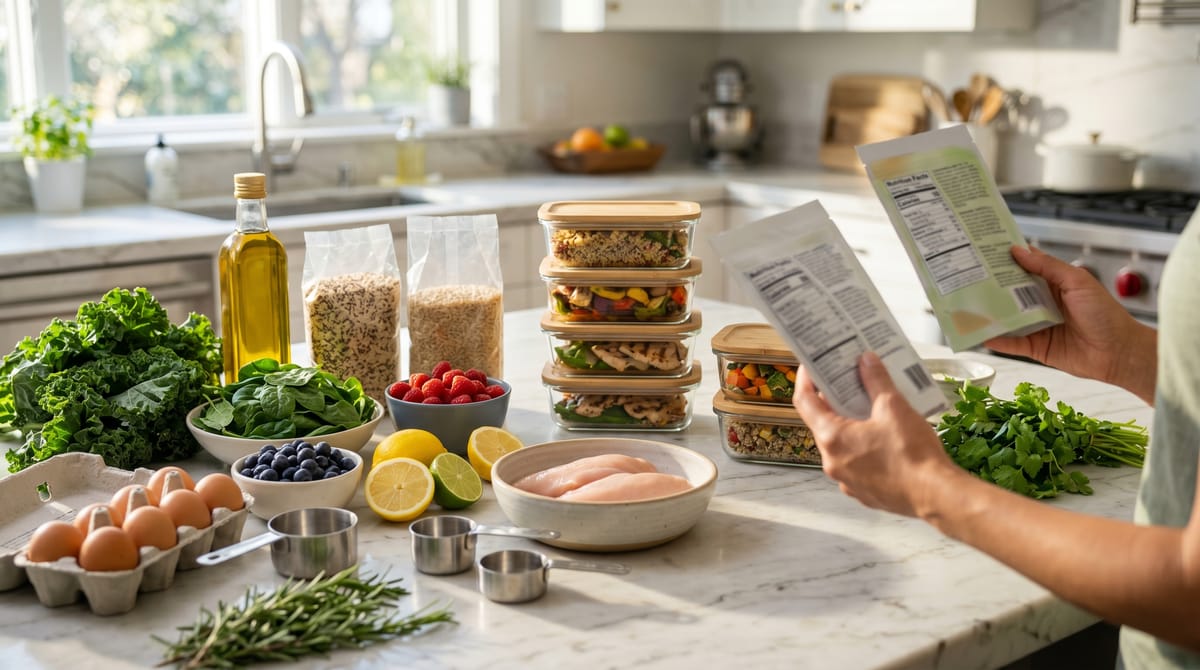
Clean eating is a practical approach to choosing minimally processed foods, reading labels, controlling portions, and building balanced meals so you get more nutrients per calorie while reducing reliance on ultra-processed products and easier-to-overeat packaged foods.
Clean eating is a practical approach to choosing minimally processed foods, reading labels, controlling portions, and building balanced meals so you get more nutrients per calorie while reducing reliance on ultra-processed products and easier-to-overeat packaged foods.
Key Takeaways
- Clean eating emphasizes minimally processed foods, not rigid perfection.
- Calorie targets are personal; according to NIDDK, needs vary by age, weight, metabolism, sex, and activity.
- According to CDC NCHS Blog, about 55% of U.S. calories came from ultra-processed foods, so label literacy matters.
- FreshStart 1500 adds structure with three meals, one snack, menus, recipes, and portion guidance.
- The course is most useful if you want a practical reset and a repeatable routine, not just theory.
Table of Contents
- Understanding Clean Eating
- Key Concepts and Techniques
- Who Benefits from Learning Clean Eating?
- What Do Students Say?
- Is This Course Worth It?
- About the Creator
- Clean Eating Deep-Dive Table
- Watch Before You Enroll
- Frequently Asked Questions
- Conclusion
- Explore More on TGD
Understanding Clean Eating
Clean eating is a pattern for choosing foods that are closer to their natural form and easier to organize into balanced meals. It matters because food quality affects hunger, energy, and how easy it is to sustain healthy habits over time.
According to NIDDK, daily calorie needs depend on age, weight, metabolism, sex, and physical activity level, so no single target works for everyone. That is why a thoughtful eating pattern matters more than a one-size-fits-all number.
According to CDC NCHS Blog, people in the U.S. ages 1+ got about 55% of their daily calories from ultra-processed foods in August 2021-August 2023, with youth at 61.9% and adults at 53%. Those numbers explain why practical food literacy is relevant now. According to FDA, clearer front-of-package labeling is also moving forward, which should make saturated fat, sodium, and added sugars easier to spot at a glance.
It is not about banning whole categories of food. It is about making default choices that favor fiber, protein, and minimally processed ingredients more often. That gives people a flexible framework they can use at home, at work, or while eating out, instead of a short-lived reset that collapses under normal life. It also helps shoppers compare products quickly when the shelf is crowded with options that look similar but behave very differently in the body.
Want to Learn Clean Eating Step by Step?
This course on The Great Discovery covers these fundamentals in a structured format, with menus, recipes, and practical meal-planning support.
The Great Discovery (TGD) is a global online course marketplace where creators publish courses and learners discover practical training across business, technology, wellness, and personal growth.
Key Concepts and Techniques
The core tools behind clean eating are simple: choose better ingredients, build balanced plates, read labels, and make the plan repeatable. These skills matter because the hardest part is usually not knowing what is healthy; it is making healthy choices easy enough to repeat.
Nutrient density
Nutrient density means choosing foods that deliver more vitamins, minerals, fiber, and protein for each calorie. A plain yogurt with fruit, for example, usually does more for satiety than a sugary snack with the same calorie count.
Balanced meal structure
A balanced meal combines protein, carbohydrates, and fats in a way that supports energy and fullness. FreshStart 1500 frames this as three meals and one snack, which helps turn an abstract target into a daily rhythm.
Portion awareness
Portion control is not about deprivation. It is about learning what a normal serving looks like so you can stay within a target without accidentally overshooting it.
Label reading
Ingredient lists and nutrition labels help you see whether a product is mostly whole food or mostly additives, sugars, and refined starches. That skill becomes even more important when front-of-package labels are easier to compare.
Mindful eating and habit design
Mindful eating slows the decision down enough for hunger, fullness, and satisfaction to register. Sustainable habits come from repeating small actions, such as planning lunch before a busy day or choosing a default grocery list.
Who Benefits from Learning Clean Eating?
People who want more structure around meals, shopping, and portions benefit most from learning clean eating. The topic is useful whenever food choices feel reactive instead of planned.
Busy adults who need a simpler routine
If your day leaves little room for decision-making, a clean-eating framework reduces friction. FreshStart 1500 is a strong starting point because it pairs the idea with menus, recipes, and a meal-plan structure you can follow.
People trying to improve food quality
If most of your calories come from packaged or fast options, the biggest win is usually not perfection. It is learning how to swap in a few nutrient-dense meals that actually fit your real life.
Shoppers who want better label literacy
If you want to know what you are buying before it lands in your cart, this topic pays off quickly. The course focus on label reading makes it especially relevant for people who want clearer grocery decisions.
People who do better with accountability
If you stick with a plan longer when someone else has already mapped the steps, a guided course helps. Denise Stegall's course is worth a look for learners who want practical support rather than loose advice.
What Do Students Say?
This course is new to the marketplace and hasn't collected reviews yet. Check back after launch for student feedback. For now, the strongest signals are the curriculum breadth, the included FreshStart Success Guide, and the practical meal-planning assets.
Is This Course Worth It?
Yes, if you want a structured clean-eating framework that turns nutrition ideas into daily habits. The course is best for people who want menus, recipes, label reading, portion guidance, and a clearer way to think about meals.
Not for: people looking for medical nutrition therapy, sport-specific macro coaching, or a universal calorie prescription. According to NIDDK, calorie needs vary by age, weight, metabolism, sex, and activity, so no single target fits everyone.
Verdict: FreshStart 1500 is a strong next step when you already know the basics and want a practical system to apply them. On TGD, it looks most valuable as a habit-building course for everyday eating decisions.
About the Creator
FreshStart 1500 was created by Denise Stegall, whose creator bio is Healthy Living with Denise. The current creator profile lists 2 courses created, 9 total learners, and an average rating of 0.0 in the available data.
That is a sparse but useful profile. The strongest evidence for this course is still the curriculum itself: clean-eating fundamentals, nutrient density, meal planning, label reading, portion control, mindful eating, and sustainable habits.
Clean Eating Deep-Dive Table
This table breaks clean eating into practical decisions you can use at the grocery store, in the kitchen, and at the table. It is meant to be a quick reference for everyday choices.
| Concept | What It Means | Practical Payoff |
|---|---|---|
| Nutrient-dense swap | Choose foods that give more vitamins, minerals, and protein per calorie. | Helps you feel satisfied without relying on empty calories. |
| Balanced plate | Combine protein, fiber-rich carbs, and healthy fats in one meal. | Supports steadier energy and fewer mid-meal cravings. |
| Portion check | Measure servings instead of guessing from the package. | Makes a calorie target easier to follow in real life. |
| Label scan | Look at saturated fat, sodium, added sugars, and ingredient lists. | Helps you spot foods that look healthy but are heavily processed. |
| Mindful pause | Slow down long enough to notice hunger and fullness. | Reduces autopilot eating and helps you stop at enough. |
| Plan ahead | Decide on meals and snacks before hunger gets loud. | Makes busy days less likely to derail your eating pattern. |
These ideas line up closely with FreshStart 1500's lesson set. The course adds menus, recipes, and a simple daily structure so the concepts become easier to practice.
Master Clean Eating with Expert Guidance
Denise Stegall's course covers these concepts and more, with structured lessons, menus, and recipes you can complete at your own pace.
Watch Before You Enroll
Learn how to become an affiliate on The Great Discovery — the best affiliate program for course creators and marketers in 2026. Start earning commissions by sharing courses you believe in.
Frequently Asked Questions
What is clean eating?
Clean eating is a way of choosing foods that are closer to their natural state and easier to combine into balanced meals. It usually emphasizes whole foods, shorter ingredient lists, and fewer ultra-processed products.
Is a 1,500-calorie plan right for everyone?
No. According to NIDDK, calorie needs depend on age, weight, metabolism, sex, and activity level, so a 1,500-calorie target must be individualized.
Why do ultra-processed foods matter?
They matter because they make up a large share of the modern diet. According to CDC NCHS Blog, people in the U.S. ages 1+ got about 55% of calories from ultra-processed foods, with youth at 61.9% and adults at 53%.
How do food labels help with cleaner eating?
Labels help you compare products quickly and spot excess saturated fat, sodium, and added sugars. According to FDA, front-of-package labeling is being designed to make those signals easier to read at a glance.
What does nutrient density mean?
Nutrient density means more useful nutrition for the calories you eat. Foods with fiber, protein, vitamins, and minerals tend to be more filling and more helpful for long-term eating habits.
What does FreshStart 1500 cover?
The course covers clean-eating fundamentals, nutrient density, meal planning, label reading, portion control, mindful eating, sustainable habits, and strategies for dining out, busy schedules, and cravings.
Ready to Go Deeper?
You've learned the fundamentals of clean eating and meal planning. FreshStart 1500 turns that understanding into a practical structure with menus, recipes, and daily guidance.
Start Learning Clean Eating on TGD →
Conclusion
Clean eating is less about strict rules and more about repeatable choices: nutrient-dense foods, better portions, clearer labels, and meal patterns you can sustain. That matters because calorie needs differ from person to person, ultra-processed foods remain common, and label reading is still a practical everyday skill.
FreshStart 1500 gives you a structured way to apply those ideas with menus, recipes, and habits that fit real life. If you want the next step from understanding to action, explore the course on TGD and see how the lessons fit real-life routines: FreshStart 1500.
Explore More on TGD
There are no related courses listed in the source data, so here are useful starting points across TGD.
- Food & Cooking courses
- Health and Fitness courses
- TGD Success courses
- The Great Discovery homepage
- Denise Stegall creator page
Share Your Knowledge on The Great Discovery
Join Denise Stegall and hundreds of other creators sharing their expertise. Create and sell your own courses on TGD.