
Learn Great Investing Practices from Entrepreneurs Library on The Great Discovery
Great investing practices are the disciplined strategies that build long-term wealth: consistent monthly contributions, diversified asset allocation, staying fully invested through market cycles, and avoiding costly market-timing mistakes that reduce average returns by over 2% annually.

Great investing practices are the disciplined strategies that build long-term wealth: consistent monthly contributions, diversified asset allocation, staying fully invested through market cycles, and avoiding costly market-timing mistakes that reduce average returns by over 2% annually.
Key Takeaways
- Monthly investing outperforms market timing by an average of 2.3% annually over 5+ year periods
- The 10 largest S&P 500 companies now represent 40% of index value, making diversification more critical than ever
- Low-cost index funds have consistently outperformed actively managed funds in public markets
- This free course teaches you the exact principles that successful entrepreneurs use to grow wealth
- You'll learn how to build a portfolio that weathers market volatility and compounds over decades
Table of Contents
- Understanding Great Investing Practices
- Key Concepts and Techniques for Successful Investing
- Who Benefits from Learning Investing?
- What Do Students Say?
- About the Creator
- Common Investing Mistakes and How to Prevent Them
- Watch Before You Enroll
- Frequently Asked Questions
- Conclusion
- Explore More on The Great Discovery
Understanding Great Investing Practices
Great investing practices are the foundational strategies that separate wealth builders from those who struggle with their finances. According to Cambridge Associates, the average equity index fund investor earned only 6.0% annually over a 20-year period, while the comparable global equity index returned 8.3%—a 2.3% annual gap driven almost entirely by poor timing and inconsistency rather than bad investment choices.
The core elements of great investing practices remain consistent regardless of market conditions. They include maintaining a diversified portfolio across asset classes and sectors, making regular monthly contributions regardless of market conditions, and staying fully invested through market cycles rather than attempting to time entries and exits.
Market concentration has become increasingly important in 2026. As of August 2025, the 10 largest companies in the S&P 500 now constitute over 40% of the index market cap, according to iShares' 2026 Investment Outlook. This structural shift underscores why deliberate diversification across asset classes, sectors, and geographic regions has become more essential than ever for managing concentration risk.
Research from the White Coat Investor demonstrates that low-cost index funds have historically delivered superior returns compared to actively managed alternatives in publicly traded stock and bond markets, making them the mathematically sound choice for most investors. Finally, the FCA InvestSmart research shows that monthly investing over five or more years smooths out market volatility and significantly outperforms attempts at market timing, proving that consistency compounds wealth faster than genius.
Want to Master Great Investing Practices?
This free course on The Great Discovery teaches you the exact investing fundamentals that successful entrepreneurs use to build wealth consistently, regardless of market conditions.
Key Concepts and Techniques for Successful Investing
Understanding these core concepts will transform how you approach your finances and market participation.
Dollar-Cost Averaging (DCA)
Dollar-cost averaging means investing a fixed amount at regular intervals—typically monthly—regardless of market price. This technique automatically buys more shares when prices are low and fewer when prices are high, smoothing out volatility over time. Research shows that consistent monthly investing outperforms lump-sum investing and market-timing strategies, making it the most accessible path to wealth for regular investors.
Diversification Across Asset Classes
Diversification means spreading your investments across different asset classes (stocks, bonds, real estate), sectors (technology, healthcare, energy), and geographic regions (domestic, international). This reduces your exposure to any single company or market segment, protecting your portfolio when specific industries underperform. With 40% of the S&P 500 now concentrated in just 10 companies, strategic diversification has moved from "nice to have" to "essential."
Index Funds vs. Active Management
Index funds track a broad market benchmark and charge minimal fees, typically 0.03% to 0.10% annually. Actively managed funds employ managers who attempt to beat the market through stock picking, but charge 0.5% to 2% annually. Evidence consistently shows that low-cost index funds outperform 80-90% of actively managed funds over 20-year periods, making index funds the default choice for wealth building.
The Power of Compound Interest
Compound interest is the "eighth wonder of the world." When your investments generate returns, those returns generate their own returns—exponentially accelerating wealth over decades. Starting early and staying invested, even with modest amounts, leverages compound interest far more effectively than larger investments made later.
Portfolio Rebalancing
Rebalancing means periodically realigning your portfolio back to your target allocation—perhaps 60% stocks and 40% bonds. As stocks outpace bonds, your portfolio drifts toward higher risk. Rebalancing forces you to "buy low and sell high" mechanically, removing emotion from investing and maintaining your intended risk level.
Who Benefits from Learning Investing?
Early-Career Professionals Building Wealth
Young professionals often have 40+ years until retirement, making compound interest their greatest advantage. Learning great investing practices early—even with modest starting amounts—can result in 5-10x more wealth than starting 10 years later. This course provides the foundational knowledge to make money decisions that will compound over your entire career.
Entrepreneurs and Business Owners
Entrepreneurs typically earn income sporadically and may accumulate capital quickly from successful ventures. The Entrepreneurs Library course is specifically designed for this audience, teaching how to deploy capital wisely, diversify away from business risk, and build wealth independently of your business performance. Understanding investing principles prevents the common mistake of concentrating all wealth in a single venture.
Parents Planning for Their Children's Future
Parents often want to fund education, first homes, or long-term security for their children. Great investing practices teach you how to build dedicated accounts with time horizons aligned to specific goals. Monthly contributions to a child's 529 education account or custodial investment account, started early, can grow dramatically through compound interest.
Anyone Intimidated by Investment Complexity
Many people avoid investing because financial media makes it seem complicated. Great investing practices strip away the noise and focus on what actually works: consistency, diversification, and patience. This course is designed for basic skill level, meaning you don't need prior finance knowledge—just willingness to learn.
What Do Students Say?
This course is new to the marketplace and hasn't collected reviews yet. Check back after launch for student feedback from learners who have completed Great Investing Practices.
About the Creator
Entrepreneurs Library specializes in content marketing and investing education. With a 5.0-star average rating and 23 learners across 2 courses, the creator focuses on practical knowledge for entrepreneurs and business owners building wealth. The emphasis on actionable content rather than theoretical finance makes the teaching style ideal for someone seeking real-world application.
Learn more about the creator and explore their other courses on their creator profile on The Great Discovery.
Common Investing Mistakes and How to Prevent Them
| Mistake | Why It Costs You | Prevention Strategy |
|---|---|---|
| Trying to time the market | You miss the 10 best days in any 20-year period, reducing returns by 2%+ annually on average | Commit to monthly investing regardless of market conditions; let DCA handle timing automatically |
| Holding too much in one stock or sector | Concentration risk means one bad event can devastate your portfolio; 40% of S&P 500 is now in 10 companies | Diversify across at least 3-4 asset classes and avoid any single holding exceeding 5% of portfolio |
| Paying high fees for active management | A 1.5% annual fee versus 0.1% for index funds costs you over $500,000 on a $1M portfolio over 30 years | Choose low-cost index funds (expense ratio under 0.15%) for core holdings |
| Panic-selling during market downturns | You lock in losses and miss the recovery; every market crash in history has eventually recovered to new highs | Define your target allocation in writing before market volatility hits; commit to not selling |
| Starting too late or investing inconsistently | Inconsistency reduces returns by 2.3% annually; starting 10 years late means roughly 10x less compounding | Start now, however small; automate monthly contributions so consistency happens without willpower |
| Neglecting to rebalance | Your portfolio drifts toward higher risk as winners grow; you end up more aggressive than intended | Rebalance annually or when allocations drift 5% off target; this forces "buy low, sell high" discipline |
These six mistakes account for the majority of the 2.3% annual performance gap that separates average investors from the market index. Understanding and preventing each one is the difference between compounding wealth and spinning wheels. The course covers all of these pitfalls and provides a concrete framework for avoiding them.
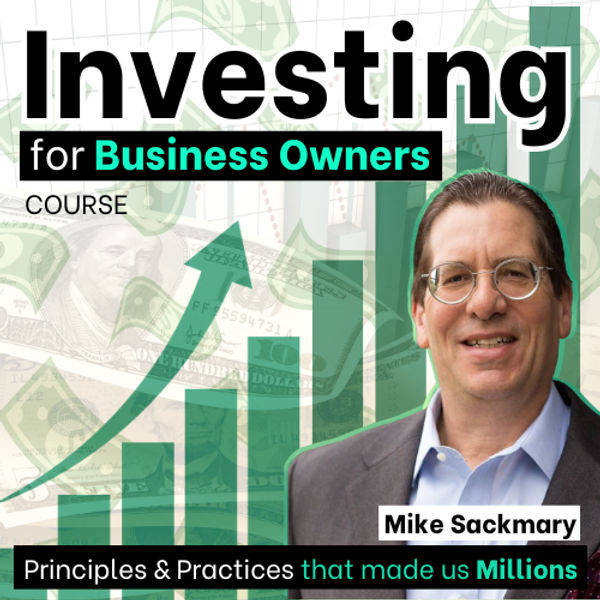
Master Great Investing Practices with Expert Guidance
Entrepreneurs Library has designed this free course to distill the essential investing principles you've just learned into a structured, step-by-step progression. You'll move from understanding why consistency matters to building your actual investment plan and executing it with confidence.
Enroll in Great Investing Practices →
Watch Before You Enroll
Learn how to become an affiliate on The Great Discovery—the best affiliate program for course creators and marketers in 2026. Start earning commissions by sharing courses you believe in.
Ready to Transform Your Financial Future?
You've now learned why great investing practices matter, what mistakes to avoid, and exactly which techniques actually work. This free course provides the structured guidance to turn this knowledge into your personal wealth-building system.
Start Learning Great Investing Practices →
Frequently Asked Questions
What are the most important investing principles for beginners?
The three most important principles are: (1) start as early as possible to leverage compound interest, (2) invest consistently every month regardless of market conditions, and (3) diversify across multiple asset classes and sectors. These three alone will put you ahead of 80% of investors.
How much money do I need to start investing?
Many investment platforms now allow you to start with $1-5 per month through automated investing apps. Dollar-cost averaging actually works better with modest amounts invested consistently than waiting to accumulate a large lump sum. Time in the market beats timing the market.
What's the real difference between index funds and actively managed funds?
Index funds track a market benchmark and charge 0.03-0.10% in annual fees. Actively managed funds employ managers attempting to beat the market and charge 0.5-2%. Research shows index funds beat 80-90% of actively managed funds over 20 years, making the fee difference the primary driver of returns.
How often should I review or rebalance my investment portfolio?
Review your portfolio quarterly to stay informed, but only rebalance annually or when allocations drift 5% off target. Over-adjusting introduces costs and taxes while reducing returns. Most investors benefit from "set and forget" discipline with annual rebalancing.
Is this course really free? What's the catch?
Yes, this course is completely free. The Great Discovery offers free foundational courses on many topics to build your learning journey. There's no catch—just education designed to help you make better financial decisions.
How long will it take me to see results from investing?
You'll see account growth immediately as you make contributions, but meaningful compound interest takes time. Most investors see substantial results (5x-10x returns) over 20+ year periods. The longer you stay invested, the more powerful the compounding effect becomes.
Conclusion
Great investing practices are not secrets—they're timeless strategies proven across decades of market history. Consistency beats timing, diversification beats concentration, and index funds beat active management. The 2.3% annual performance gap between average investors and the market index is driven by behavior, not ignorance.
Understanding these principles is the first step; building discipline around them is what creates wealth. This free course on The Great Discovery takes you from understanding why great investing practices work to implementing them in your own financial life. You'll have a clear plan, a solid foundation, and the confidence to execute it for decades.
Start the course today and begin building the wealth that consistency compounds over time.
Explore More on The Great Discovery
- More Courses in Money and Finances
- Entrepreneurship and Business Courses
- More Courses by Entrepreneurs Library
- Browse All Courses on The Great Discovery
Share Your Knowledge on The Great Discovery
Join Entrepreneurs Library and hundreds of other creators sharing their expertise. Create and sell your own courses on TGD.