
The Film & TV Circle with Melissa Green-Lavigne | TGD
Film and TV networking is the practice of building trusted industry relationships through introductions, short pitches, collaboration, and follow-up. It matters because entertainment careers move through connections, referrals, and timing as much as raw talent.
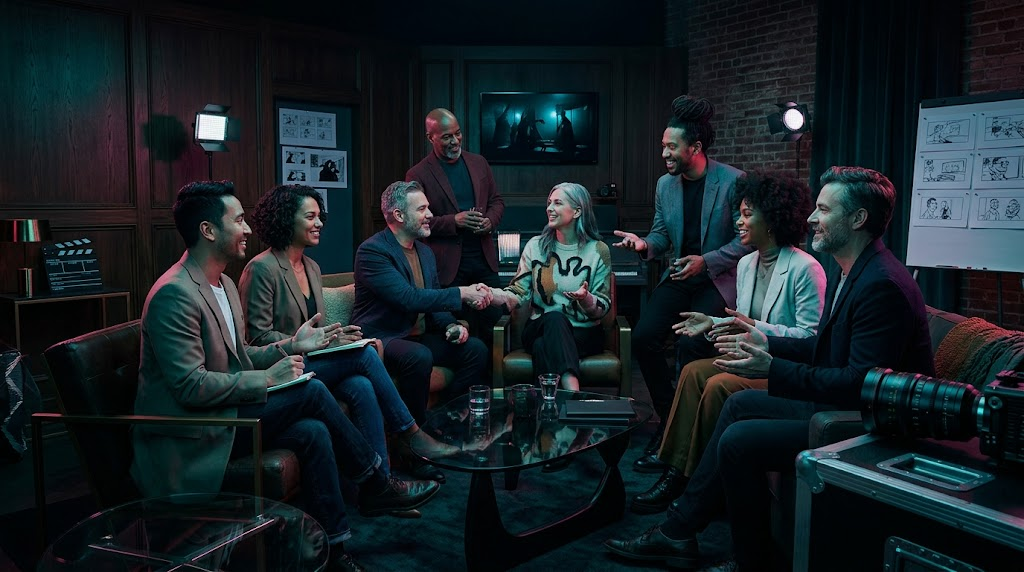
Film and TV networking is the practice of building trusted industry relationships through introductions, short pitches, collaboration, and follow-up. It matters because entertainment careers move through connections, referrals, and timing as much as raw talent.
Key Takeaways
- Film and TV networking works best when it is structured, recurring, and easy to repeat.
- According to the Motion Picture Association, the U.S. film, television, and streaming industry supports 2.01 million jobs and more than 162,000 businesses.
- According to the U.S. Bureau of Labor Statistics, producers and directors are projected to grow 5% from 2024 to 2034, with about 12,800 openings per year on average.
- Breakout conversations, guest Q&A, and short project shares turn casual contacts into useful industry relationships.
- The Film & TV Circle is a free weekly networking event, so it offers a low-risk way to practice real-world industry communication.
Table of Contents
- Understanding Film & TV Networking
- Key Concepts and Techniques
- Who Benefits from Learning Film & TV Networking?
- What Do Students Say?
- About the Creator
- Essential Film & TV Networking Practices
- Watch Before You Enroll
- Frequently Asked Questions
- Conclusion
- Explore More on TGD
Understanding Film & TV Networking
Film and TV networking is how creatives turn industry visibility into real opportunities. It combines introductions, relationship-building, and clear communication so people remember what you do and how you can help.
According to the Motion Picture Association, the U.S. film, television, and streaming industry supports 2.01 million jobs and more than 162,000 businesses. That size creates opportunity, but it also makes the field crowded and competitive.
According to the U.S. Bureau of Labor Statistics, producers and directors are projected to grow 5% from 2024 to 2034, with about 12,800 openings per year on average. Actors are projected to have about 6,300 openings each year, even as overall employment shows little or no change.
That combination means networking is not optional busywork. It is a practical skill for finding collaborators, learning about projects, and staying relevant as the industry changes.
Want to Learn Film & TV Networking Step by Step?
This free course on The Great Discovery covers the fundamentals of relationship-building, pitching, and collaboration in a simple weekly format.
Key Concepts and Techniques
Strong entertainment networking depends on a few repeatable habits, not on being the loudest person in the room. The most effective practices are simple, specific, and easy to use in virtual or in-person settings.
1. Introductions that Clarify Your Role
A good introduction tells people who you are, what you make, and what kind of work you want. In a fast-moving networking room, clarity helps others place you quickly and remember you later.
If you are an actor, producer, director, writer, or crew member, lead with the role that matters most for your current goals. That makes follow-up easier and reduces vague conversations.
2. Short Pitches and Project Shares
Short pitches work because they create a clear hook without forcing a long presentation. A concise project share lets others respond with ideas, contacts, or possible partnerships.
The Film & TV Circle format described by The Great Discovery uses short pitches and project shares, which is ideal practice for creatives who need to explain ideas quickly and professionally.
3. Breakout-Room Networking
Breakout rooms are useful because they move you from a crowd into smaller conversations. That setting makes it easier to ask better questions, learn someone’s goals, and spot overlap.
For creative work, overlap matters. A writer may need a producer, a producer may need a composer, and a coach or manager may know the right person to introduce.
4. Guest Q&A and Industry Context
Guest speakers and Q&A sessions help you hear how working professionals think about projects, timing, and career moves. They also reveal how different roles collaborate across development, production, and promotion.
When you listen for process, not just credit lists, you learn how to position yourself in the same ecosystem.
5. Follow-Up and Collaboration Tracking
Networking only pays off when you follow up with something specific. A short message that references the conversation and suggests a next step is much better than a generic “nice to meet you.”
Track who you met, what you discussed, and whether there is a clear next action. That discipline turns a one-time conversation into a repeatable professional relationship.
Who Benefits from Learning Film & TV Networking?
The best fit is anyone who needs access, feedback, or relationships inside the entertainment industry. The source data does not list a formal skill level, so the format is broad enough for beginners and working professionals. Because the event is free, it also lowers the barrier for people who want to test networking before investing more time or money.
Newcomers Building Their First Contacts
If you are new to the industry, networking helps you learn the language, norms, and pace of entertainment work. A weekly room with introductions and short pitches gives you a safe place to practice.
For this segment, The Film & TV Circle is a sensible starting point because it is a free, recurring event rather than a high-pressure gatekeeping environment.
Actors, Writers, and Crew Looking for Opportunities
If you are trying to get cast, hired, or remembered for future projects, relationships matter. According to the U.S. Bureau of Labor Statistics, actors face a competitive market with about 6,300 annual openings on average, so visibility matters.
The categories tied to this course, including Film, TV Series, and Entertainment Industry, make it especially relevant for people whose work depends on being top of mind when opportunities appear.
Producers, Directors, and Development-Minded Creatives
If you build projects, networking helps you find collaborators faster and reduce development friction. According to the U.S. Bureau of Labor Statistics, producers and directors are projected to see about 12,800 openings per year on average, which keeps relationship-building strategically valuable.
These professionals often benefit most from spaces where they can share ideas, hear feedback, and identify partners who can help move a project forward.
Agents, Managers, Coaches, and Connectors
If your work involves representing or advising talent, networking helps you stay aware of who is active, what people need, and where collaboration is forming. You can use the room to spot potential referrals and build trust across disciplines.
The Film & TV Circle is also useful for connectors because it focuses on community, encouragement, and collaboration announcements, not just self-promotion.
What Do Students Say?
Student feedback points to a supportive, relationship-centered experience. That is exactly what you want from a networking format, because the value comes from the quality of conversation as much as the names in the room.
"It has been a delight to join the Film & TV Circle. I love the opportunity to network with other professionals who love the art of performance."— Cynthia McQuade-Brinkman
The review highlights the community feel and the chance to meet like-minded professionals. For networking courses, that is a strong sign that the event creates a welcoming environment rather than a transactional one.
About the Creator
Melissa Green-Lavigne is the creator behind this course, and her profile aligns closely with the topic. Her bio identifies her as a filmmaker, which fits a networking event designed for film and television professionals.
Creator stats: 4 courses created, 10 total learners, 5.0 average rating. You can view her profile here: Melissa Green-Lavigne on The Great Discovery.
That combination suggests a focused creator with a small but highly rated catalog. For learners, that usually means the course is likely to feel personal, practical, and community-oriented.
Essential Film & TV Networking Practices
Film and TV networking becomes easier when you understand the job of each interaction. Different formats serve different purposes, and the table below shows how to use each one well.
| Networking Practice | What It Does | How to Use It Well |
|---|---|---|
| Introductions | Creates first contact and frames your role | Keep it specific, brief, and tied to your current goals |
| Short Pitches | Explains a project or idea in a memorable way | Lead with the hook, then name the type of support you need |
| Breakout Conversations | Turns a room into smaller, more usable conversations | Ask one focused question and listen for overlap |
| Guest Q&A | Shares industry process and real-world perspective | Use it to learn how professionals make decisions |
| Follow-Up Notes | Extends the conversation after the event ends | Reference one detail and suggest a clear next step |
These practices are exactly why a recurring networking event can be more valuable than an occasional meet-and-greet. The Film & TV Circle uses this kind of structure, so it doubles as both learning environment and professional practice.

Master Film & TV Networking with Expert Guidance
Melissa Green-Lavigne’s course covers the same networking foundations you just learned, with a structured weekly format for introductions, pitches, and collaboration.
Enroll in The Film & TV Circle - Online Event - Every Tuesday @ 5:15 PM pst →
Watch Before You Enroll
Watch this short video overview to understand the main ideas behind The Film & TV Circle - Online Event - Every Tuesday @ 5:15 PM pst before you enroll.
This video introduces The Film & TV Circle - Online Event - Every Tuesday @ 5:15 PM pst and previews the Film & TV Circleis a community-centered networking group designed to bring together professionals and aspiring creatives in the film and television industry.
Frequently Asked Questions
What is film and TV networking?
Film and TV networking is the practice of forming professional relationships that can lead to introductions, referrals, collaboration, and work. It is especially useful in a relationship-driven industry where timing and trust matter.
Why does networking matter in the entertainment industry?
According to the Motion Picture Association, the U.S. film, television, and streaming industry supports 2.01 million jobs and more than 162,000 businesses. Networking matters because that scale makes personal visibility and direct relationships a practical advantage.
What should you say in a networking introduction?
Say who you are, what you do, and what kind of opportunity you want next. A short, clear introduction helps other people remember you and decide how they can help.
How do breakout-room conversations help creatives?
Breakout rooms create smaller conversations that feel easier to navigate than a large group. They help creatives ask better questions, find overlap, and identify possible collaborations faster.
How often should creatives network?
Consistency matters more than intensity. A weekly or recurring rhythm is easier to sustain, and it helps people remember you over time instead of only seeing you once.
Is The Film & TV Circle free and what level is it for?
The Great Discovery describes The Film & TV Circle as a free virtual networking event. The source data does not list a formal skill level, so it is best understood as broadly accessible to a wide range of experience levels.
Ready to Go Deeper?
You have learned the basics of film and TV networking: how to introduce yourself, pitch clearly, and build follow-up into the process. This free course is the natural next step if you want a weekly place to practice those skills.
Start Learning Film & TV Networking on TGD →
Conclusion
Film and TV networking works when it is structured, repeatable, and centered on real relationships. You learned why the industry makes networking essential, how introductions and short pitches help you stand out, and why breakout rooms, Q&A, and follow-up turn conversations into opportunities.
If you want to put those ideas into practice, The Film & TV Circle gives you a free weekly format built around the exact behaviors that matter most. It is a practical next step for anyone who wants to learn by doing rather than by reading alone. Explore The Film & TV Circle on The Great Discovery
Explore More on TGD
If you want to keep learning inside The Great Discovery ecosystem, start with these related paths. Because there are no related courses listed in the source data, the links below point to relevant category pages, plus the homepage and creator profile.
- Film courses on TGD
- TV Series courses on TGD
- Entertainment Industry courses on TGD
- TGD Success courses on TGD
- The Great Discovery homepage
- Melissa Green-Lavigne creator page
Share Your Knowledge on The Great Discovery
Join Melissa Green-Lavigne and hundreds of other creators sharing their expertise. Create and sell your own courses on TGD.