
Learn One-Minute Story Template with Jayne Lowell on TGD
A one-minute story template turns a real experience into a short narrative people can follow, remember, and repeat. It matters because attention is compressed, and speakers need to explain value before the room drifts.

A one-minute story template turns a real experience into a short narrative people can follow, remember, and repeat. It matters because attention is compressed, and speakers need to explain value before the room drifts.
Key Takeaways
- A strong one-minute story usually follows a simple arc: problem, action, result, and lesson.
- According to Forbes Coaches Council, adding one or two relevant data points can make the story more strategic.
- Toastmasters recommends that stories connect smoothly into the rest of a speech, whether they open, reinforce, or close it.
- Wyzowl's 2026 report says 63% of people prefer a short video when learning about a product or service, and 84% want more videos from brands.
- The Great Discovery course gives you a structured way to build and deliver a transformational story in one minute flat.
Table of Contents
- Understanding One-Minute Story Templates
- Key Concepts and Techniques
- Who Benefits from Learning One-Minute Story Templates?
- What Do Students Say?
- Is This Course Worth It?
- About the Creator
- One-Minute Story Building Blocks
- Watch Before You Enroll
- Frequently Asked Questions
- Conclusion
- Explore More on TGD
Understanding One-Minute Story Templates
A one-minute story template turns a lived moment into a compact narrative with a clear beginning, middle, and end. It matters because leaders, founders, and creators rarely have unlimited time to earn trust or interest. According to McKinsey, storytelling has become an essential leadership skill in today’s noisy, complex business environment. Forbes Coaches Council recommends a business story structure built around the problem, how you tackled it, the results, and a final lesson or purpose, with one or two relevant data points to make the story strategic. Toastmasters adds that stories can open, reinforce, or close a speech when they connect smoothly to the larger message.
That combination makes the template useful far beyond public speaking. It helps entrepreneurs, interview guests, and creators shape experience into a clear takeaway instead of a ramble. Wyzowl’s 2026 report says 63% of people prefer a short video when learning about a product or service, and 84% want more videos from brands, which shows how strongly modern audiences respond to concise messaging. A tight story gives that message a human shape.
Want to Learn One-Minute Story Templates Step by Step?
This course on The Great Discovery turns the framework into a practical process for speeches, interviews, podcasts, and written content.
The Great Discovery (TGD) is a global online course marketplace where creators publish courses and learners discover practical training across business, technology, wellness, and personal growth. It helps people find focused lessons from independent creators in one place.
Key Concepts and Techniques
The best one-minute stories are built from repeatable parts. That keeps them short, specific, and useful in live conversations, podcasts, pitches, and written bios.
1. Build the arc: problem, action, result, lesson
The cleanest structure starts with a problem, shows what you did, shares the result, and ends with the lesson. The course page describes a three-part story formula, and Forbes suggests that a final lesson or purpose can make the story more strategic.
2. Add one concrete data point
Numbers turn a story from a feeling into evidence. Forbes recommends adding one or two relevant data points, which is often enough to make a short story sound credible without burying the human part.
3. Place the story where attention needs a reset
Toastmasters notes that stories can work at the opening, in the middle, or at the close of a speech. A one-minute story is most useful when it bridges to a larger point instead of floating on its own.
4. Trim to one scene and one takeaway
A short story fails when it tries to cover too much life at once. Keep one scene, one change, and one lesson so the listener can follow the shift in real time.
5. Adapt the same core story across formats
The course description says the template is useful for live presentations, interviews, podcasts, and written content. That is the real advantage of a reusable story: you can shape the same core message for a stage, a microphone, or a page.
Who Benefits from Learning One-Minute Story Templates?
This topic is most useful when you need to explain value quickly and credibly. The course fits people who want a practical way to turn experience into a clear story instead of a long explanation.
Entrepreneurs and founders
Founders often need to explain what changed, why it mattered, and why anyone should care. A one-minute story helps you make the message memorable in a pitch, a networking conversation, or a brief introduction.
This is the most natural audience for Jayne Lowell’s course because the title and course description speak directly to entrepreneurs. If you want a focused starting point, this TGD course is a sensible first pass at the framework.
Speakers, podcast guests, and interviewees
Guests who ramble lose momentum, even when their ideas are strong. A one-minute story keeps an answer tight while still giving the host something vivid to react to.
Toastmasters’ guidance on opening, reinforcing, and closing stories makes this especially relevant for live speaking. If your job is to hold attention on mic or on stage, the course can help you rehearse a repeatable story shape.
Sales and marketing professionals
Short stories are useful in sales because they show outcomes instead of just claims. They are also useful in marketing because people remember a human narrative faster than a feature list.
Wyzowl’s 2026 data supports that behavior: 63% of people prefer a short video when learning about a product or service, and 84% want more brand video. That is why a short story template matters in modern messaging.
Creators building a personal brand
Creators often need a short way to explain who they are and what they do without sounding rehearsed. A one-minute story can become the backbone of an introduction, a bio, or a launch talk.
Jayne Lowell’s profile is focused rather than broad, with one course and a clear niche. That makes the course feel like a narrow tool for a specific storytelling problem, which can be exactly what many learners need.
What Do Students Say?
This course is new to the marketplace and hasn't collected reviews yet. Check back after launch for student feedback.
Is This Course Worth It?
Yes, if you want a focused way to turn lived experience into a tight story.
It is best for entrepreneurs, speakers, and creators who need a reliable structure for introductions, pitch moments, podcast answers, or short written narratives. The course’s narrow promise is a strength if you want one repeatable template instead of broad theory.
It is not the best fit if you want a deep public-speaking curriculum, advanced stagecraft, or a large catalog of different topics. On TGD, it is a strong next step when you already know the story you want to tell but need help shaping it into a one-minute format you can actually deliver.
About the Creator
Jayne Lowell is listed as the creator of a single focused course on storytelling. The profile is sparse, but it does show a clear niche: practical inspiration and message-shaping for entrepreneurs.
- Courses created: 1
- Total learners: 0
- Average rating: 0.0
Bio: Chief Inspirational Officer - SteveLowell.com. View creator profile
One-Minute Story Building Blocks
One-minute stories work best when you can see their parts. The table below breaks the format into practical pieces you can reuse in speaking, interviews, and written storytelling.
| Building Block | What It Does | How to Use It |
|---|---|---|
| Problem frame | Gives the audience immediate context | Name the tension in one sentence so listeners know why the story matters. |
| Action | Shows agency and credibility | Describe the decision or step you took instead of listing every detail. |
| Result | Proves the change mattered | Share a concrete outcome, such as a better response, faster process, or clearer decision. |
| Lesson | Makes the story transferable | End with the insight the audience can apply in their own situation. |
| Data point | Adds strategic weight | Use one metric or fact that supports the claim without overwhelming the narrative. |
| Transition | Connects the story to the larger message | Bridge from the story back to your main point in one short sentence. |
These building blocks match the course’s promise of turning a story into a transformational one-minute message. If you can name the parts, you can adapt the same core story to a stage, an interview, a podcast, or a page.
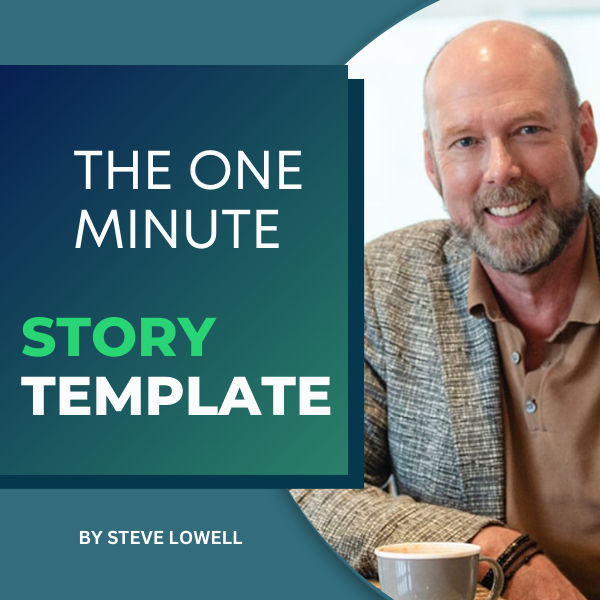
Master One-Minute Story Templates with Expert Guidance
Jayne Lowell's course turns the structure you just saw into a repeatable one-minute story you can use in speaking, interviews, podcasts, and written content.
Watch Before You Enroll
If you want to understand how affiliate promotion works on TGD, this short video explains the workflow.
Learn how to become an affiliate on The Great Discovery — the best affiliate program for course creators and marketers in 2026. Start earning commissions by sharing courses you believe in.
Frequently Asked Questions
These are the questions people usually ask when they are learning how to build a one-minute story. The answers below focus on the topic itself, with one question about the TGD course at the end.
What is a one-minute story template?
A one-minute story template is a short narrative structure that helps you explain a problem, the action you took, the result, and the lesson. It is designed to keep the story focused enough for live speaking, interviews, and short-form content.
What should a one-minute business story include?
Forbes Coaches Council recommends a problem, how you tackled it, results, and a final lesson or purpose. Adding one or two relevant data points can make the story feel more strategic and credible.
Should a one-minute story include data?
Yes, if the data supports the point instead of distracting from it. Forbes specifically recommends one or two relevant data points because they help a short story sound grounded in real outcomes.
How do you use a one-minute story in a speech?
Toastmasters says stories can open, reinforce, or close a speech. The key is to connect the story smoothly to the rest of the talk so it feels like part of the message, not a separate detour.
How do you keep it from sounding scripted?
Focus on one scene, one change, and one takeaway instead of memorizing a long script. Practice the structure until it feels natural, then let the details vary slightly so the delivery stays human.
What is this TGD course best for?
The course is best for people who want a structured way to create and deliver a transformational one-minute story. Its scope fits entrepreneurs, speakers, interview guests, and creators who need a practical storytelling template.
Ready to Go Deeper?
You now know how a one-minute story works and why it matters in modern communication. This course takes you from understanding the structure to applying it in real conversations, presentations, and content.
Start Learning One-Minute Story Templates on TGD →
Conclusion
You now know that a one-minute story works because it compresses experience into a clear arc: problem, action, result, and lesson. You also know why it matters now, when leaders and creators need concise explanations that still feel human. The strongest versions use one useful data point and a smooth transition back to the main message. If you want a guided way to practice that structure instead of improvising it, the course is a logical next step on TGD. Explore The One Minute Story Template on The Great Discovery →
Explore More on TGD
If you want to keep learning, start with TGD pages that overlap most closely with speaking, growth, and entrepreneurship.
- Browse Self Improvement courses
- Browse Public Speaking courses
- Browse TGD Success courses
- Browse Entrepreneurship and Business courses
- Visit the TGD homepage
- Visit Jayne Lowell's creator page
Share Your Knowledge on The Great Discovery
Join Jayne Lowell and hundreds of other creators sharing their expertise. Create and sell your own courses on TGD.