Poetry and Mechanics: Do You Need Technical Mastery to Write from the Heart?
Poetry that emanates from genuine emotion can be powerful, but mastering mechanics—meter, rhyme, form, and structure—strengthens emotional expression and ensures readers fully grasp the poet's intent. The most compelling poetry blends authentic feeling with skillful technique.
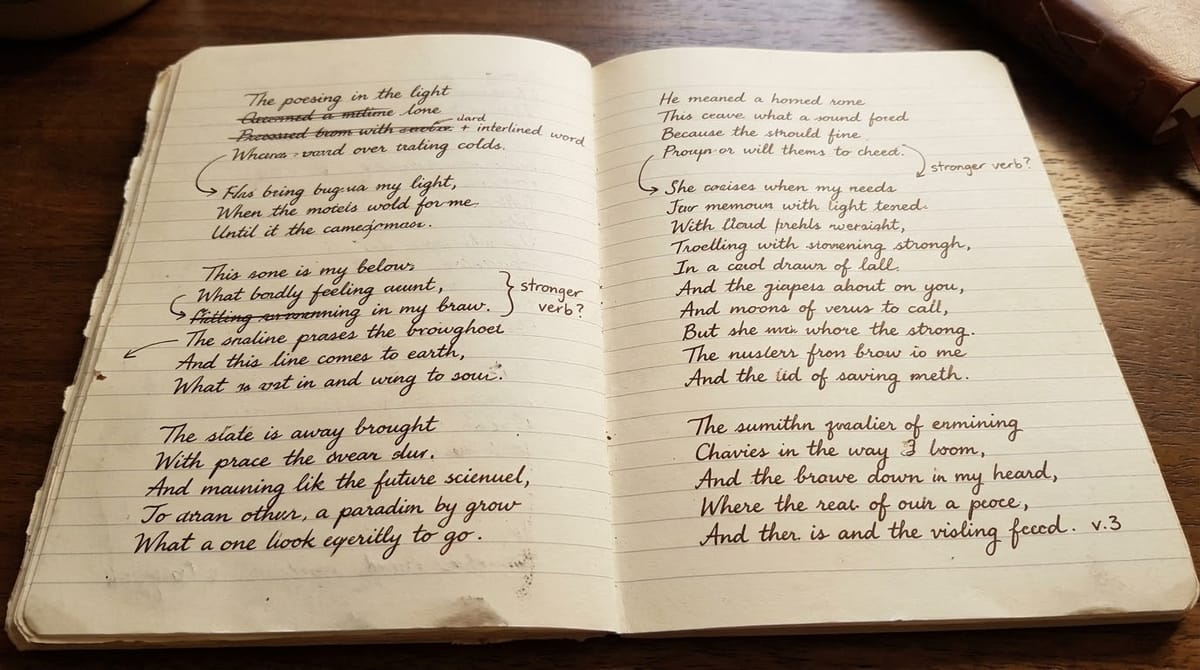
Poetry that emanates from genuine emotion can be powerful, but mastering mechanics—meter, rhyme, form, and structure—strengthens emotional expression and ensures readers fully grasp the poet's intent. The most compelling poetry blends authentic feeling with skillful technique.
Key Takeaways
- Poetry and prose serve different purposes—poetry compresses meaning into emotional language, while prose prioritizes clarity and narrative flow.
- Poetic mechanics (meter, rhyme, imagery, form) aren't obstacles to authentic expression—they're tools that channel emotion more effectively.
- Mastering basic poetic techniques takes practice, but dramatically improves how readers connect with your message.
- Writing poetry from the heart doesn't mean ignoring craft—the best poetry combines emotional authenticity with technical skill.
- This free course teaches you the fundamentals of poetry and prose so you can write authentic work that resonates with readers.
Table of Contents
- Understanding Poetry and Prose
- Key Concepts and Techniques
- Who Benefits from Learning Poetry?
- What Do Students Say?
- About the Creator
- Essential Poetic Forms and Their Characteristics
- Watch Before You Enroll
- Frequently Asked Questions
- Conclusion
- Explore More on TGD
Understanding Poetry and Prose
Poetry and prose are two distinct forms of written expression with fundamentally different purposes. Prose—the language of novels, essays, and articles—prioritizes clarity, narrative structure, and direct communication. Poetry, by contrast, compresses complex emotions and ideas into condensed language, using sound, rhythm, and imagery to create multiple layers of meaning.
The core question many aspiring poets face is whether the technical aspects of poetry—its mechanics—are necessary or even helpful. After all, if a poem comes from the heart, shouldn't it simply flow onto the page? The answer is more nuanced. While genuine emotion is the foundation of meaningful poetry, the mechanics of the form act as a vessel that strengthens and clarifies that emotion for readers.
Understanding the relationship between heart and technique is what separates novice poets from those who can craft work that truly resonates. The mechanics aren't constraints—they're opportunities to make your authentic voice heard more clearly.
Want to Learn Poetry Step by Step?
This free course on The Great Discovery walks you through the fundamentals of poetry and prose, helping you understand how to channel your authentic voice through the power of poetic technique.
Key Concepts and Techniques
Meter and Rhythm
Meter is the pattern of stressed and unstressed syllables in a line of poetry. When you understand meter, you can control the pace and emotional weight of your words. A fast-moving meter creates urgency, while a slow, heavy meter conveys solemnity or grief. This technical skill directly serves emotional authenticity—you're using rhythm to amplify what your heart is trying to say.
Imagery and Sensory Language
Imagery involves using specific, concrete details that appeal to the senses. Rather than writing "I felt sad," a skilled poet might write about the weight of rain on shoulders or the cold silence of an empty room. This technique bridges heart and mechanics—your authentic emotion becomes visceral and memorable through precise sensory language.
Metaphor and Symbolism
A metaphor directly compares two unlike things ("love is a battlefield"), while symbolism uses objects or images to represent larger ideas. These aren't decorative tricks—they're how poetry achieves its compression and power. A single image can evoke an entire emotional landscape, allowing readers to feel what you felt.
Form and Structure
Formal poetry includes sonnets, haikus, villanelles, and ballads—structures with specific rules about line length, rhyme, and stanza form. While free verse (poetry without formal constraints) offers total freedom, understanding traditional forms teaches you how line breaks, white space, and repetition shape meaning. Even poets who reject form benefit from studying it.
Sound and Musicality
Alliteration, assonance, consonance, and rhyme create the sonic texture of a poem. These techniques make a poem memorable and emotionally resonant. The sound of words matters—their hard or soft consonants, their vowel sounds, the way they flow together. This is craft in service of feeling.
Who Benefits from Learning Poetry?
Emerging Writers
If you're new to writing and want to express yourself creatively, poetry offers a direct path to authentic self-expression. Starting with the basics of poetry and prose helps you understand which form best serves what you're trying to communicate. Carol Jennifer Soars' free course is designed for intermediate learners ready to move beyond dabbling into genuine skill.
Writers Seeking Deeper Craft
Experienced writers often turn to poetry to sharpen their language skills. Poetry demands precision—every word must earn its place. Understanding poetic mechanics makes you a better prose writer too, because you learn to value economy of language and sensory detail. This course bridges the gap between poetry and prose, showing how each strengthens the other.
Educators and Teachers
If you teach writing or literature, understanding the mechanics of poetry helps you guide students past the "I don't understand poetry" wall. By exploring both the technical and emotional dimensions of poetry, you can help others see poetry not as an elite art form, but as a natural extension of human expression.
People Processing Emotion
Many people discover poetry as a tool for processing grief, joy, trauma, or transformation. Poetry allows you to explore complex emotions in ways prose sometimes can't. Learning the craft gives you a stronger container for these deep feelings, ensuring your authentic experience reaches the reader with its full impact intact.
What Do Students Say?
This course is new to the marketplace and hasn't collected reviews yet. As Carol Jennifer Soars' course gains students, feedback and testimonials will appear here. Check back soon for insights from learners who've worked through the material.
About the Creator
Carol Jennifer Soars is an educator and writer with deep experience teaching writing fundamentals. She's created 7 courses on The Great Discovery, with a perfect 5.0 average rating and 6 total learners engaging with her content. Her focus on practical, grounded writing instruction reflects her commitment to helping students move from passion to publication.
Carol's approach emphasizes the partnership between heart and craft—she understands that aspiring writers don't need to choose between authenticity and technique. Her courses are designed to strengthen both.
Explore more of Carol's work: Visit Carol Jennifer Soars' Creator Profile
Essential Poetic Forms and Their Characteristics
| Form | Structure | Best Used For |
|---|---|---|
| Haiku | 3 lines; 5-7-5 syllable pattern | Capturing a single moment or image; nature observations; brevity and impact |
| Sonnet | 14 lines; strict rhyme scheme (Shakespearean or Petrarchan) | Exploring a single theme deeply; love, loss, or philosophical questions; complex emotion |
| Free Verse | No fixed meter, line length, or rhyme; follows natural speech patterns | Contemporary expression; conversational tone; flexibility with form |
| Villanelle | 19 lines with two repeating refrains; creates hypnotic effect | Obsession, repetition, cyclical emotions; songs and lyrical poetry |
| Ballad | Narrative poem in quatrains (4-line stanzas); often uses rhyme and refrain | Storytelling; folk tradition; combining narrative and emotion |
| Blank Verse | Unrhymed iambic pentameter (10 syllables per line) | Dramatic and philosophical work; Shakespearean drama; serious subjects |
Each form offers different possibilities for emotional expression. Understanding these structures shows you how technical constraints can actually deepen authentic feeling rather than constrain it. The form you choose should serve the emotion you're trying to convey.

Master Poetry Fundamentals with Expert Guidance
Carol Jennifer Soars' course covers all of these forms and concepts, teaching you how technical skill and emotional authenticity work together. Learn at your own pace with structured lessons that build from poetry basics to confident composition.
Watch Before You Enroll
Learn how to become an affiliate on The Great Discovery—the best affiliate program for course creators and marketers in 2026. Start earning commissions by sharing courses you believe in.
Ready to Go Deeper?
You've learned the fundamentals about poetry mechanics and how they serve authentic expression. This free course takes you from understanding to practical application, with guided lessons that help you write poetry that comes straight from your heart—informed by craft.
Start Learning Poetry on TGD →
Frequently Asked Questions
What's the difference between poetry and prose?
Prose prioritizes clarity and narrative flow, using conventional sentence structure to convey information directly. Poetry compresses meaning into carefully chosen language, using rhythm, imagery, and form to create emotional resonance. Poetry tells you how something feels; prose tells you what happened.
Do I need to master poetic mechanics before writing poetry?
You don't need to master all techniques before writing your first poem, but understanding the basics—meter, imagery, line breaks—helps you express authentic emotion more effectively. Start writing immediately while learning the tools that will strengthen your voice.
Can a poem be powerful without following formal rules?
Yes. Free verse poetry proves that you don't need traditional form to create powerful work. However, understanding formal constraints teaches you how to use line breaks, white space, and rhythm intentionally—skills that strengthen free verse as much as formal poetry.
What makes a poem resonate with readers?
A resonant poem combines two elements: authentic emotional truth and skillful craft. The emotion gives the poem meaning; the craft—imagery, rhythm, word choice—ensures readers actually feel that emotion. Without authenticity, craft is hollow. Without craft, authenticity gets lost.
How long does it take to learn poetic fundamentals?
The basics can be understood within weeks of focused study. Carol Jennifer Soars' free course is designed for intermediate learners and moves at a pace that allows genuine learning without overwhelming. Becoming a skilled poet takes years, but you can start writing meaningful poetry much sooner.
What types of poetry are easiest to start with?
Haiku and free verse are accessible starting points. Haiku's constraint (5-7-5 syllables) focuses your attention; free verse allows you to ignore formal rules while learning imagery and language. As your confidence grows, explore sonnets and other formal structures.
Conclusion
The question "Is poetry from the heart and soul dependent on a mastery of mechanics?" has a clear answer: authenticity and technique aren't in conflict—they're partners. Your heart provides the truth; mechanics provide the vessel that carries that truth to readers. The best poetry emerges when emotional authenticity meets skillful craft.
Learning to write poetry means understanding both dimensions. You'll discover how meter shapes pacing, how imagery makes emotion concrete, and how structure focuses your message. Carol Jennifer Soars' free course on The Great Discovery is designed to teach you exactly this—how to honor your authentic voice while strengthening it with technical skill. Start learning today and begin writing poetry that truly resonates.
Explore More on TGD
- More Writing Courses on The Great Discovery
- Explore All Courses by Carol Jennifer Soars
- Visit The Great Discovery Homepage
Share Your Knowledge on The Great Discovery
Join Carol Jennifer Soars and hundreds of other creators sharing their expertise. Create and sell your own courses on TGD.