
Marketing & Menu Engineering with Angela Vendetti on TGD
Restaurant start-up marketing and menu engineering help new restaurants choose a target market, sharpen a value proposition, price dishes for margin, and design menus that support takeout, delivery, and repeat visits.
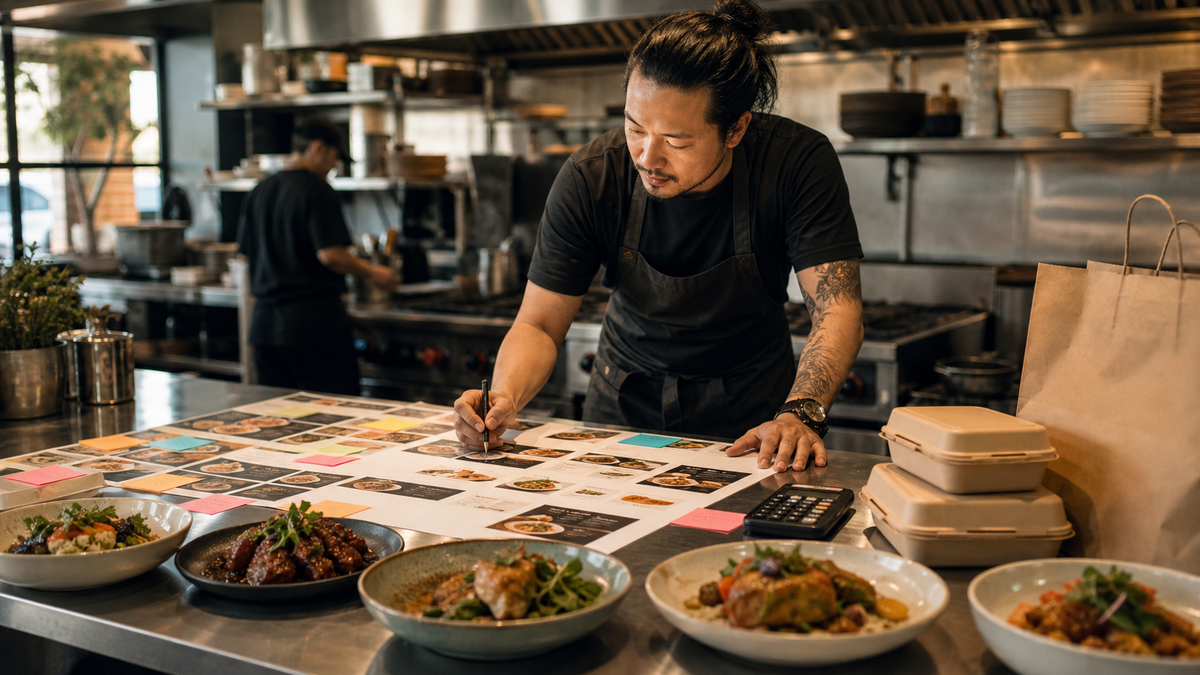
Restaurant start-up marketing and menu engineering help new restaurants choose a target market, sharpen a value proposition, price dishes for margin, and design menus that support takeout, delivery, and repeat visits.
Key Takeaways
- According to the National Restaurant Association, U.S. restaurant and foodservice sales are projected to reach $1.55 trillion in 2026, so positioning matters in a very large market.
- Nearly 75% of restaurant traffic now happens off-premises, which makes takeout, delivery, and drive-thru part of the core marketing strategy.
- Menu prices were up 3.9% year over year as of February 2026, so pricing decisions need to protect margin and communicate value clearly.
- Clear menu labeling, local sourcing, value menus, and comfort foods are major 2026 trends that can influence what diners notice and order.
- Angela Vendetti's course ties target market, unique value proposition, pricing, and menu engineering together into a practical start-up framework.
Table of Contents
- Understanding Restaurant Start-Up Marketing & Menu Engineering
- Key Concepts and Techniques
- Who Benefits from Learning Restaurant Start-Up Marketing & Menu Engineering?
- What Do Students Say?
- About the Creator
- Restaurant Menu Engineering Reference Table
- Watch Before You Enroll
- Frequently Asked Questions
- Conclusion
- Explore More on TGD
Understanding Restaurant Start-Up Marketing & Menu Engineering
Restaurant start-up marketing and menu engineering are the linked decisions that turn a restaurant concept into a business people can find, understand, and reorder. Marketing tells diners why your place matters. Menu engineering decides which items deserve attention, how they should be named, and how prices should be framed.
According to the National Restaurant Association, U.S. restaurant and foodservice sales are projected to reach $1.55 trillion in 2026, and operators are expected to add more than 100,000 jobs. That scale means the market is large, but so is the competition. It also means small choices matter: nearly 75% of restaurant traffic now happens off-premises, so takeout, delivery, and drive-thru can no longer be treated as side channels. According to the National Restaurant Association, menu prices were up 3.9% year over year as of February 2026, which makes pricing strategy and clear value signaling essential, not optional.
Trends reinforce the same lesson. In the National Restaurant Association's 2026 What's Hot Culinary Forecast, local sourcing, comfort foods, value menus or options, and clear menu labeling all ranked prominently. In practice, that means the strongest restaurant starts are the ones where the menu, the message, and the channel all point in the same direction.
Want to Learn Restaurant Start-Up Marketing Step by Step?
This course on The Great Discovery covers the fundamentals of positioning, pricing, and menu planning in a structured format.
Key Concepts and Techniques
The core ideas behind restaurant start-up marketing are simple, but the execution has to be deliberate. A strong concept connects who you serve, what you promise, how you price, and how your menu guides buying behavior.
Target Market and Occasion
Your target market is more than a demographic. It is the specific group of diners you can serve better than anyone else, whether they want fast lunch, family dinner, late-night delivery, or a premium experience.
Occasion matters because people do not choose restaurants the same way for every meal. A clear occasion lets you match menu length, speed, price point, and channel to actual demand.
Unique Value Proposition
Your unique value proposition is the single reason a guest should choose you over a nearby competitor. It can come from flavor, speed, local sourcing, comfort food, healthier choices, or a better value menu.
The strongest value propositions are easy to repeat in one sentence. If guests need a paragraph to understand your concept, the market will move on quickly.
Menu Architecture and Item Placement
Menu architecture is how you organize items so profitable choices are easier to notice. In menu engineering, operators often look at stars, puzzles, plowhorses, and dogs to see which dishes deserve promotion, refinement, or removal.
Placement, naming, and section order all influence what people buy. A profitable dish that is buried in the wrong section can underperform even when customers like it.
Pricing for Margin and Perceived Value
Pricing is not only about covering cost. It also signals quality, supports your brand position, and protects margin when ingredient or labor costs rise.
According to the National Restaurant Association, menu prices were up 3.9% year over year as of February 2026, so many operators need a review process rather than a one-time price list.
Off-Premises Marketing and Loyalty
Off-premises dining now includes takeout, delivery, and drive-thru, so the menu has to travel well. Clear packaging, concise descriptions, and easy reorder paths help turn one order into repeat business.
According to TouchBistro, 47% of diners engage with loyalty programs at least once a week, and 67% of Gen Z diners have used social media to decide on a restaurant. That means retention and discovery now work together.
Who Benefits from Learning Restaurant Start-Up Marketing & Menu Engineering?
This topic is most useful for beginners and early operators who need a practical business foundation. The provided data lists categories in TGD Success, Entrepreneurship and Business, Food & Cooking, and Sales and Productivity, but it does not list a skill_level or price. That makes this a sensible starter resource for people who want both kitchen thinking and growth thinking.
First-Time Restaurant Founders
If you are opening your first restaurant, this topic helps you avoid common launch mistakes. You need to know who you serve, what you sell best, and how each menu choice supports revenue.
Angela Vendetti's course is a logical starting point here because it focuses on target market, value proposition, pricing, and menu engineering in one place.
Existing Operators Refreshing a Menu
If traffic has slowed or margins are tight, a menu refresh can be more effective than a full rebrand. Small changes in item placement, naming, and price framing can shift buying behavior without changing the whole concept.
This matters even more now that nearly 75% of restaurant traffic is off-premises, according to the National Restaurant Association.
Marketers, Consultants, and Growth Freelancers
Marketers who work with restaurants need more than social posts. They need to understand the menu itself, because the menu is often the actual conversion tool.
That makes restaurant start-up marketing and menu engineering a useful service skill for consultants who help operators improve sales, not just visibility.
Culinary Professionals Moving Into Business
If you know food but not positioning, this topic bridges the gap. It teaches how to translate kitchen strengths into a value proposition guests can understand quickly.
For many chefs and operators, that is the difference between a menu that feels creative and a menu that actually sells.
What Do Students Say?
This course is new to the marketplace and hasn't collected reviews yet. Check back after launch for student feedback.
About the Creator
Angela Vendetti is listed as the creator of this course and is described as a Restaurant Strategist. The provided data is sparse, but it does show a focused niche around restaurant growth and menu strategy rather than a broad generalist profile.
- Courses created: 4
- Total learners: 0
- Average rating: 0.0
Bio: Angela Vendetti, Restaurant Strategist. View her profile at Angela Vendetti on The Great Discovery.
Restaurant Menu Engineering Reference Table
Menu engineering becomes easier when you break it into a few repeatable decisions. The table below shows the most useful parts of the process for a new restaurant or a menu refresh.
| Element | What It Means | Why It Matters |
|---|---|---|
| Target market | The specific diners you want to attract most often. | It shapes your price point, language, and menu style. |
| Value proposition | The one clear reason guests should choose your restaurant. | It makes your marketing easier to remember and repeat. |
| Menu hierarchy | The order and structure of sections, dishes, and featured items. | It guides attention toward the items you want to sell more often. |
| Contribution margin | How much profit remains after direct food costs are covered. | It helps you identify dishes that drive healthier revenue. |
| Off-premises readiness | How well items travel for takeout, delivery, or drive-thru. | It protects quality when nearly 75% of traffic is off-premises. |
| Menu labeling | Clear wording, dietary cues, and value signals on the menu. | It helps diners decide faster and supports 2026 trends like clarity and value. |
This table shows why restaurant success is not just about recipes. The course helps turn those moving parts into a launch plan you can use when naming dishes, setting prices, and planning promotions.

Master Restaurant Start-Up Marketing and Menu Engineering with Expert Guidance
Angela Vendetti's course covers the same target-market, pricing, and menu-engineering decisions you just saw in the table. It is a practical next step if you want a structured launch framework rather than scattered tips.
Enroll in Restaurant Start-Up 101: Marketing & Menu Engineering →
Watch Before You Enroll
Watch this short video overview to understand the main ideas behind Restaurant Start-Up 101: Marketing & Menu Engineering before you enroll.
This video introduces Restaurant Start-Up 101: Marketing & Menu Engineering and previews by the end of today’s class, you will be able to: •Identify your target market •State your unique value proposition •Price your menu effectively •Increase sales up to 16% through menu engineering.
Frequently Asked Questions
What is restaurant menu engineering?
Menu engineering studies how popularity and profit interact on a menu. Operators use that information to decide which dishes deserve better placement, stronger naming, or a different price structure.
How do you choose a target market for a new restaurant?
Choose a target market by looking at occasion, location, budget, and need. The clearest concepts know whether they are serving quick lunch, family dinner, delivery-first convenience, or a premium dining experience.
Why does off-premises dining matter so much?
According to the National Restaurant Association, nearly 75% of restaurant traffic now happens off-premises. That means takeout, delivery, and drive-thru should shape packaging, menu readability, and promotion.
How much have restaurant menu prices changed recently?
According to the National Restaurant Association, menu prices were up 3.9% year over year as of February 2026. That does not give one perfect price, but it does show why operators need regular margin reviews.
Do loyalty programs and social media really affect restaurant traffic?
According to TouchBistro, 47% of diners engage with loyalty programs at least once a week, and 67% of Gen Z diners have used social media to decide on a restaurant. Those channels matter because discovery and repeat visits are now connected.
Is the TGD course suitable for beginners, and how much does it cost?
The provided data does not list a skill_level or price, so verify the enrollment page before you budget. Based on the title and description, it is positioned as a practical starter course for target market, value proposition, pricing, and menu engineering.
Ready to Go Deeper?
You've now seen how target market, pricing, menu design, and off-premises strategy work together. This course is the natural next step if you want to turn those ideas into a repeatable restaurant launch plan.
Start Learning Restaurant Start-Up Marketing on TGD →
Conclusion
Restaurant start-up marketing and menu engineering are about much more than putting dishes on a page. The real work is aligning a target market, a clear value proposition, pricing that protects margin, and menu choices that work across dine-in, takeout, and delivery. In 2026, that matters in a $1.55 trillion industry where off-premises traffic dominates and diners respond to value, clarity, and convenience.
If you want to move from understanding the framework to applying it in a real launch, the course is a logical next step. Restaurant Start-Up 101: Marketing & Menu Engineering
Explore More on TGD
Use these internal links to keep learning on The Great Discovery. Since no related courses were provided, these links point to the most relevant category and profile pages.
- TGD Success courses
- Entrepreneurship and Business courses
- Food & Cooking courses
- Sales and Productivity courses
- The Great Discovery homepage
- Angela Vendetti creator page
Share Your Knowledge on The Great Discovery
Join Angela Vendetti and hundreds of other creators sharing their expertise. Create and sell your own courses on TGD.