
Your Face Reveals, Your Mind Transforms | Debi Voris | TGD
Face reading is the practice of interpreting facial cues, expression patterns, and baseline shifts to better understand emotion, attention, and communication context. It matters because faces shape trust, and careful observation helps you respond more accurately in real conversations.

Face reading is the practice of interpreting facial cues, expression patterns, and baseline shifts to better understand emotion, attention, and communication context. It matters because faces shape trust, and careful observation helps you respond more accurately in real conversations.
Key Takeaways
- Reliable face reading depends on clusters of cues and baseline changes, not a single expression or one frozen image.
- According to Scientific Reports, face perception now spans psychology, psychiatry, neuroscience, and human-machine interaction, which shows how broad the topic has become.
- According to Affect Science, researchers now have 25 spontaneous and dynamic facial-expression databases, so this field is increasingly data-backed.
- Your Face Reveals, Your Mind Transforms blends mindset work with Rapid Trait Profiling, making it useful for both self-regulation and communication.
- The course is labeled Basic, so it is a practical starting point for beginners who want a structured introduction.
Table of Contents
- Understanding Face Reading and Mindset
- Key Concepts and Techniques
- Who Benefits from Learning Face Reading and Mindset?
- What Do Students Say?
- Is This Course Worth It?
- About the Creator
- Essential Face-Reading Concepts
- Watch Before You Enroll
- Frequently Asked Questions
- Conclusion
- Explore More on TGD
Understanding Face Reading and Mindset
Face perception matters because humans use it constantly to interpret emotion, intention, and trust. According to the 2025 Scientific Reports editorial, face perception sits at the center of social life and now spans psychology, psychiatry, neuroscience, and human-machine interactions. That makes the topic much bigger than casual guesswork or party-trick reading.
According to the 2025 Affect Science review, researchers identified 25 spontaneous and dynamic facial-expression databases of basic emotions. That matters because the field now rests on a growing empirical base, not just intuition. It also means better models for observing patterns, timing, and context across real-world interactions.
According to Cognitive Research: Principles and Implications, AI-generated images of fictional and celebrity faces could not be distinguished from real photographs in a 2025 study. That raises the stakes for careful observation. The practical lesson is simple: learn baselines, notice deviations, and verify interpretations with context rather than assuming one expression tells the whole story.
Want to Learn Your Face Reveals, Your Mind Transforms Step by Step?
This course on The Great Discovery covers these fundamentals in a guided format, combining mindset change with practical face-reading ideas.
The Great Discovery (TGD) is a global online course marketplace where creators publish courses and learners discover practical training across business, technology, wellness, and personal growth. It helps turn specialized knowledge into structured learning paths.
Key Concepts and Techniques
These concepts help separate useful observation from fast, overconfident guessing. The strongest approach combines emotional self-awareness, pattern recognition, and context. That is the core discipline behind any practical face-reading system.
Baselines and Deviation
Everyone has a normal expression pattern. The useful question is not, "What does this face mean?" but "What changed from the person's baseline?" A sudden jaw clamp, slower blink rate, or tightened mouth can matter more than the expression itself.
Micro-Expressions
Micro-expressions are brief, involuntary facial movements that may reveal emotion before a person fully controls their expression. They are clues, not verdicts. The safest use is to compare them with speech, timing, and body language.
Rapid Trait Profiling
Rapid Trait Profiling, as presented in the course context, is a structured way to notice likely communication tendencies from facial features and related cues. Used well, it can speed up rapport and trust-building. Used badly, it becomes a shortcut for labeling people too quickly.
Self-Regulation Before Interpretation
Your own emotional state changes what you notice. If fear, doubt, or irritation are driving your attention, you will over-read threat and under-read nuance. Slowing down, breathing, and pausing before judgment improves accuracy.
Context and Confirmation
Context is the filter that keeps interpretation honest. Compare facial cues with the situation, the relationship, and the person's usual behavior. If the same cue appears across multiple moments, it becomes more meaningful than a single snapshot.
Who Benefits from Learning Face Reading and Mindset?
This topic helps anyone who needs better communication, clearer observation, or stronger self-control. Because the course is labeled Basic and sits in Mental/Emotional Health, Self Improvement, and Communication, it fits beginners who want practical tools instead of jargon.
People Who Want Better Relationships
If you want to respond more thoughtfully in conversations, this topic gives you a framework for noticing emotional shifts earlier. That can reduce misreads and help you ask better follow-up questions. The course is a natural starter if you want a guided introduction.
Managers, Coaches, and Sales Professionals
People who lead others benefit from reading comfort, hesitation, and engagement more accurately. In business settings, even small improvements in trust and timing can improve conversations. The communication focus makes the course relevant for that use case.
Wellness and Personal Growth Learners
Debi Voris's wholistic health angle makes the mindset side especially relevant for people who care about emotional regulation and resilience. If you want to understand fear, doubt, and energy patterns as part of personal growth, this topic connects well with that goal.
Beginners Curious About Face Reading
If you are new to face reading, this topic offers an accessible starting point without assuming advanced technical training. The course is a reasonable first step if you want a simple framework that combines mind, body, and communication.
What Do Students Say?
This course is new to the marketplace and hasn't collected reviews yet. Check back after launch for student feedback.
Is This Course Worth It?
Yes, if you want a beginner-friendly introduction to both mindset change and face-reading communication.
It is best for people who want a simple, structured path into emotional self-regulation and practical observation. It also suits learners who prefer communication skills with a personal growth angle.
It is not for people looking for advanced academic research, clinical training, or a heavily technical curriculum. If you want a broad but approachable first pass at the topic, this course is a sensible next step.
The strongest case for it is the combination of basic-level accessibility, communication focus, and the creator's wholistic health perspective. If that matches your learning goal, it is worth exploring on TGD.
About the Creator
Debi Voris is a Certified Wholistic Health Coach whose profile centers on practical personal transformation. Her published stats are modest but positive: 2 courses created, 5 total learners, and a 5.0 average rating.
Creator bio: Debi Voris, Certified Wholistic Health Coach. Her course framing emphasizes mind, body, and soul, which fits the blend of emotional health and communication in this webinar.
Visit Debi Voris on The Great Discovery
Essential Face-Reading Concepts
These patterns give you a practical reference for observing faces without rushing to conclusions. The table below focuses on cues that matter in real conversations, not on dramatic claims.
| Signal | What It Can Suggest | How to Use It Well |
|---|---|---|
| Baseline expression change | A shift in emotion, comfort, or attention | Compare the current face with the person's normal resting pattern |
| Micro-expressions | Brief, involuntary emotion leakage | Look for timing and clusters, not isolated moments |
| Gaze and blink rate | Attention, arousal, or uncertainty | Interpret with context instead of treating it as a standalone proof |
| Jaw, shoulders, and posture | Tension, guardedness, or readiness | Combine with speech tone and the situation before drawing a conclusion |
| Trait patterning | Possible communication style or preference | Use it to guide rapport, not to permanently label the person |
The table above lines up with the course's Rapid Trait Profiling angle. It is most useful when you treat observation as a starting point for better conversation, not as a final judgment.
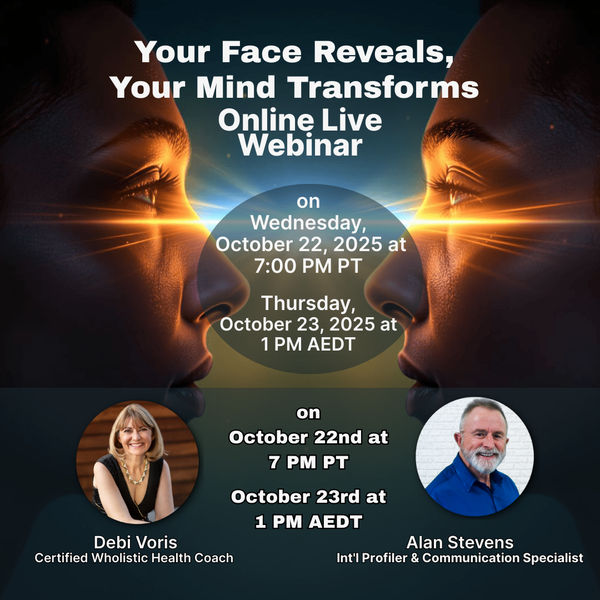
Master Your Face Reveals, Your Mind Transforms with Expert Guidance
Debi Voris brings a wholistic health lens to the mindset side of the topic, and the table above shows why baselines, cues, and context matter.
Enroll in Your Face Reveals, Your Mind Transforms →
Watch Before You Enroll
This video shows how TGD affiliate sharing works and is useful if you want to promote courses you trust.
Learn how to become an affiliate on The Great Discovery — the best affiliate program for course creators and marketers in 2026. Start earning commissions by sharing courses you believe in.
Frequently Asked Questions
These are the most common questions readers ask about face reading, facial cues, and the course level.
What is face reading?
Face reading is the practice of observing facial cues, expression changes, and body-language context to infer emotional state or likely communication style. According to Affect Science, the field now has 25 spontaneous and dynamic facial-expression databases, which shows it is studied systematically.
Are facial expressions reliable indicators of emotion?
They can be useful, but only when you compare them with baseline behavior and context. According to the 2025 Scientific Reports editorial, face perception is central to social life, but that does not mean one expression gives you the whole story.
What are micro-expressions?
Micro-expressions are brief, involuntary facial movements that can reveal emotion before people fully control their expression. They are useful as clues, not proof, because the safest interpretation comes from patterns plus context.
How does mindset affect the way you read people?
Mindset changes what you notice, how you react, and whether you stay calm enough to observe carefully. Fear and doubt can distort interpretation, so self-regulation is part of better observation.
Can AI-generated faces fool human observers?
Yes. According to Cognitive Research: Principles and Implications, a 2025 study found that AI-generated images of fictional and celebrity faces could not be distinguished from real photographs, which makes context and caution more important.
Is Your Face Reveals, Your Mind Transforms good for beginners?
Yes. The course is labeled Basic and is positioned around Mental/Emotional Health, Self Improvement, and Communication, so it is aimed at people who want an accessible introduction.
Ready to Go Deeper?
You have learned the fundamentals of face reading, baseline observation, and mindset regulation. This course takes those ideas into a more guided learning path on TGD.
Start Learning Your Face Reveals, Your Mind Transforms on TGD →
Conclusion
Face reading works best when you treat it as pattern recognition, not mind reading. The research context shows why: faces are central to social life, the evidence base is growing, and synthetic images can blur the line between real and manufactured cues. If you want a beginner-friendly next step that combines communication with emotional self-regulation, Debi Voris's course is a practical fit. Explore it here: Your Face Reveals, Your Mind Transforms.
Explore More on TGD
The closest next steps are the category pages for communication, self-improvement, and mental/emotional health, plus Debi Voris's creator profile.
- Mental/Emotional Health courses
- Self Improvement courses
- Communication courses
- The Great Discovery homepage
- Debi Voris creator page
Share Your Knowledge on The Great Discovery
Join Debi Voris and hundreds of other creators sharing their expertise. Create and sell your own courses on TGD.