
Anger Alchemy 2 with David Gruder on TGD
Anger literacy is the ability to recognize different forms of anger, separate healthy boundaries from escalation, flooding, and looping, and choose the right response before conflict spreads. It matters because anger is common, misunderstood, and easier to handle when labeled precisely.

Anger literacy is the ability to recognize different forms of anger, separate healthy boundaries from escalation, flooding, and looping, and choose the right response before conflict spreads. It matters because anger is common, misunderstood, and easier to handle when labeled precisely.
Key Takeaways
- According to Gallup, 22% of adults worldwide reported anger the previous day in 2024, so anger is a widespread daily experience.
- The course's four-form model distinguishes boundaries, escalation, flooding, and looping, which is more useful than treating all anger as one problem.
- Flooding can make reasonable discussion temporarily impossible, so timing and emotional safety matter as much as the message itself.
- A 2025 meta-analytic review in PubMed found mindfulness-based interventions are linked to lower anger and aggression.
- Anger Alchemy 2 is an intermediate self-help course for learners who want structured anger literacy, repair tools, and future planning.
Table of Contents
- Understanding Anger Literacy
- Key Concepts and Techniques
- Who Benefits from Learning Anger Literacy?
- What Do Students Say?
- Is This Course Worth It?
- About the Creator
- Essential Anger Types and Responses
- Watch Before You Enroll
- Frequently Asked Questions
- Conclusion
- Explore More on TGD
Understanding Anger Literacy
Anger literacy means recognizing what kind of anger is present and what that anger is trying to signal. When people treat anger as one undifferentiated emotion, they miss the difference between boundary-setting, escalation, flooding, and looping. Those distinctions matter because each one needs a different response.
According to Gallup, 22% of adults worldwide reported anger the previous day in 2024, and the report said anger, stress, and worry were still at least four points above 2014 levels. According to the American Psychological Association, more than six in 10 U.S. adults said societal division was a significant stressor, 54% felt isolated, and 69% needed more emotional support than they received. That combination helps explain why anger shows up so often in daily life.
Anger is not always destructive. It can warn that a boundary has been crossed, a need has gone unmet, or an unresolved issue needs attention. The practical skill is learning to distinguish signal from spiral.
Want to Learn Anger Literacy Step by Step?
This course on The Great Discovery breaks anger literacy into a practical framework for boundaries, escalation, flooding, and looping.
The Great Discovery (TGD) is a global online course marketplace where creators publish courses and learners discover practical training across business, technology, wellness, and personal growth. It helps people find structured learning paths from independent subject-matter experts.
Key Concepts and Techniques
The most useful anger skills start with classification. If you can tell one form of anger from another, you can choose a response that fits the moment instead of making the conflict worse.
Boundaries: Healthy Anger With a Message
Healthy anger often shows up as a boundary signal. If someone keeps crossing a limit, the useful response is not always to suppress the feeling; it is to state the limit clearly and early. That is why the course treats boundaries as the healthiest form of anger.
Escalation: When the Temperature Rises
Escalation is what happens when the exchange starts amplifying faster than the people involved can regulate. In practice, that means slower speech, fewer accusations, and fewer new topics. The point is to lower the temperature before the conversation turns into damage control.
Flooding: When Reasoning Drops Offline
Flooding is a state of overload. The course page notes that reasonable discussion can become temporarily impossible, which matches what many people experience when the nervous system is saturated. A pause, physical space, and a planned return are usually better than pushing for closure in the moment.
Looping: When Old Anger Repeats
Looping is recycled anger that keeps getting activated by unresolved history. A current comment can hit an older wound, and the reaction becomes bigger than the moment. Naming the older event often reveals why the present argument feels so familiar.
Repair and Future Planning
The value of anger literacy is not just diagnosis; it is repair. After an angry exchange, document what happened, what was missed, and what to do differently next time. A 2025 review found mindfulness-based interventions are linked to lower anger and aggression, which makes regulation a practical companion to reflection.
Who Benefits from Learning Anger Literacy?
This topic helps anyone who needs better emotional control and clearer conflict language. It is especially useful when anger keeps showing up in conversations that matter.
Leaders and Managers
The leadership development angle fits people who have to keep conversations productive while still naming limits. If you need a structured starting point, Anger Alchemy 2 is a sensible TGD fit because it is positioned at the intermediate level and focuses on practical emotional intelligence.
Couples and Families
Home conflict often turns into flooding or looping because the latest exchange is carrying older history. Learning the difference between those patterns can make it easier to pause, reset, and return without repeating the same fight.
Coaches, Facilitators, and Helpers
When clients or teammates bring anger into a session, precision matters. The course gives you a cleaner vocabulary for reflection and action planning, while staying in a self-help lane rather than claiming to be psychotherapy or medical care.
Self-Improvement and Spiritual-Growth Learners
If you want emotional intelligence with a reflective, growth-oriented frame, this course makes sense. The combination of self-improvement, leadership development, and spiritual growth categories signals that the material is meant for practical change, not just theory.
What Do Students Say?
This course is new to the marketplace and hasn't collected reviews yet. Check back after launch for student feedback.
Is This Course Worth It?
Yes, if you want a structured framework for understanding anger instead of generic coping advice.
It is best for intermediate learners who already know anger is a recurring issue and want clearer categories, repair steps, and future planning. It also fits leaders and self-improvement learners who want practical emotional intelligence with a disciplined framework.
It is not for anyone looking for psychotherapy, crisis support, or a quick one-step fix. The official page frames it as self-help education, so the strongest fit is a learner who wants insight plus action, not just emotional relief.
As a next step on TGD, this course is strongest when the structure itself is the value: four anger forms, repair after damage, and a better plan for future situations.
About the Creator
David Gruder is the creator of Anger Alchemy 2 and is described as The Polymath of Human Potential.
- Courses created: 2
- Total learners: 3
- Average rating: 0.0
The public footprint is still small, so the course page and the curriculum structure matter more than social proof right now. View his creator page here: David Gruder on TGD.
Essential Anger Types and Responses
Anger becomes easier to use when you can label the form and match it to the response. This table is a simple reference for reading anger before it takes over the conversation.
| Form | What It Tells You | Best First Move |
|---|---|---|
| Boundaries | A limit, value, or need has been crossed | State the limit clearly and early |
| Escalation | The exchange is speeding up and getting sharper | Slow the pace and remove extra triggers |
| Flooding | Reasoning is overloaded and discussion is breaking down | Pause, regulate, and return later |
| Looping | Old unresolved anger is getting replayed in a new moment | Name the older issue and separate it from the present |
| Repair | Trust or clarity has been damaged by the conflict | Acknowledge impact, restate needs, and plan differently |
This is the kind of discrimination Anger Alchemy 2 is built to teach. Instead of one blanket anger strategy, you get a matching response for each form, which is useful in leadership, family conflict, and self-regulation work.
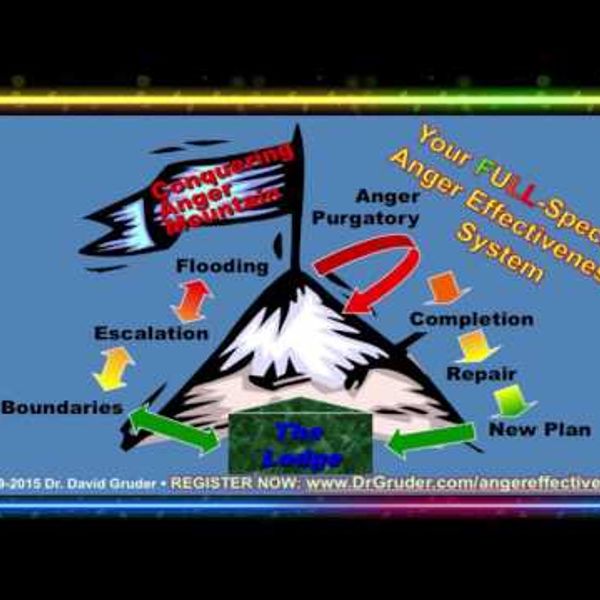
Master Anger Literacy with Expert Guidance
David Gruder's course covers the same anger distinctions you just saw in the table, then expands them into structured lessons you can work through at your own pace.
Enroll in Anger Alchemy 2: Conquering Anger Mountain →
Watch Before You Enroll
Learn how to become an affiliate on The Great Discovery — the best affiliate program for course creators and marketers in 2026. Start earning commissions by sharing courses you believe in.
Frequently Asked Questions
What is anger literacy?
Anger literacy is the ability to tell different forms of anger apart and respond to the one actually happening. It helps you avoid treating every conflict as the same problem.
What are the four forms of anger?
According to The Great Discovery listing, the course framework names boundaries, escalation, flooding, and looping. Boundaries are healthy anger, flooding makes reasonable discussion temporarily impossible, and looping is anger recycled from unresolved prior situations.
How is anger different from aggression?
Anger is an emotion or signal. Aggression is behavior that can be harmful, coercive, or unsafe. You can feel anger without acting aggressively, and good anger literacy helps keep that distinction clear.
What should you do when anger floods you?
When flooding is happening, pause the conversation and reduce stimulation. The course model says reasonable discussion may be temporarily impossible in that state, so cooling off and returning later is usually smarter than forcing resolution.
Can mindfulness reduce anger?
Yes. A 2025 meta-analytic review in PubMed found mindfulness-based interventions are linked to lower anger and aggression. Mindfulness works best as a regulation skill paired with clear understanding of what kind of anger you are dealing with.
Who is Anger Alchemy 2 best for?
It is an intermediate self-help course for people who want a more precise, structured approach to anger, emotional intelligence, leadership, and relationship repair. It is not psychotherapy or medical care, so it fits learners who want education and practical tools.
Ready to Go Deeper?
You've learned the fundamentals of anger literacy. This course takes you from understanding to practical application with a clearer map for real conversations and repair.
Start Learning Anger Literacy on TGD →
Conclusion
Anger is not one thing. It can protect a boundary, escalate a conflict, flood the nervous system, or loop around unresolved history. When you can name the form, you can choose a better response, from pausing and regulating to repairing damage and planning the next conversation. That is what makes anger literacy useful in daily life: it turns a vague, reactive emotion into a readable signal. If you want a structured next step, Anger Alchemy 2: Conquering Anger Mountain on The Great Discovery offers a clear framework for learning it in depth. Explore the course on TGD
Explore More on TGD
If you want to keep exploring related TGD paths, start with these category pages and creator links.
- TGD Success courses
- Leadership Development courses
- Self Improvement courses
- Spiritual Growth courses
- The Great Discovery homepage
- David Gruder creator page
Share Your Knowledge on The Great Discovery
Join David Gruder and hundreds of other creators sharing their expertise. Create and sell your own courses on TGD.