Original Paella Recipe from Valencia | Vanessa Rubio | TGD
Valencian paella is a rice dish from eastern Spain made with short-grain rice, broth, olive oil, saffron, and careful heat control. Authentic versions emphasize a thin rice layer, balanced seasoning, and the lightly crisp bottom called socarrat.
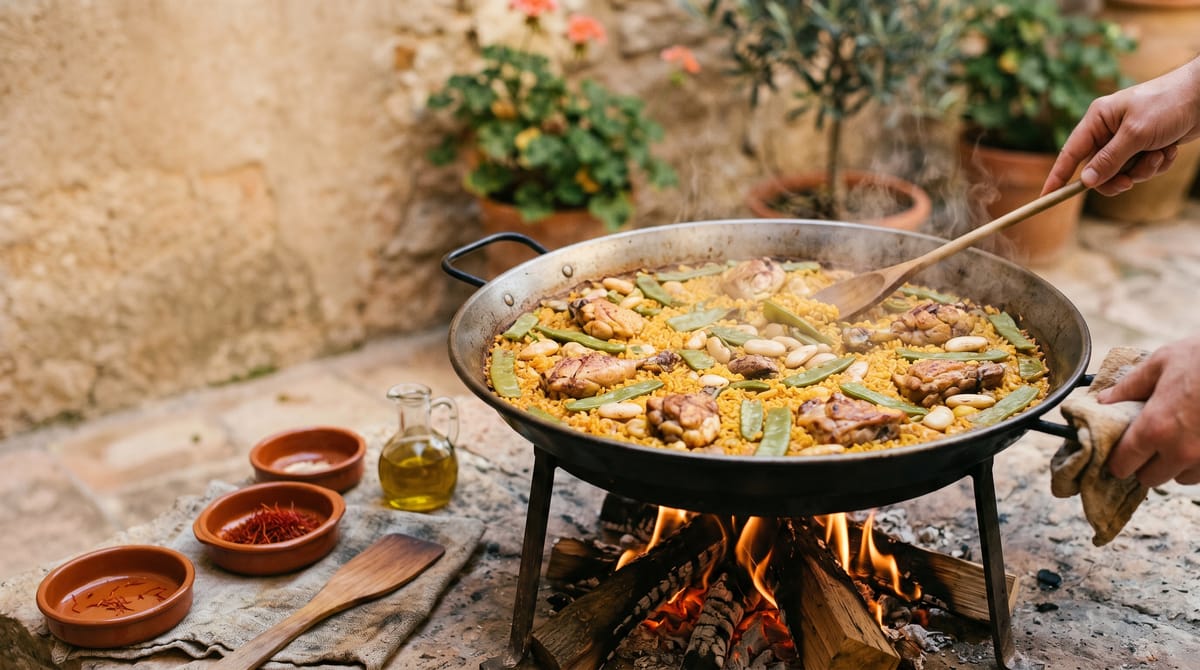
Valencian paella is a rice dish from eastern Spain made with short-grain rice, broth, olive oil, saffron, and careful heat control. Authentic versions emphasize a thin rice layer, balanced seasoning, and the lightly crisp bottom called socarrat.
Key Takeaways
- Authentic paella depends on short-grain rice that absorbs flavor without turning mushy.
- Heat control matters as much as the ingredient list because the rice cooks best in an even, shallow layer.
- Socarrat is the toasted bottom layer of the pan, and it should be crisp rather than burnt.
- Vanessa Rubio's course explains the origin, shopping, preparation, and cooking process in a beginner-friendly way.
- The course is useful if you want a practical path for cooking paella at home or outside for one person or the whole family.
Table of Contents
- Understanding Valencian Paella
- Core Paella Techniques
- Who Benefits from Learning Paella?
- What Do Students Say?
- Is This Course Worth It?
- About the Creator
- Essential Paella Concepts
- Watch Before You Enroll
- Frequently Asked Questions
- Conclusion
- Explore More on TGD
Understanding Valencian Paella
Paella is a rice dish built around a simple idea: grains that absorb flavor without breaking apart. In Valencia, the dish is traditionally associated with short-grain rice, a seasoned broth, olive oil, and a shallow pan that spreads heat evenly across the surface. The technique matters because the rice cooks in place; if you stir too much, you lose the texture that makes paella distinct.
What makes paella matter is that it sits at the intersection of everyday cooking and regional identity. The same pan can feed one person or a whole table, and the final result depends on a few controllable variables: rice choice, broth temperature, pan size, and timing. Once you understand those variables, paella becomes less mysterious and much easier to reproduce at home. The dish rewards attention, not complexity.
Want to Learn Paella Step by Step?
This course on The Great Discovery turns paella fundamentals into a structured, beginner-friendly walkthrough.
The Great Discovery (TGD) is a global online course marketplace where creators publish courses and learners discover practical training across business, technology, wellness, and personal growth.
Core Paella Techniques
Paella is easier when you treat it as a system of ingredients, heat, and timing rather than a single recipe. The most useful techniques are simple, but they have to be followed in the right order. Once you understand them, you can adapt the dish to different kitchens and heat sources.
Choosing the Right Rice
Short-grain rice is the backbone of paella because it absorbs liquid while staying structured. If you use a rice that behaves like long-grain rice, you lose the dense, unified texture that makes paella feel complete.
Good paella rice should stay tender but distinct. That balance is what lets the dish carry flavor from the broth without turning soft or sticky.
Building a Strong Sofrito Base
Sofrito is the flavor base that gives the rice depth before the liquid even starts doing the work. Slow cooking tomatoes, aromatics, and oil builds sweetness and balance.
This step matters because paella should taste layered, not just seasoned at the end. A weak base leaves the whole pan flat.
Managing Broth Absorption
The broth is not just moisture. It is the vehicle that carries seasoning through the rice, so temperature and timing matter from the first pour.
If the broth is too cool or the pan is overcrowded, the rice can cook unevenly. A steady simmer helps the grains absorb flavor at the same pace.
Controlling Heat and Pan Size
Paella cooks best in a shallow layer because that gives every grain similar access to heat. The wider the pan, the easier it is to keep the rice even.
This is why paella works on different heat sources as long as you respect the pan's shape and the burner or fire beneath it. Good control matters more than fancy equipment.
Finishing with Socarrat and Resting
Socarrat is the lightly toasted layer on the bottom of the pan. It should be crisp and aromatic, not blackened.
After the heat comes off, let the pan rest briefly so the moisture settles and the texture finishes setting. That small pause helps the dish serve cleanly.
Who Benefits from Learning Paella?
This topic is a strong fit for beginners, family cooks, and anyone who wants a practical entry into authentic Spanish cooking. Because the course is labeled Basic and sits in Food & Cooking, it is aimed at learners who want a clear starting point rather than a technical culinary lecture.
Beginner Home Cooks
If paella feels intimidating, this is the right kind of topic to start with. The dish has a short list of moving parts, so a beginner can learn the method without getting buried in theory.
Vanessa Rubio's course is a sensible first step here because it is built for home resources and step-by-step learning. That lowers the friction for a first attempt.
Family Cooks and Weekend Hosts
Paella works well when you want to cook for one person or a full table. The course description explicitly mentions both scales, which makes it useful for real household planning.
If you need a dish that feels special but still practical, paella fits that brief. It gives you a single-pan centerpiece that can serve a crowd without becoming complicated.
Food Lovers Who Want Regional Authenticity
People who care about origin, tradition, and ingredient discipline will get the most from the topic. Valencian paella is a regional dish with a clear identity, so the learning value comes from understanding why certain choices matter.
The course's origin-to-cooking structure is a good match for that mindset. It helps connect the story of the dish to the steps on the pan.
Learners Who Prefer Visual Guidance
Step-by-step video instruction is useful when you are learning texture and timing. Paella is one of those dishes where seeing the pan matters as much as reading the recipe.
If you learn best by watching sequence and pacing, this course format is especially helpful. It gives you a process you can follow without guessing.
What Do Students Say?
This course is new to the marketplace and hasn't collected reviews yet. Check back after launch for student feedback.
Is This Course Worth It?
Yes, if you want a clear, beginner-friendly path into authentic Valencian paella.
It is best for home cooks who want to understand the dish from origin to execution, and who value a practical course built around shopping, preparation, and cooking. It also suits people who want to cook for one person or a whole family without overcomplicating the process.
It is not for learners who want an advanced culinary deep dive or a highly technical restaurant-style breakdown. The strongest fit is someone who wants a focused, approachable recipe course and a creator with a small but real track record on TGD.
As a next step on TGD, this looks strongest when you want a guided first pass at the dish rather than a broad survey of Spanish cuisine.
About the Creator
Vanessa Rubio is the creator behind this course.
- Courses created: 2
- Total learners: 13
- Average rating: 4.0
Creator bio: Vanessa Rubio.
Visit Vanessa Rubio's creator page on TGD
Essential Paella Concepts
These are the core ideas that make paella work in any kitchen. Once you understand the parts below, you can read most paella recipes more critically and cook with more confidence.
| Element | Role in Paella | Practical Tip |
|---|---|---|
| Short-grain rice | Absorbs broth while staying structured | Choose rice that cooks tender but does not collapse |
| Sofrito | Builds the flavor base | Cook it slowly so the pan starts with sweetness and depth |
| Broth | Carries seasoning through the rice | Keep it hot and add it steadily for even cooking |
| Heat control | Determines texture and doneness | Maintain an even layer and avoid unnecessary stirring |
| Pan size | Spreads the rice in a shallow layer | Use a pan wide enough for the grains to cook uniformly |
| Socarrat | Creates the crisp bottom layer | Finish with a brief heat increase, then let the pan rest |
That table is the core logic behind good paella. Vanessa Rubio's course covers these fundamentals in a practical sequence, so the ideas above turn into a dish you can actually make.

Master Paella with Expert Guidance
Vanessa Rubio's course turns the rice, broth, heat, and socarrat framework into a practical cooking walkthrough. It also matches the course description's promise to teach shopping, preparation, and cooking with any source of heat.
Enroll in Original Paella Recipe from Valencia Spain →
Watch Before You Enroll
Learn how to become an affiliate on The Great Discovery — the best affiliate program for course creators and marketers in 2026. Start earning commissions by sharing courses you believe in.
Frequently Asked Questions
What makes Valencian paella different from other rice dishes?
Valencian paella is defined by a shallow pan, short-grain rice, and a cooking method that keeps the grains separate rather than creamy. The texture and heat management are as important as the ingredient list.
That is why paella feels different from risotto or a generic rice pilaf. The dish is built to absorb flavor while maintaining structure.
What rice is best for paella?
Short-grain rice is the best fit because it absorbs liquid without losing shape. The goal is a rice that stays tender, flavorful, and distinct in the pan.
If you use a rice that behaves too loosely, the dish can turn soft instead of unified. The rice choice is one of the most important decisions in the recipe.
What is socarrat?
Socarrat is the lightly caramelized layer that forms on the bottom of the pan. It should be crisp, aromatic, and slightly toasted.
If it tastes burned, the heat stayed on too long. Good socarrat comes from control, not guesswork.
Can paella be cooked on a home stove?
Yes. Paella can be cooked on a standard stove if the pan fits the burner and the heat is managed evenly.
The course description also notes that it can be cooked with any source of heat, at home or outside. That flexibility makes the dish more approachable than many people think.
Which ingredients belong in authentic Valencian paella?
Authentic Valencian paella focuses on a disciplined ingredient list and a clear flavor base. The exact combination can vary by tradition, but the core idea is restraint rather than excess.
That restraint is what keeps the rice from being buried under too many competing flavors. Every ingredient should support the pan, not fight it.
Is this TGD course good for beginners?
Yes. The course is labeled Basic and is built around step-by-step videos, so it should suit first-time learners who want a guided introduction.
It is a good match if you want a practical recipe path that covers origin, shopping, preparation, and cooking. That structure is especially useful when you are learning a dish with strong texture and timing cues.
Ready to Go Deeper?
You've learned the fundamentals of Valencian paella. This course takes you from understanding the dish to cooking it with a structured, home-friendly process.
Start Learning Paella on TGD →
Conclusion
Paella is a lesson in proportion, patience, and heat control. You learned why short-grain rice, broth, sofrito, and socarrat matter, and why the dish works best when each step supports the next. Valencian paella is less about complexity and more about respecting the pan.
If you want a guided path from origin to shopping, prep, and cooking, Vanessa Rubio's course is a natural next step on The Great Discovery. Explore the course here: Original Paella Recipe from Valencia Spain.
Explore More on TGD
Because there are no related courses listed for this page, here are useful places to continue browsing on The Great Discovery.
- Food & Cooking courses
- Health & Fitness courses
- TGD Success courses
- Vocational & Tech courses
- The Great Discovery homepage
Creator page: Vanessa Rubio on TGD
Share Your Knowledge on The Great Discovery
Join Vanessa Rubio and hundreds of other creators sharing their expertise. Create and sell your own courses on TGD.