
Sanskrit Beginners Course with Amritha Kailas | TGD
Sanskrit is a classical Indo-Aryan language known for its precise sound system, Devanagari script, and long literary tradition. Beginners usually start with pronunciation, vowels, consonants, and simple reading so they can understand mantras, short verses, and basic texts.
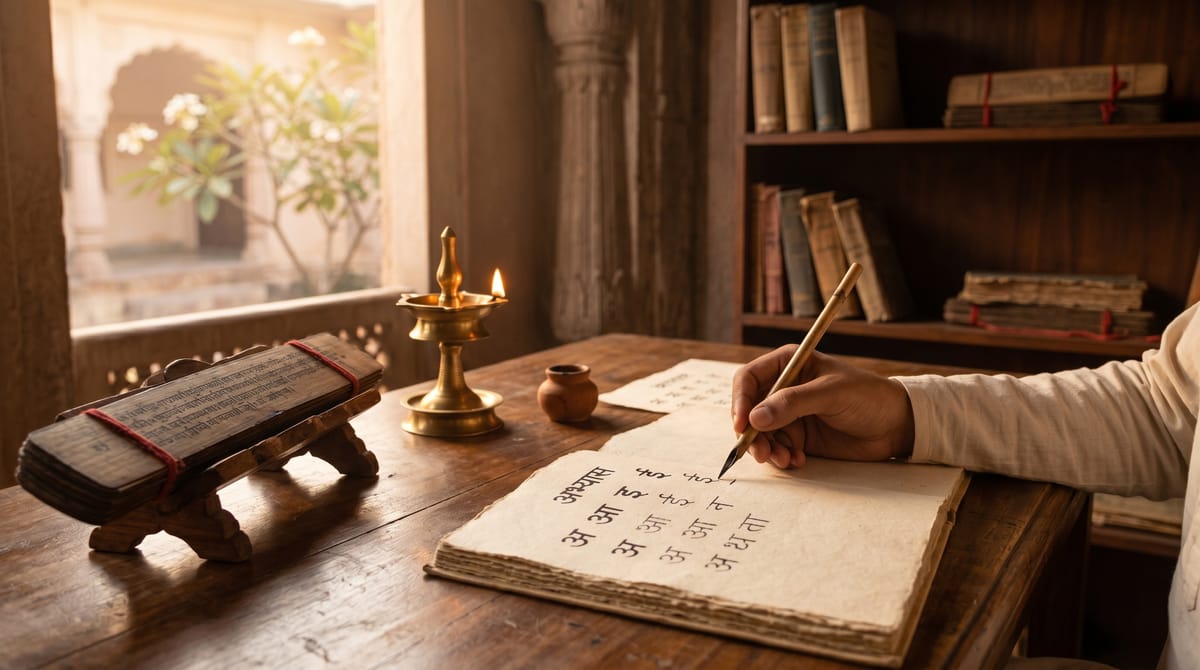
Sanskrit is a classical Indo-Aryan language known for its precise sound system, Devanagari script, and long literary tradition. Beginners usually start with pronunciation, vowels, consonants, and simple reading so they can understand mantras, short verses, and basic texts.
Key Takeaways
- Sanskrit learning usually starts with sound, script, and Devanagari before grammar gets more complex.
- Beginner courses emphasize pronunciation, listening, reading, and writing because those skills unlock simple verses.
- According to Ministry of Culture (PIB), Sanskrit is one of 11 Classical Languages and is still institutionally supported.
- This course introduces vowels, consonants, semi-vowels, aspirated sounds, sibilants, and vowel-consonant combinations.
- TGD's Basic-level course is a useful first step if you want simple Sanskrit, daily mantras, and values-based learning.
Table of Contents
- Understanding Sanskrit
- Key Concepts and Techniques
- Who Benefits from Learning Sanskrit?
- What Do Students Say?
- Is This Course Worth It?
- About the Creator
- Essential Sanskrit Foundations
- Watch Before You Enroll
- Frequently Asked Questions
- Conclusion
- Explore More on TGD
Understanding Sanskrit
Sanskrit matters because it is still studied for sound, script, and textual reading, not just for history. According to the Ministry of Culture (PIB), Sanskrit is one of 11 Classical Languages and is promoted through three central universities: Central Sanskrit University, Shri Lal Bahadur Shastri National Sanskrit University, and National Sanskrit University. According to the Ministry of Education, the Bharatiya Bhasha Pustak Pariyojana will develop 2.43 lakh textbooks in 22 Indian languages over 2025-2028, which shows that language learning remains a live policy priority. Beginner offerings from the Oxford Centre for Hindu Studies and Hindu University of America start with pronunciation, Devanagari, listening, reading, writing, and basic grammar. That combination matters because Sanskrit is easier to approach when you learn how sounds map to letters and how short words build into verses. For many learners, the payoff is practical: clearer chanting, better reading of classical material, and a stronger grasp of a language that still has institutional support.
Want to Learn Sanskrit Step by Step?
This course on The Great Discovery covers these basics in a simple, beginner-friendly sequence.
The Great Discovery (TGD) is a global online course marketplace where creators publish courses and learners discover practical training across business, technology, wellness, and personal growth. It gives readers a way to move from a topic overview to a structured next step.
Key Concepts and Techniques
The fastest way to learn Sanskrit is to treat it as a sound-and-pattern system. Start with the alphabet, then practice pronunciation, then read simple combinations before moving into verses or grammar.
Devanagari and Sound Mapping
Devanagari is the script most beginners meet first, and it helps you see how one sound maps to one written form. That makes reading far easier than memorizing isolated symbols.
Vowels and Consonants
Sanskrit vowels set the core pronunciation of a syllable, while consonants give the word its shape. Practicing them separately keeps beginners from rushing into whole words too early.
Semi-Vowels, Aspirated Sounds, and Sibilants
These letter groups change how breath and airflow work in speech. Learning them early helps you hear the difference between similar sounds and chant more accurately.
Vowel-Consonant Combinations
Sanskrit words often appear as combined syllables rather than separate letters. Working through combinations aloud builds reading fluency and reduces hesitation.
Mantras, Poetries, and Short Stories
Short, repeatable texts turn abstract rules into real practice. They also give learners a reason to read, chant, and remember what they studied.
Who Benefits from Learning Sanskrit?
Sanskrit beginners, families, spiritual readers, and self-directed language learners benefit most from a structured first course. Because this course sits in TGD Success and Spiritual Growth, it suits readers who want study plus meaning, not just memorization.
Absolute Beginners
If you have never studied Sanskrit, this is the most obvious fit. Because the course is Basic level, it can give you a step-by-step start with vowels, consonants, combinations, and simple Sanskrit without demanding prior knowledge. It is a sensible TGD starting point for learners who want structure instead of guesswork.
Parents and Homeschoolers
The course description includes simple poetries and short stories, which makes it useful for values-based family learning. The guided format can support a steady home routine, and the language work gives children or teens a concrete skill instead of only abstract cultural exposure.
Spiritual Readers and Mantra Practitioners
If you want to understand daily mantras rather than recite them by rote, this topic matters. The course introduces mantra practice alongside the alphabet, which makes it a practical first step on TGD for learners who want meaning, sound, and routine together.
Heritage and Academic Learners
According to Ministry of Culture (PIB), Sanskrit remains one of 11 Classical Languages and is supported by three central universities. Open Pathshala's basic Sanskrit grammar course lists 1,732 students enrolled, which suggests that beginner demand is real. If you want a clean bridge into more serious study, a Basic-level course is a practical place to begin.
What Do Students Say?
This course is new to the marketplace and hasn't collected reviews yet. Check back after launch for student feedback.
Is This Course Worth It?
Yes, if you want a gentle first step into Sanskrit.
It is best for beginners, families, and spiritual readers who want pronunciation, Devanagari, basic vocabulary, and simple verses explained in a steady sequence. The Basic skill level and the course's focus on daily mantras and short stories make that clear.
It is not ideal for learners who want advanced grammar, scholarly commentary, or a large body of public reviews before deciding. With a small creator footprint and no reviews listed yet, the course's structure is the strongest signal. As a next step on TGD, it makes sense when you want guided practice more than exploration.
About the Creator
Amritha Kailas is listed as an Author, Coach and Speaker. She has created 1 course on TGD, reached 3 total learners, and shows an average rating of 0.0.
- Courses created: 1
- Total learners: 3
- Average rating: 0.0
Her profile is sparse, so the course outline is the best way to judge fit. Visit Amritha Kailas on The Great Discovery to see the creator page.
Essential Sanskrit Foundations
The most useful Sanskrit starter topics are the script, sounds, and the small grammar patterns that let you read simple words. A beginner does not need to master everything at once. The table below gives a practical reference for the pieces that matter first.
| Foundation | What It Means | Why It Matters |
|---|---|---|
| Devanagari script | The writing system used for Sanskrit | It helps readers match symbols to pronunciation quickly |
| Vowels (svara) | The core sounds that shape each syllable | They give you the base for reading and chanting |
| Consonants (vyanjana) | The sounds that combine with vowels | They are necessary for reading words accurately |
| Vowel-consonant combinations | Joined forms used in everyday reading | They teach you how Sanskrit syllables are built |
| Pronunciation drills | Repetition of sounds and syllables | They improve memory, listening, and chant accuracy |
| Daily mantras and short verses | Short, repeatable lines used in practice | They build confidence and connect reading to use |
These foundations match the way beginner courses teach Sanskrit: sound first, then script, then reading. Sanskrit Beginners Course follows that logic by introducing the alphabet, combinations, and simple text practice before moving into mantras and short stories.

Master Sanskrit with Expert Guidance
The table above showed the building blocks first-time learners need. As an Author, Coach and Speaker, Amritha Kailas organizes those pieces into a beginner sequence that covers vowels, consonants, combinations, daily mantras, and simple reading practice.
Enroll in Sanskrit Beginners Course →
Watch Before You Enroll
If you plan to share courses on TGD, this short video explains the affiliate workflow.
Learn how to become an affiliate on The Great Discovery — the best affiliate program for course creators and marketers in 2026. Start earning commissions by sharing courses you believe in.
Frequently Asked Questions
Most Sanskrit beginner questions are about script, pronunciation, and how to start reading simple words. The answers below focus on the practical issues new learners search for first.
What is Sanskrit?
Sanskrit is a classical language with a highly structured sound system and a long literary tradition. According to the Ministry of Culture (PIB), it is one of 11 Classical Languages in India.
How do beginners start learning Sanskrit?
Start with Devanagari, vowels, consonants, and pronunciation. Oxford Centre for Hindu Studies and Hindu University of America both emphasize sound-first learning in their beginner offerings.
Do I need to learn Devanagari before reading Sanskrit?
Yes, Devanagari is a practical early step because it helps you match written symbols to sounds. That makes reading, chanting, and vocabulary work much easier.
What are semi-vowels, aspirated sounds, and sibilants?
They are sound groups that affect how breath and airflow work in Sanskrit speech. Learning them early helps beginners hear similar sounds more clearly and pronounce words more accurately.
Can Sanskrit help with mantras and short verses?
Yes. Sanskrit is widely used in mantras and short verses, so learning basic pronunciation and syllable structure supports more accurate chanting.
Is Sanskrit Beginners Course good for first-time learners?
Yes. It is a Basic-level course that introduces vowels, consonants, combinations, daily mantras, and simple Sanskrit in a beginner-friendly sequence.
Ready to Go Deeper?
You have learned the core building blocks of Sanskrit. This course takes you from understanding the alphabet and sound system to structured beginner practice with mantras, reading, and simple texts.
Start Learning Sanskrit on TGD →
Conclusion
Sanskrit becomes manageable when you learn it in the right order. Script, pronunciation, vowels, consonants, combinations, and short verses all build on one another. That is why beginner-focused training matters: it turns a potentially intimidating classical language into a series of readable steps. Sanskrit also remains relevant today because it still sits inside a live education ecosystem, with policy support, university programs, and active beginner courses. If you want a guided next move, explore Sanskrit Beginners Course on The Great Discovery.
Explore More on TGD
If you want adjacent learning paths, browse TGD Success, Spiritual Growth, the homepage, and the creator profile. No related course matches were surfaced in the source data, so these internal links are the best next steps.
- Browse TGD Success courses
- Browse Spiritual Growth courses
- The Great Discovery home
- Amritha Kailas on TGD
Share Your Knowledge on The Great Discovery
Join Amritha Kailas and hundreds of other creators sharing their expertise. Create and sell your own courses on TGD.