
Breathwork for Calming the Mind with Alok Rocheleau | TGD
Breathwork for calming the mind uses deliberate breathing patterns, especially slower exhales and brief pauses, to help shift the nervous system toward steadiness. Research links it to lower stress, better mood, and improved attention.
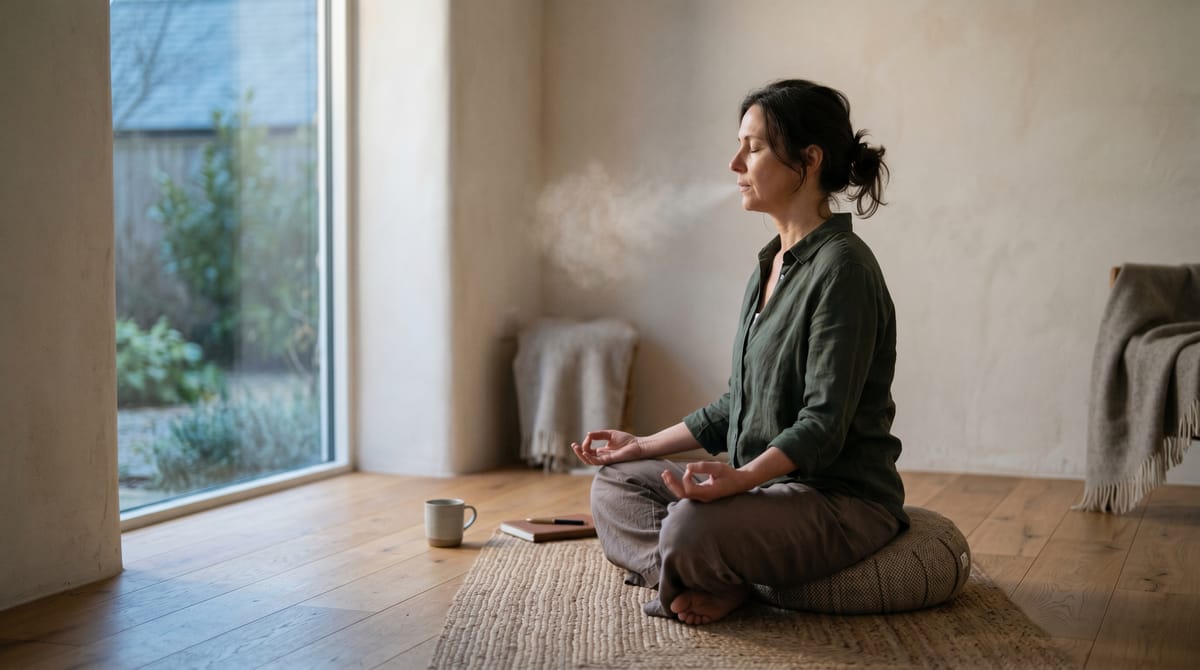
Breathwork for calming the mind uses deliberate breathing patterns, especially slower exhales and brief pauses, to help shift the nervous system toward steadiness. Research links it to lower stress, better mood, and improved attention.
Key Takeaways
- Breathwork is the deliberate use of breathing patterns to influence stress, attention, and emotional regulation.
- A 2025 review in Stress & Health (PMC) screened 465 articles and included 30 full-text studies, showing the field is being studied seriously.
- A 2025 randomized study of 139 undergraduates found one brief slow-paced breathing session improved working memory and temporarily improved mood and stress.
- The course teaches four purifications pranayama as taught by Baba Hari Das, which gives beginners a structured way to practice.
- For people who want a basic, guided entry into calm-breath practice, this course is a practical next step.
Table of Contents
- Understanding Breathwork for Calming the Mind
- Key Concepts and Techniques
- Who Benefits from Learning Breathwork?
- What Do Students Say?
- Is This Course Worth It?
- About the Creator
- Essential Breathwork Methods
- Watch Before You Enroll
- Frequently Asked Questions
- Conclusion
- Explore More on TGD
Understanding Breathwork for Calming the Mind
Breathwork is the practice of changing how you breathe on purpose to influence how you feel and function. According to Stress & Health (PMC), a 2025 narrative review screened 465 articles and included 30 full-text studies, which shows the topic is being studied as an emerging non-pharmacological intervention rather than a fad. People use it for quick resets, meditation support, and everyday nervous-system regulation.
Slower breathing, longer exhales, and calmer nasal patterns are the main tools people use to shift out of stress mode. According to Anxiety, Stress, & Coping (PubMed), one brief slow-paced breathing session in 139 undergraduates improved working memory and temporarily improved mood and stress. According to Journal of Holistic Nursing (PubMed), 12 of 19 studies reported significant anxiety improvements and 9 reported stress improvements, with no adverse events reported, while Acta Neurologica Belgica (PubMed) found improved heart rate variability across all six included studies. Together, the data suggest breathwork is a low-tech self-regulation skill that can be practiced in minutes, without equipment, and with a meaningful physiological signal. That makes it relevant for daily stress, focus, and recovery.
It matters because people need tools they can use immediately during ordinary stress. Breathwork fits that need.
Want to Learn Breathwork for Calming the Mind Step by Step?
This course on The Great Discovery covers these fundamentals in a more structured format, so you can turn the research into a repeatable practice.
The Great Discovery (TGD) is a global online course marketplace where creators publish courses and learners discover practical training across business, technology, wellness, and personal growth. It helps learners find focused instruction from independent teachers.
Key Concepts and Techniques
Breathwork works best when the pattern is simple, repeatable, and matched to a clear goal.
Slow the exhale
Longer exhales are a common downshifting tool because they nudge the body away from stress arousal. The 2025 scoping review in Acta Neurologica Belgica found heart rate variability improvements across all six studies, especially in the high-frequency band, which is consistent with stronger parasympathetic engagement.
Use rhythm, not strain
Steady counts help you keep the practice gentle. The A52 Breath Method described in Stress & Health (PMC) uses a 5-second nasal inhale, 5-second exhale, and 2-second post-exhale hold for about 10 minutes, or roughly five breaths per minute. The point is regulation, not chasing discomfort.
Combine breath holds with awareness
Brief pauses can help you notice the space between inhale and exhale. In classical pranayama traditions, breath holds are often used to deepen concentration, but the practical rule is to stop if you feel dizzy, nauseous, or overly tight.
Make the practice fit real life
The course description emphasizes morning practice, after a bowel movement and before food, which is a practical way to improve consistency and comfort. For many people, a short daily routine is more useful than an intense occasional session.
Know the safety boundaries
Breathe gently if you're sick or menstruating, and scale back if a technique feels forceful. Breathwork is promising, but it still works best when you treat the body as a signal, not something to overpower.
Who Benefits from Learning Breathwork?
Breathwork is most useful for people who want a simple way to calm down, reset attention, and build a repeatable daily practice. The basic skill level of this course makes it especially approachable for first-time learners, and its Mindset, Health and Fitness, and Spiritual Growth categories fit learners who want both practical calm and a reflective routine.
Beginners who want a clear starting point
If you are new to pranayama, a focused basic course is easier to use than scattered tips online. Because this TGD course is listed as Basic, it works well as an entry point when you want guidance instead of experimentation.
Busy professionals and students
Quick breathing resets can fit between meetings, before study sessions, or after stressful tasks. The shorter and more repeatable the practice, the more likely it is to become a habit you actually use.
Yoga and meditation practitioners
If you already sit, stretch, or meditate, breathwork can deepen that routine by giving you a direct regulation tool. A tradition-based course like this one adds structure to the work you may already be doing informally.
People who want a tradition-based framework
Some learners want more than generic relaxation tips. The course's focus on the four purifications as taught by Baba Hari Das gives the practice a lineage and a clearer sequence.
What Do Students Say?
The available feedback is small but positive, and the one review highlights clear instruction.
"Wow- this was a great course. I learned a lot and the instruction was very clear. Thank you for sharing this and I look forward to future programs with you."— Anjuli Mahendra
The review sample is limited, but the tone is strongly favorable. That suggests the course is likely to help learners who value straightforward teaching over flashy presentation.
Is This Course Worth It?
Yes, if you want a gentle, basic-level introduction to pranayama with clear instruction.
It is best for beginners, mindfulness learners, and people who want a structured breath practice they can fit into mornings or short reset breaks. The course's four purifications focus and the lone review's praise for clarity both point to a course built for accessibility.
It is not the right fit if you want advanced breath retention work, a clinical program, or a wide survey of many breathing systems. The strongest use case is a first guided step into calm-breath practice, especially if you prefer a traditional framing rooted in Baba Hari Das.
On TGD, this looks like a strong next step when you already know breathwork can help and you now want a clean path from theory to practice.
About the Creator
Alok Rocheleau has a focused catalog and a strong learner rating. Public creator details are limited, but the available numbers are straightforward: 1 course created, 31 total learners, and a 5.0 average rating.
No creator bio was provided in the course data, so the best signal is the course itself and the learner response around it.
CreatorAlok RocheleauCourses created1Total learners31Average rating5.0
View Alok Rocheleau's creator profile
Essential Breathwork Methods
The most useful breathwork methods are simple enough to repeat and specific enough to create a noticeable shift.
| Method | What It Does | Why It Matters |
|---|---|---|
| Longer exhales | Slows the breathing cycle and supports downshifting. | Often used to settle stress or prepare for meditation. |
| Nasal breathing | Keeps airflow gentle and consistent. | Helpful for steady pacing and focus. |
| Paced breathing | Uses a count to keep rhythm consistent. | Makes practice repeatable and easy to track. |
| Breath holds | Adds pause and awareness between breaths. | Can sharpen concentration when kept mild. |
| Diaphragmatic breathing | Encourages fuller belly-rib movement. | Can reduce shallow chest breathing. |
| Safety check | Stops the practice when dizziness or nausea appears. | Helps keep the practice sustainable. |
The course maps well to these ideas because it teaches a specific pranayama tradition instead of leaving you to assemble techniques on your own. That structure helps when you want calm, not complexity.
Master Breathwork for Calming the Mind with Expert Guidance
Alok Rocheleau's course covers all of these concepts and more, with structured lessons you can use to build a calm, repeatable practice. If the table above made the methods feel useful, this course shows how to put them together.
Enroll in Breathwork for Calming the Mind →
Watch Before You Enroll
This video explains how TGD affiliates share courses and how the program works.
Learn how to become an affiliate on The Great Discovery — the best affiliate program for course creators and marketers in 2026. Start earning commissions by sharing courses you believe in.
Frequently Asked Questions
These are the most common questions readers ask about breathwork for calming the mind, safety, and beginner use.
What is breathwork for calming the mind?
It is the deliberate use of breathing patterns to influence stress, mood, and attention. According to Stress & Health (PMC), the field is being studied as an emerging non-pharmacological intervention.
How does slow breathing reduce stress?
Slower breathing often lengthens the exhale, which can support parasympathetic activity and improve heart rate variability. According to Acta Neurologica Belgica (PubMed), all six studies in a 2025 scoping review found HRV improvements, especially in the high-frequency band.
Can breathwork improve focus?
Yes, sometimes. According to Anxiety, Stress, & Coping (PubMed), a brief slow-paced breathing session in 139 undergraduates improved working memory and temporarily improved mood and stress.
What is the difference between pranayama and breathwork?
Pranayama is the yogic tradition of regulating life force through breath control or restraint. Breathwork is a broader term that includes modern and traditional breathing practices, and this course uses the four purifications taught by Baba Hari Das.
Is breathwork safe for beginners?
Usually yes when practiced gently, but it should never feel forceful. The 2025 systematic review in Journal of Holistic Nursing (PubMed) reported no adverse events across the included studies, and beginners should stop if they feel dizzy, nauseous, or unwell.
Is the TGD course good for beginners?
Yes. It is listed as Basic, has a 5.0 average rating, and focuses on a clear traditional framework, which makes it a sensible first step for new learners.
Ready to Go Deeper?
You've learned the fundamentals of breathwork for calming the mind, from slow exhales to gentle pacing and safety. This course takes you from understanding to a guided practice you can repeat.
Start Learning Breathwork for Calming the Mind on TGD →
Conclusion
Breathwork for calming the mind is a practical self-regulation skill built around rhythm, exhale length, and gentle awareness. The recent research points to real benefits for stress, mood, attention, and heart rate variability, especially when the practice stays simple and repeatable. If you want a structured beginner path grounded in pranayama and the four purifications, Alok Rocheleau's course is a logical next step on TGD. Explore the course on TGD
Explore More on TGD
If you want to keep learning, these category and profile links are the most relevant next stops on TGD.
- Browse Health and Fitness courses
- Browse Mindset courses
- Browse Spiritual Growth courses
- Browse TGD Success courses
- Visit The Great Discovery homepage
- View Alok Rocheleau's creator page
Share Your Knowledge on The Great Discovery
Join Alok Rocheleau and hundreds of other creators sharing their expertise. Create and sell your own courses on TGD.