
Servant Leadership Essentials with Euvonka Farabee | TGD
Servant leadership is a leadership style that starts with serving people first. It shares power, centers growth, and measures success by trust, capability, and results, which is why it matters in workplaces facing disengagement and rapid skill change.

Servant leadership is a leadership style that starts with serving people first. It shares power, centers growth, and measures success by trust, capability, and results, which is why it matters in workplaces facing disengagement and rapid skill change.
Key Takeaways
- Servant leadership puts the well-being and development of team members before ego or control.
- According to Gallup, global employee engagement fell to 20% in 2025, which raises the value of trust-based leadership.
- According to the World Economic Forum, 63% of employers see skills gaps as the biggest barrier to transformation and 77% plan to upskill workers.
- Beginners can practice servant leadership through listening, empathy, stewardship, foresight, and community-building.
- Euvonka Farabee's course gives an intermediate, structured path for learners who want to turn the philosophy into repeatable habits.
Table of Contents
- Understanding Servant Leadership
- Key Concepts and Techniques
- Who Benefits from Learning Servant Leadership?
- What Do Students Say?
- Is This Course Worth It?
- About the Creator
- Essential Servant Leadership Practices
- Frequently Asked Questions
- Conclusion
- Explore More on TGD
Understanding Servant Leadership
Servant leadership is a non-traditional leadership philosophy built around the well-being and growth of the people being served. According to the Greenleaf Center for Servant Leadership, the servant-leader shares power, puts others' needs first, and helps people develop and perform as highly as possible. That matters now because workplaces are under strain: Gallup's 2026 State of the Global Workplace report says global engagement fell to 20% in 2025, and manager engagement fell to 22%. The World Economic Forum's 2025 Future of Jobs Report adds that 63% of employers see skills gaps as their main barrier to transformation, while 77% plan to upskill workers. In that environment, servant leadership is not soft. It is a practical way to build trust, retain energy, and grow capability without relying on control alone.
According to the Center for Creative Leadership, sustainable servant leadership balances serving others with supporting yourself, so the model does not collapse into burnout. MindTools also highlights Larry Spears' 10 characteristics, including listening, empathy, healing, awareness, persuasion, foresight, stewardship, and community-building. Together, these ideas show why servant leadership matters: it turns leadership into a set of daily behaviors that improve team health, decision quality, and long-term performance. It is most useful when teams need to adapt, learn quickly, and stay aligned around a shared mission.
Want to Learn Servant Leadership Step by Step?
This course on The Great Discovery covers these fundamentals in a structured format.
The Great Discovery (TGD) is a global online course marketplace where creators publish courses and learners discover practical training across business, technology, wellness, and personal growth. It is a place to find structured learning from independent instructors.
Key Concepts and Techniques
Servant leadership becomes useful when you turn the philosophy into repeatable habits. The core ideas below are the ones most likely to change how you lead, coach, and make decisions.
1. Power Sharing and Stewardship
Servant leaders do not hoard authority. They distribute decision-making where the best information lives and treat their role as stewardship rather than ownership.
That can mean asking a customer-facing employee to help shape a policy or giving a team the authority to solve a recurring problem without waiting for escalation.
2. Listening and Empathy
Listening is more than hearing words. It means slowing down enough to understand what people are worried about, what they need, and what they are not saying directly.
Empathy makes that listening usable. If someone is missing deadlines because a process is broken, the servant leader fixes the process instead of only criticizing the person.
3. Foresight and Conceptualization
Servant leadership still requires judgment about the future. Foresight means seeing how a decision will affect workload, morale, and customer experience over time.
Conceptualization helps leaders step back from daily noise and connect individual tasks to a larger mission. That keeps the team from becoming busy without becoming effective.
4. Growth, Coaching, and Community
One of the strongest servant leadership signals is investment in other people's growth. That includes coaching, mentoring, and giving people chances to stretch without setting them up to fail.
Community-building matters too. Teams perform better when people feel safe enough to share ideas, disagree respectfully, and help each other improve.
Who Benefits from Learning Servant Leadership?
Servant leadership is useful for anyone who wants people to trust them, not just obey them. It is especially practical for leaders who need to grow capability while keeping morale intact.
New Managers and Team Leads
If you recently started supervising people, servant leadership gives you a stable framework for feedback, delegation, and trust-building. The intermediate skill level of this TGD course makes it a sensible next step once you already know the basics of leading people and want to lead them better.
For new leaders, the main benefit is discipline. It helps you replace reactive management with habits like listening first, coaching clearly, and sharing ownership.
Founders and Entrepreneurs
Founders often move fast, but speed without service can create turnover and confusion. Servant leadership helps you build a culture where people know the mission and feel responsible for it.
Euvonka Farabee's course is a logical starting point if you want to lead a business in a way that grows people, not just output.
People, Culture, and Learning Leaders
HR, L&D, and people-ops professionals need leadership models that improve engagement and development together. That matters in a world where Gallup says engagement dropped to 20% globally in 2025 and manager engagement fell to 22%.
This topic helps those roles design better coaching systems, performance conversations, and manager training.
Mission-Driven and Values-Based Leaders
Servant leadership naturally fits leaders who want their work to reflect spiritual or ethical values. The model aligns with service, humility, and stewardship, which are central themes in the course categories around spiritual growth and leadership development.
If your challenge is turning values into daily behavior, this topic gives you a practical bridge from belief to action.
What Do Students Say?
This course is new to the marketplace and hasn't collected reviews yet. Check back after launch for student feedback.
Is This Course Worth It?
Yes, if you want a structured introduction to servant leadership that focuses on habits, not hype.
It is best for learners who already have some leadership exposure and want a practical foundation in listening, empathy, stewardship, and growth-centered leadership. The course's intermediate level and leadership-development focus make it a natural fit for founders, managers, and mission-driven leaders.
It is not for people who want a fast motivational overview, a purely tactical management checklist, or a heavily data-modelled leadership program. Based on the small creator catalog and the absence of reviews, the strongest case for this course is fit: if the topic resonates, it looks like a focused next step on TGD.
When you already believe leadership should serve people first, this course is a reasonable place to turn that belief into a repeatable practice.
About the Creator
Euvonka Farabee is listed as the creator of this course and describes their work as empowering leaders with resilience and success.
Courses created: 2
Total learners: 21
Average rating: 0.0
Euvonka Farabee's profile suggests a focused catalog rather than a large content library. View the creator profile on TGD.
Essential Servant Leadership Practices
Servant leadership becomes easier to apply when you break it into specific, observable behaviors. The table below turns the philosophy into practical actions you can recognize and practice.
| Practice | What It Means | Everyday Example | Why It Matters |
|---|---|---|---|
| Listening | Fully hearing concerns before responding | Ask clarifying questions before offering a solution | Improves trust and reduces avoidable mistakes |
| Empathy | Understanding how work affects people | Notice stress signals and adjust the conversation | Prevents conflict from hardening into resentment |
| Stewardship | Treating authority as responsibility | Protect time, tools, and energy for the team | Keeps leadership accountable to the group's success |
| Foresight | Anticipating downstream consequences | Check how a decision changes next quarter's workload | Helps teams adapt before problems become crises |
| Community-Building | Creating belonging and shared purpose | Invite cross-functional input before finalizing a plan | Strengthens collaboration and shared ownership |
| Coaching | Helping others grow through feedback and practice | Give one specific improvement point after each project | Builds capability instead of dependence |
These practices show why servant leadership is actionable rather than abstract. The course can help you turn them into a repeatable leadership style instead of isolated good intentions.
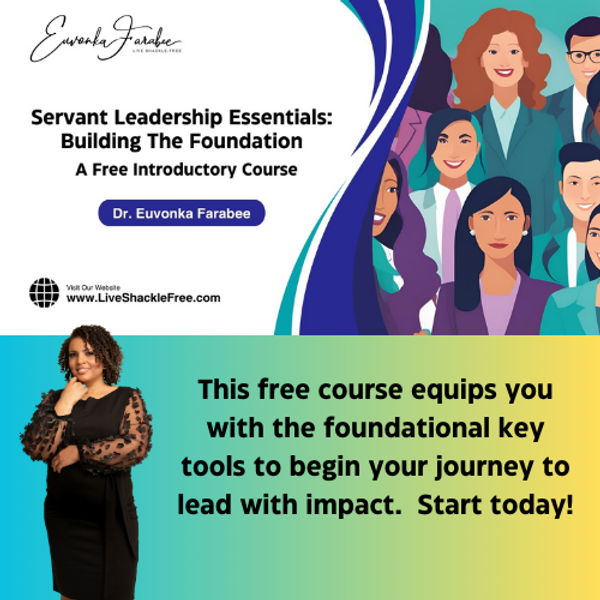
Master Servant Leadership with Expert Guidance
Euvonka Farabee's course covers the fundamentals you just saw in the table, with a structured path for building a service-first leadership style. It is a logical next step if you want to turn empathy, stewardship, and foresight into daily practice.
Enroll in Servant Leadership Essentials: Building the Foundation →
Watch Before You Enroll
Learn how to become an affiliate on The Great Discovery — the best affiliate program for course creators and marketers in 2026. Start earning commissions by sharing courses you believe in.
Frequently Asked Questions
What is servant leadership?
Servant leadership is a leadership approach that prioritizes the needs, growth, and well-being of others. The Greenleaf Center defines it as sharing power and helping people develop as highly as possible.
Why does servant leadership matter now?
It matters because engagement and capability are under pressure. Gallup reported global employee engagement at 20% in 2025, and the World Economic Forum said 63% of employers see skills gaps as the main barrier to transformation.
What are the main characteristics of servant leadership?
MindTools highlights Larry Spears' 10 characteristics, including listening, empathy, healing, awareness, persuasion, conceptualization, foresight, stewardship, commitment to the growth of people, and building community. Those traits turn the philosophy into observable behavior.
Is servant leadership the same as being passive?
No. Servant leadership still requires clear decisions, standards, and accountability. The Center for Creative Leadership notes that sustainable servant leadership balances serving others with supporting yourself, so it avoids burnout and indecision.
Who is this TGD course best for?
This course is best for intermediate learners who already have some leadership exposure and want a structured foundation. It is a good fit for managers, founders, and values-driven leaders who want practical habits, not just theory.
How do I start practicing servant leadership?
Start by listening longer, asking better questions, and removing obstacles that slow other people down. Then coach for growth, share credit, and look one step ahead so your decisions help the team perform well over time.
Ready to Go Deeper?
You now know the core habits of servant leadership and why they matter in a low-engagement, high-change workplace. This course takes you from understanding to practical application.
Start Learning Servant Leadership on TGD →
Conclusion
Servant leadership is a practical way to lead by sharing power, listening well, and developing people so teams can perform without constant pressure. The evidence matters: engagement is low, skill gaps are widening, and leaders need methods that build trust as well as capability. If you want a structured way to turn those ideas into habits, Euvonka Farabee's course is a sensible next step on TGD. Explore the course on The Great Discovery →
Explore More on TGD
Continue your learning with related TGD areas and the creator's profile.
- Entrepreneurship and Business courses on TGD
- TGD Success courses on TGD
- Spiritual Growth courses on TGD
- Leadership Development courses on TGD
- The Great Discovery homepage
- Euvonka Farabee creator page
Share Your Knowledge on The Great Discovery
Join Euvonka Farabee and hundreds of other creators sharing their expertise. Create and sell your own courses on TGD.